Getting Lost in Grief

Navigating life while dealing with death can be like finding your way to an urgent appointment — in a new country …

Where you don’t understand the culture — or the language …

While operating a vehicle you’ve never driven, flown, or sailed before — and while responsible for a dozen kids, their gear, and their pets …

All yelling, “Are we there yet? How much longer?”*

And you were supposed to be there yesterday.

You could pull over to ask for directions — if you could find a passerby with whom you can communicate.

You could call someone who has been there before — if you hadn’t just unknowingly crossed a border not included in your phone plan. If you had any service bars available. If you had your charger with you.

Getting lost in grief

Getting lost in grief, photo by Teresa TL Bruce, TealAshes.com

“The grief journey” is one description for the process of learning to live again after a loss. It’s not like vacationing to experience new scenery or to reconnect with family origins. It’s more like traveling through J.R.R. Tolkein’s Mordor, but without a noble quest. There’s no loyal Samwise Gamgee for unwavering companionship — those on the journey are there because a beloved one has been forever left behind.

Travelers on the grief journey constantly ask themselves, “Where am I? What am I doing here?”

Have you ever forgotten where you were going (while halfway there)? Ever been so lost you had to approach a stranger for directions,  or call a friend to talk you through your route, or pull out a map — even while using GPS?

There was no map to show me the way from life with my husband to life without him.

I’ve always been prone to “creative” navigation from Point A to Point B via unintended alternative routes. My husband and kids found it amusing, though sometimes annoying, that I could find my way through any area — once I’d already been lost there.

After he died, when the shock of grief was new and raw, I couldn’t locate familiar, close-by places; less familiar, more distant destinations were all but impossible.

The interstate was easy to reach, just two turns from my street. But I can’t begin to count how many times I found my widowed self turning too many blocks before I got there. Or half a mile past it. Or not remembering where I’d meant to go. (In hindsight, that was a good thing. I had no business driving at highway speeds when I couldn’t even figure out how to reach it.)

Physically, I was lost all the time. Emotionally, I was just as lost.

In the early months, I was so lost I even blurted my grief whenever I approached strangers. (Most of my widowed friends have said they did the same.) It was as if telling the grocery store clerk, the librarian, and the receptionist “My husband died” was a compulsory password to activate my grief processing symptoms — my distressing, personal GPS.

In time I learned to call on others who’d been there; they’d also lost their spouses. They talked me through how they survived the upending of all they’d known.

Slowly, oh, so slowly, I began drafting my own mourning map.

It took more time than I would have expected to be able to find my way again. It took more time than many of my friends expected, too.**

Be patient with your grieving friends as they relearn how to navigate their altered lives … and offer them rides whenever possible.

___

*See my earlier post called Are We There Yet? (How Long Does Grieving Take?)

___

**Speaking of my friends … I’d like to thank Bettie Wailes, Doug Grossman, Nylda Dieppa, and Liz Collard for their feedback — and patience.

Are We There Yet? (How Long Does Grieving Take?)

Are we there yet? — one of the most annoying questions parents hear. Invariably, no matter how long remained was too long for our children. When they were young,  we sometimes answered that if they asked one more time, we’d turn the car around and go back home.

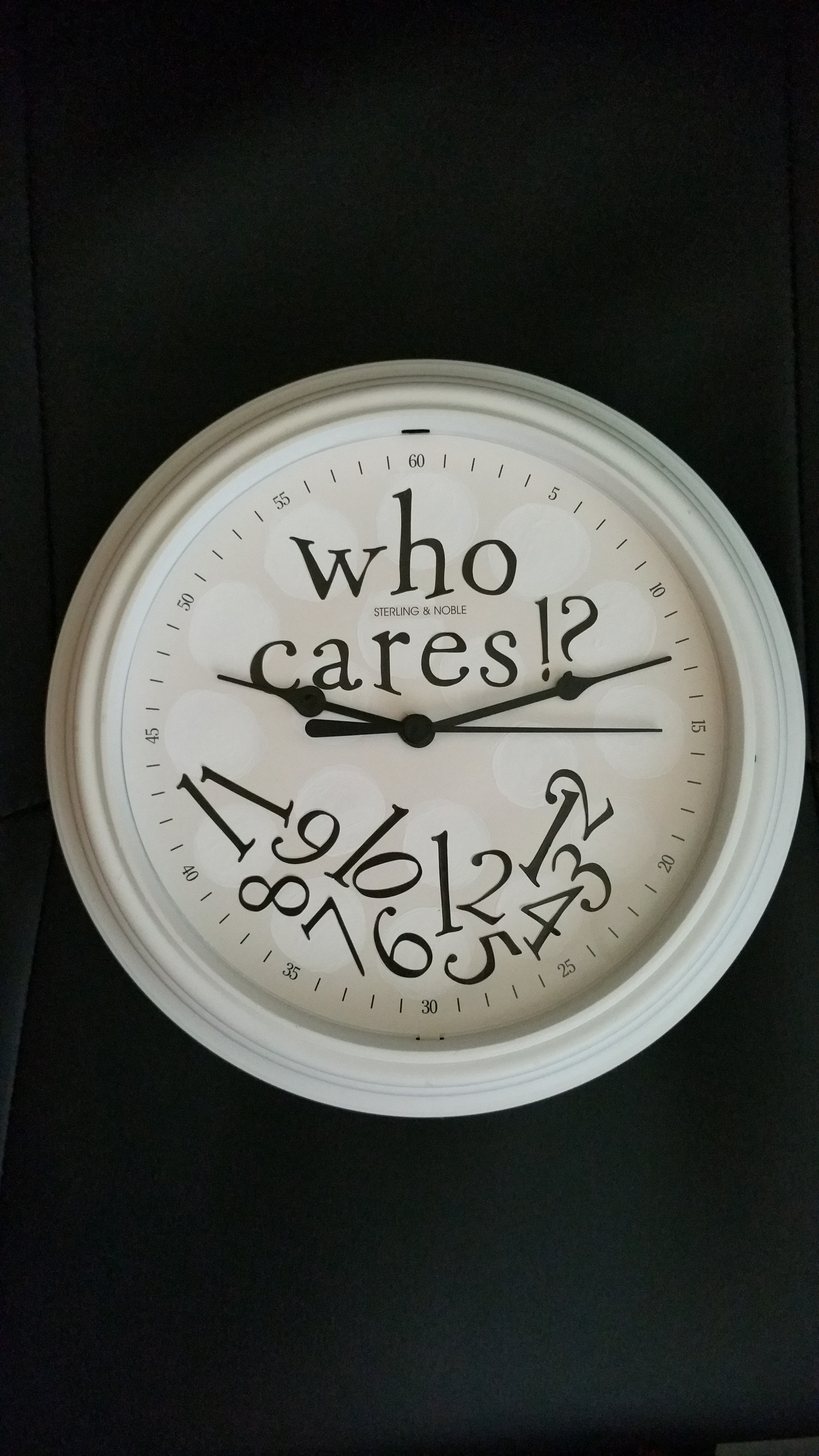
clock with fallen numbers

“who cares?” clock face created and photographed by Teresa TL Bruce (TealAshes.com)

On a few occasions, we circled back to where we started, postponing the excursion for another day.

Their petition came regardless of our destination — rare, days-long, out-of-state road trips; frequent, up-to-an-hour-long, crosstown errands; or thrice-weekly, around-the-corner church meetings . All drives were apt to include variations on the dreaded question.

In hindsight, I realize our kids were eager for the fun to begin (or at least for the end of being strapped into car seats and belts while motion sickness churned their tummies). But while we were behind the wheel, our focus was to convey everyone safely from point A to point B. (If I could manage not getting lost when I was driving — ha! — so much the better.*)

Maybe askingWhen will we get there? reflected part of our kids’ intellectual development, too. They were still learning the basics of how time flows and is measured. They were learning to anticipate upcoming landmarks on familiar routes and weren’t yet able to estimate the amount of time it would take to reach the next location they could relate to during their journey.

And at that point in their lives, they lacked the experience to realize (or in some cases to care) how annoying it was to be asked.

We were more worried about reaching our destination intact than in time. If the Bruces were late, we were late … as long as we didn’t become the late Bruces in our attempt to arrive.

Sometimes detours or road conditions made our best estimates to How long is it gonna take? woefully wrong. (And, oh, did we hear about it!)

Then life’s day-to-day travels crashed into the worst kind of unplanned detour. My husband died.

My estimated arrival times died with him.

Are you better yet? — one of the most annoying questions mourners hear. With precious and dear exceptions, no matter how recent my bereavement felt, it seemed to take too long for those around me. When my grief was still young, I first answered bluntly, “No, of course not.”

If the same person asked more than once, I soon learned my frank answers disappointed them; disapproval showed in their expressions, voices, and words. I turned myself around when I saw them (or their phone numbers). That I was “still” not “better” (meaning not yet my former, pre-widowed self again) shamed me into silence about my real feelings. (Grieving was hard enough without being made to feel I was doing it the wrong way.) I put on my plastic smile and said, “Mm-hmm” — and got away from them as fast as I could.

In hindsight, I realize my friends were still learning the basics of what it meant to be around someone who’d lost a loved one. And they were eager for my sadness to end (as evidenced when I cried my way through conversations). But while I fumbled my  way through learning to cope with life-altering loss, my focus was simply to endure a single day from one moment to the next.

Any planning, any  estimation, any sense of the “when” of things was beyond my capacity. Death detoured my timing in every way. It slowed me down. (I know others who fell into fast-paced flurries of keep-busy actions to try to keep their grief from catching up with them; it sometimes worked — temporarily.)

It took me twice as long to do the dishes (when I remembered to cook — or to eat — and the two didn’t necessarily happen together anymore). It took me twice as long (or more) to get dressed in the morning. Four times as long to pay the bills and attend necessary business transactions. And getting to sleep or staying asleep … (sigh). Let’s just say my internal sleep clock has been at the repair shop for several years now …

I had a trouble estimating how I’d fare on the other side of the next five or ten minutes. Figuring out what would happen another day was tougher. What would the next week hold? (Thinking that far ahead made my head hurt almost as much as my heart.) The following month? Ha! (In case the italicized “Ha” with an exclamation point didn’t convey it clearly the first time, let me repeat. Ha!)

Questions about my five- or ten-year plans were as impossible to answer as “When are you going to act like normal again?

Maybe askingWhen will you be done with grieving? reflected part of my acquaintances’ empathetic development. They were still learning the basics of how grief flowed and ebbed around time-warped detours on an unfamiliar journey they couldn’t relate to. Yet because of what they observed in how I grieved my husband, they were awakened to an uncomfortable realization: they would someday lose a loved one, too.

Their need to ask, So, is everything okay now? stemmed as much from their lack of experience with grieving as it did from their genuine concern for me. And at that point in their lives, they had no way to realize how annoying it was to be asked. 

Instead of asking your grieving friends how long it will take them to “get over” their bereavement, assure them you accept them and support them no matter where (and when) they are in their grief.

___

*I’ve been known to get lost even when following GPS directions. In a future post I’ll share more about getting lost in other ways while finding my way through grief.

___

Feel free to subscribe or follow me on Facebook (https://www.facebook.com/TealAshesbyTeresaBruce) or Twitter (@TealAshesTBruce) for the latest posts.

Anniversary after Death

Anniversaries are different after a loved one’s death. And there are more of them than there were before.

My first wedding anniversary after my husband died was/would have been our 25th. (Note my confused tense. Since he was gone, did I still count each new year as an anniversary? Or did the numbers freeze at 24, the last we spent together?)

Ten months into widowhood, I was “still” in shock. I remember only two things about my first widowed wedding anniversary:

  1. It hurt too much for “happy anniversary” greetings to be welcome.
  2. It hurt worse not having it acknowledged at all.

The kindest contacts let me know they were thinking of me — and of my loss. I read my friends’ support in texts, emails, Facebook messages, handwritten notes, and cards. Others left phone messages I heard later (because I didn’t feel inclined to answering the phone that day).

If you’re wondering whether (or how) to mention your friends’ wedding anniversaries after they’ve lost their spouses, here are some tips:

  • Say something before the anniversary if you can. For many bereaved, the days leading up to are as hard as (if not harder than) the day of. Even a belated acknowledgment is better than none.
  • Avoid cheery, cliché greeting-card greetings.
    Don’t say, “Happy Anniversary” as if this year is no different (even though you do wish them happiness).
    Don’t say, “Have a wonderful anniversary” (because without their beloved spouse that’s not likely).
  • Acknowledge the loss. Anniversaries after death are inextricably interwoven with that loss. Phrases like these are helpful:
    • I’m thinking of you as your anniversary approaches.”
    • You’re on my mind this week. I know this anniversary will be different.”
    •  “I know you’re missing your sweetheart.”
    • You’re in my thoughts and prayers.”

At the start of the post, I mentioned there are more anniversaries after a death than there were before. Death marks a family’s calendar with its own darkly circled dates.

All the “typical” commemorations are there — holidays and birthdays and, yes, wedding anniversaries.

But for anyone who has lost a loved one (parent, child, spouse, sibling, best friend …) the death-added days are there, too — the death date, the funeral date, the day the death certificate finally arrived, the day the cemetery marker was installed, and (in cases where death was expected due to illness) the dates of first symptoms, first diagnosis, hospice care, etc.  All are anniversaries of their own sorts.

Even when death was expected (and perhaps welcomed) at the end of a long, productive life (ultimately impeded by a painful, protracted illness), such “sadiversaries” or “angelversaries” carry pain for the survivors as much as they bring remembered relief for the release of the sufferers.

(A quick side note here: As “happy” as I was for my 54-year-old mother’s release from the cancer that entrapped her body, and as “grateful” as I was that my 47-year-old husband was no longer imprisoned by the premature deterioration of his mind, I was — and still am — neither happy nor grateful that either of them died so young. I’d have much preferred decades more together. So, please. Please don’t tell me — or anyone mourning — why we should be glad or thankful for our loved ones’ deaths. Grieving is not compatible with Pollyanna’s “glad game.”)

I’d say all such dates are difficult to get through during the first year, but that would do a disservice to everyone who has lost someone close to them. Love has no time limits. Neither does grief. I mentioned not remembering much about my first widowed anniversary, but I don’t remember the second one, either. The shock of widowed fog (and other grief) can — and often does — blur more than a single year’s worth of seasons. 

We will always mourn those we’ve loved, but we won’t always be consumed by that bereavement. Given time and encouragement, we learn to live with the grief. We learn to live in spite of it. We learn to live forward again.

But as anniversaries approach — even years later — we can always use expressions of loving help and caring encouragement from our friends.

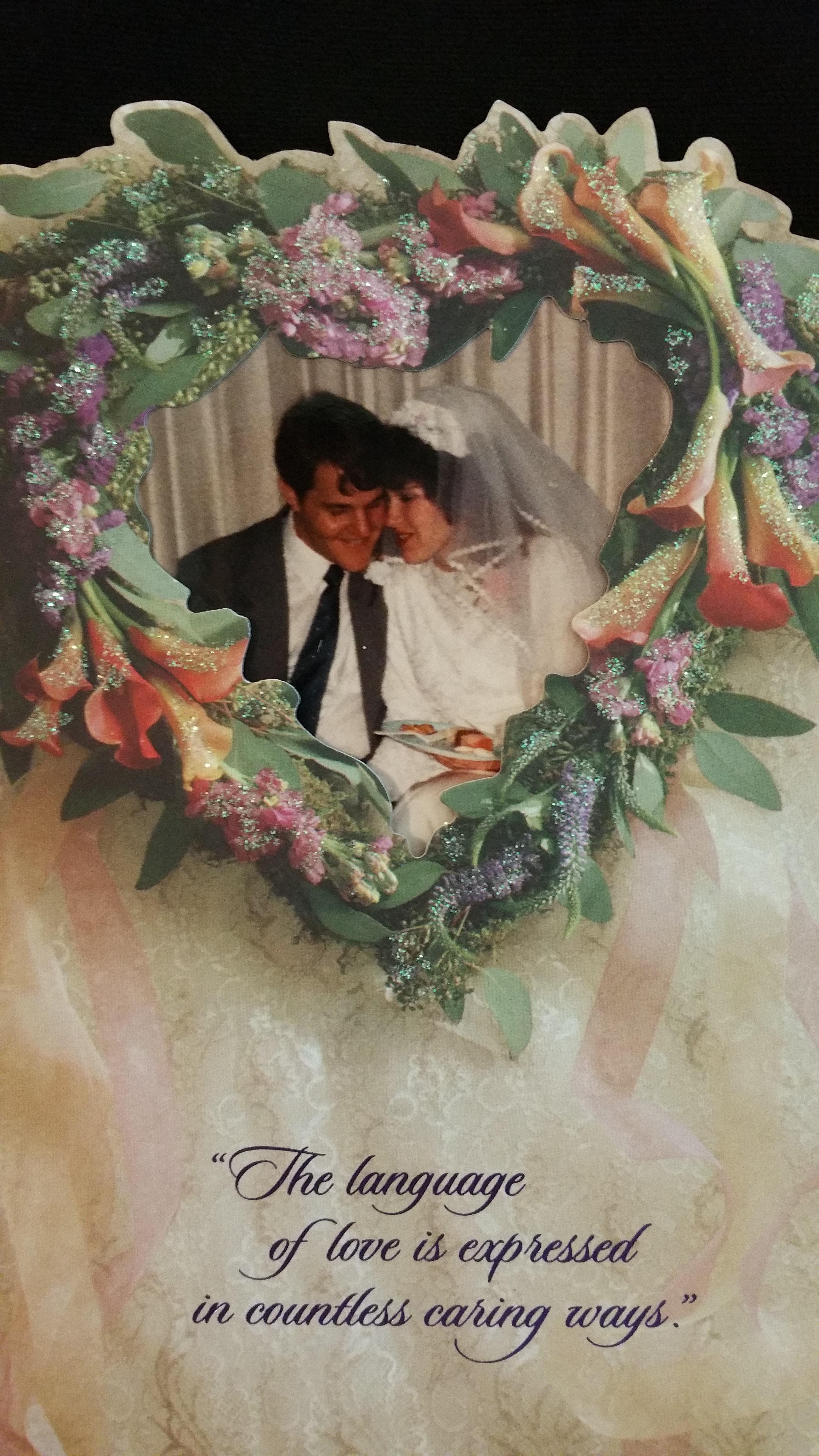
"The language of love is expressed in countless caring ways."

Snapshot taken by Mom, tucked in a Hallmark card from my late husband. Teresa TL Bruce, TealAshes.com


Putting the Widowed in a Box

I went for a checkup yesterday. I hadn’t been to that provider since the year my husband died, so I had to fill out a new medical history. How difficult filling out such forms used to be (and sometimes “still” is)! If you own or manage a business that requires personal information of its clients, make sure your paperwork and/or website includes “widowed” as a category.

At least this form offered me the option of "Other" where I could write in my own category: widowed.

At least this form offered me the option of “Other” where I could write in my own category: widowed.

I can’t count the number of times I sobbed through inadequate, limited options during the first year and a half after his death. (I do remember specific waiting rooms where people were leery enough of the crying woman to move to the other side of the room, sending not-so-furtive glances my way.)

When I was newly widowed,  EVERYTHING reminded me of my loss. It was hard enough coping with grief on a daily (sometimes hourly) basis. I hated having to acknowledge my husband’s death in clinical black and white on the many forms I had to fill out — and there were a LOT of forms. It was excruciating to complete paperwork that ignored the existence of my life-altered status.

  • I was not “single.” (I’d been married for 24 years and hadn’t done anything that changed or negated that. Neither had my husband — except for his dying.)
  • I was not “divorced.” (See above.)
  • I was not “married.” (Even though both of the above still applied, my spouse was no longer there — he was NEVER coming home.)
  • I was “widowed.” (Still am.)

Too often, company  (and government) forms offer no appropriate box for widows and widowers to check under “marital status.” On paper I write in my own category, even when there isn’t an option (or enough space) to do so. But online forms can incite scream-inducing, option-lacking frustration.

(And yes, during that first year or so, I sat at my computer and screamed at such websites — and at whatever offices or organizations had sent me to them — even though I had never been a person who screamed. But I’d never been widowed before, either.)

It has been nearly five years since my husband died. Socially, I’ve come to see myself as single again — most days, anyway.  But legally, “widowed” still feels like a better fit.

I still check the “Mrs.” box (rather than the ones for Ms. or Miss).* Online, that often opens a dialog box for my husband’s contact information. (Good luck trying to reach him, I think.) If I leave blank his current address and phone number, or type “deceased” (or, when I’m in a snarky mood, if I enter the word “cemetery”), such sites red-line my responses with please submit a valid phone number and street address. (Sometimes that makes me want to scream again.)

I don’t appreciate paperwork forcing me back to the start, forcing me to redefine myself according to its guidelines.

As a widow, I’ve had to do enough starting over — and redefining — for myself.

___

*If you don’t know what a widow prefers to be called (Mrs., Ms. or Miss), ask her. She won’t bite, and she’ll appreciate that you respect her enough to want to heed her preference.

Speak the Names of the Dead

what to say when someone dies

Speak the Names of the Dead (word cloud created on WordItOut.com)

People often mistakenly worry they’ll “make” grieving survivors feel sad by mentioning or alluding to their friends’ deceased loved ones. They’re afraid speaking up will remind them of the loss. There are two reasons this isn’t so:

  • You can’t “remind” a person of something they cannot (and should not and don’t want to) forget. Grief is rooted in love, and that love doesn’t die with the deceased. For the one grieving, no matter the relationship — bereaved parent, sibling, child, grandparent, best friend, spouse, aunt, uncle, niece, cousin, in-law, or other loving mourner — the loss is never forgotten. With time — more time than you can possibly imagine unless you’ve mourned a similar loss — the sadness will thin from a suffocating deluge to a gentle mist that moistens but no longer threatens drowning. It may at times seem imperceptible, but it never evaporates completely.
  • Most people who mourn loved ones fear that others will forget them. They may feel they have to hold tighter to the memories of their dear dead ones — because if they don’t, who will remember? Hearing others speak their dear ones’ names acknowledges they aren’t — and won’t be — forgotten. It frees them to mourn without fear of losing their memories.

Yes, your friends’ eyes may glisten (or pour) when you speak their loved ones’ names, but that’s not a bad thing. Sometimes grief fills a mourner full to bursting — and tears act as a pressure release valve.

It’s been nearly five years since my husband’s death and nearly twenty years since my mom’s. My life is rich and full (sometimes too full) and I’ve learned to live with the grief I still — yes, still — feel for them. (Thank heaven I’m way past the awful days, er, months when I blurted out variations of “My husband died” to everyone I encountered.)

But there are days when grief gets ugly again, not just for me, but for everyone who has lost someone dear. It sneaks up behind us and whispers cruel doubts about whether anyone else still cares they’re gone, about our ability to keep on keeping on, about the disloyalty of moving forward in our lives without them.

Those are some of the days when we most need to hear others speak their names. Tell us stories of what they did — good or bad.* If you knew them, tell us you miss them, too (no matter how long it’s been). If you didn’t know them, tell us you remember (and understand) that missing them goes on . . . long after they have.

___

*I realized after writing this that part of my thinking (and post title) draws on echoes of Orson Scott Card’s Speaker for the Dead. Its title character cautions survivors that he will speak the truth — the full truth — about the dead they wish memorialized.