Breast cancer awareness and grief–when seeing pink means seeing red, part 1

This is the first post of several breast cancer awareness experiences to keep in mind during October’s breast cancer awareness month … and beyond.

Last month marked twenty years* since Mom died of breast cancer. More than thirty years ago her mother passed of the same; so did hers.

I’m therefore acutely aware of the importance of women getting regular mammograms and being vigilant about self-exams. That’s how Mom won more than three extra years with our family.

That’s why I got a mammogram — on the twentieth anniversary of Mom’s death, the week after the fifth anniversary of my husband’s.

The fun of getting a mammogram starts with stuffing top wear into a locked cubby. Photo by Teresa TL Bruce

The fun of getting a mammogram starts with stuffing top wear into a locked cubby. Photo by Teresa TL Bruce

It’s not something I look forward to every year. (Does anyone?) This year I put it off for months, until one day I finally called and made an appointment for the first available opening.

The irony of the timing didn’t hit me until that morning.

By the time I’d sat in the backed-up waiting room an hour after my scheduled appointment, my emotions were all ajumble.

By the second time the technician told me the equipment had a “technical problem” — and the procedure had to be repeated — my pertinent body parts felt all ajumble, too.

I cried — as much from emotional pain as from physical. When the technician assured me (bless her heart) that it would “only hurt for a few more seconds” (for the record, not true), she had no way to know the far deeper, longer-lasting pain came not from the contortions she inflicted on my body but from the losses the date itself smashed against my chest.

For a few moments, I plunged back into the mode of blurting my bereavement the same way I did during the early weeks (months, really) after my husband’s death.

To her credit, the woman tried to comfort me. She put an arm around me to give me a hug — but clad as I was only in the radiology center’s flimsy wraparound top, it felt awkward and uncomfortable. (In an oddly different way, the feeling reminded me how it felt when I was newly widowed and well-meaning men friends offered hugs — which at that raw time I didn’t want from any man I wasn’t related to.)

After the second round of images was taken (this time without technical difficulties), as my hand touched the doorknob, she offered a few well-intended words:  “You’ll be okay. You just have to get past it. Everybody has to die sometime.”

WHAT!?

I’d just bared my soul (among other things) in front of this woman. I was crying because I missed my mom on the anniversary of her death to breast cancer, and missing my late husband, too. And she tried to make me feel better by reducing the validity of my grief? (Not to mention that she ignored my apprehension over the reason for the mammogram she’d just subjected me to.)

Yes, I saw red.

Please don’t say such things to those who are grieving! It’s true that everyone dies, but it’s not helpful or encouraging (or even nice) to make such losses seem everyday or expected or unimportant. 

___

*In an earlier post I rounded up the amount of time (see https://tealashes.com/2014/06/27/comfort-after-moms-funeral/).

Anniversary after Death

Anniversaries are different after a loved one’s death. And there are more of them than there were before.

My first wedding anniversary after my husband died was/would have been our 25th. (Note my confused tense. Since he was gone, did I still count each new year as an anniversary? Or did the numbers freeze at 24, the last we spent together?)

Ten months into widowhood, I was “still” in shock. I remember only two things about my first widowed wedding anniversary:

  1. It hurt too much for “happy anniversary” greetings to be welcome.
  2. It hurt worse not having it acknowledged at all.

The kindest contacts let me know they were thinking of me — and of my loss. I read my friends’ support in texts, emails, Facebook messages, handwritten notes, and cards. Others left phone messages I heard later (because I didn’t feel inclined to answering the phone that day).

If you’re wondering whether (or how) to mention your friends’ wedding anniversaries after they’ve lost their spouses, here are some tips:

  • Say something before the anniversary if you can. For many bereaved, the days leading up to are as hard as (if not harder than) the day of. Even a belated acknowledgment is better than none.
  • Avoid cheery, cliché greeting-card greetings.
    Don’t say, “Happy Anniversary” as if this year is no different (even though you do wish them happiness).
    Don’t say, “Have a wonderful anniversary” (because without their beloved spouse that’s not likely).
  • Acknowledge the loss. Anniversaries after death are inextricably interwoven with that loss. Phrases like these are helpful:
    • I’m thinking of you as your anniversary approaches.”
    • You’re on my mind this week. I know this anniversary will be different.”
    •  “I know you’re missing your sweetheart.”
    • You’re in my thoughts and prayers.”

At the start of the post, I mentioned there are more anniversaries after a death than there were before. Death marks a family’s calendar with its own darkly circled dates.

All the “typical” commemorations are there — holidays and birthdays and, yes, wedding anniversaries.

But for anyone who has lost a loved one (parent, child, spouse, sibling, best friend …) the death-added days are there, too — the death date, the funeral date, the day the death certificate finally arrived, the day the cemetery marker was installed, and (in cases where death was expected due to illness) the dates of first symptoms, first diagnosis, hospice care, etc.  All are anniversaries of their own sorts.

Even when death was expected (and perhaps welcomed) at the end of a long, productive life (ultimately impeded by a painful, protracted illness), such “sadiversaries” or “angelversaries” carry pain for the survivors as much as they bring remembered relief for the release of the sufferers.

(A quick side note here: As “happy” as I was for my 54-year-old mother’s release from the cancer that entrapped her body, and as “grateful” as I was that my 47-year-old husband was no longer imprisoned by the premature deterioration of his mind, I was — and still am — neither happy nor grateful that either of them died so young. I’d have much preferred decades more together. So, please. Please don’t tell me — or anyone mourning — why we should be glad or thankful for our loved ones’ deaths. Grieving is not compatible with Pollyanna’s “glad game.”)

I’d say all such dates are difficult to get through during the first year, but that would do a disservice to everyone who has lost someone close to them. Love has no time limits. Neither does grief. I mentioned not remembering much about my first widowed anniversary, but I don’t remember the second one, either. The shock of widowed fog (and other grief) can — and often does — blur more than a single year’s worth of seasons. 

We will always mourn those we’ve loved, but we won’t always be consumed by that bereavement. Given time and encouragement, we learn to live with the grief. We learn to live in spite of it. We learn to live forward again.

But as anniversaries approach — even years later — we can always use expressions of loving help and caring encouragement from our friends.

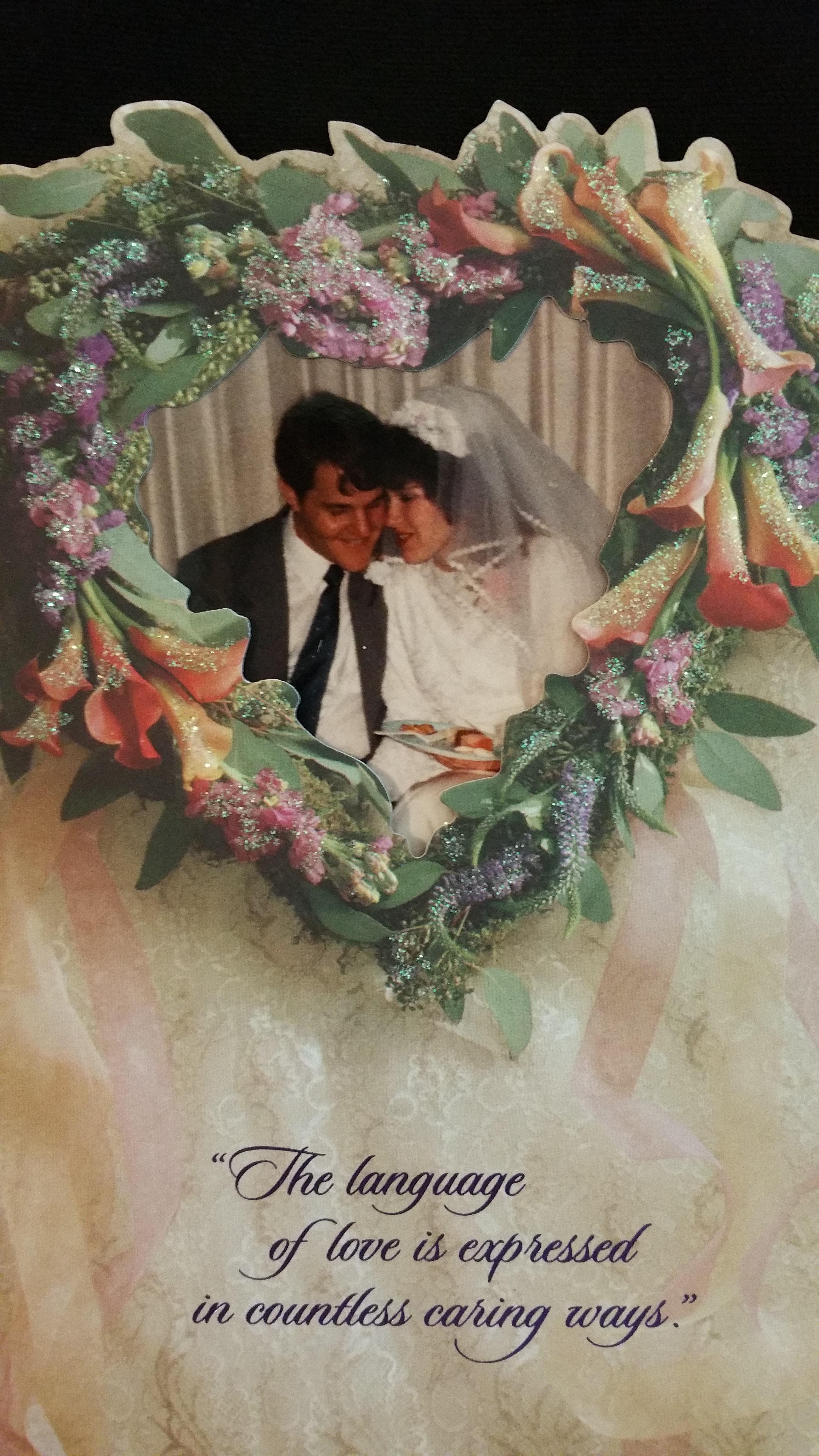
"The language of love is expressed in countless caring ways."

Snapshot taken by Mom, tucked in a Hallmark card from my late husband. Teresa TL Bruce, TealAshes.com


Speak the Names of the Dead

what to say when someone dies

Speak the Names of the Dead (word cloud created on WordItOut.com)

People often mistakenly worry they’ll “make” grieving survivors feel sad by mentioning or alluding to their friends’ deceased loved ones. They’re afraid speaking up will remind them of the loss. There are two reasons this isn’t so:

  • You can’t “remind” a person of something they cannot (and should not and don’t want to) forget. Grief is rooted in love, and that love doesn’t die with the deceased. For the one grieving, no matter the relationship — bereaved parent, sibling, child, grandparent, best friend, spouse, aunt, uncle, niece, cousin, in-law, or other loving mourner — the loss is never forgotten. With time — more time than you can possibly imagine unless you’ve mourned a similar loss — the sadness will thin from a suffocating deluge to a gentle mist that moistens but no longer threatens drowning. It may at times seem imperceptible, but it never evaporates completely.
  • Most people who mourn loved ones fear that others will forget them. They may feel they have to hold tighter to the memories of their dear dead ones — because if they don’t, who will remember? Hearing others speak their dear ones’ names acknowledges they aren’t — and won’t be — forgotten. It frees them to mourn without fear of losing their memories.

Yes, your friends’ eyes may glisten (or pour) when you speak their loved ones’ names, but that’s not a bad thing. Sometimes grief fills a mourner full to bursting — and tears act as a pressure release valve.

It’s been nearly five years since my husband’s death and nearly twenty years since my mom’s. My life is rich and full (sometimes too full) and I’ve learned to live with the grief I still — yes, still — feel for them. (Thank heaven I’m way past the awful days, er, months when I blurted out variations of “My husband died” to everyone I encountered.)

But there are days when grief gets ugly again, not just for me, but for everyone who has lost someone dear. It sneaks up behind us and whispers cruel doubts about whether anyone else still cares they’re gone, about our ability to keep on keeping on, about the disloyalty of moving forward in our lives without them.

Those are some of the days when we most need to hear others speak their names. Tell us stories of what they did — good or bad.* If you knew them, tell us you miss them, too (no matter how long it’s been). If you didn’t know them, tell us you remember (and understand) that missing them goes on . . . long after they have.

___

*I realized after writing this that part of my thinking (and post title) draws on echoes of Orson Scott Card’s Speaker for the Dead. Its title character cautions survivors that he will speak the truth — the full truth — about the dead they wish memorialized.

People Aren’t Interchangeable (and Neither Are Their Pets)

Loved ones can’t be replaced. So please don’t suggest otherwise.

Loved ones can't be replaced, so don't suggest otherwise.

An empty blanket, an empty collar, and an empty ring: Loved ones can’t be replaced, so don’t suggest otherwise.

When people (or pets) expire, mourners can’t scoop up “bargain-priced offspring” from the children’s department; they won’t rush to the store and click a collar around a “brand new best friend” package in the pet aisle; they shouldn’t be driven to the mall for sniffing and squeezing current models in order to select a “ripe new spouse” from the potential mates display window. (At least, for most people it doesn’t work that way…)

Forgive me, please, if it sounds as if I’m making light of the seriousness of death. My intent is to point out the ridiculous assumptions made by well-meaning people who treat the bereaved in this foolish way.

For example, the first variation I heard on “You’re young. You can marry again” was less than 48 hours after my husband’s death. It was an (arguably misguided) attempt to assure me I need not feel lifelong devastation and solitude. But deep as I was in that personal place of raw, recent loss,  life as I knew it had already immersed me in devastation and loneliness.

I could no more have “replaced” my late husband while thus submerged (nor contemplated the idea of it) than I could have inhaled deeply from the bottom of a full swimming pool.

For those who mourn the death of a child, there’s nothing assuring in the agony-increasing comments of those who try to “comfort” them by promises of possible future children. Doing so ignores the life-altering, soul-searing loss of THAT precious, beloved child.

Pet owners face their own grief at the passing of beloved companions. Well-meaning friends might suggest it’s “only a pet” or “you can always get another one,” but the bonds between pet owners and their furry (or feathered or scaly) friends are as unique — and can run as deep as — friendships (and deeper than some kinships) between members of the same species.

More helpful than such “reassurances” of suggested “replacements” are acknowledgements of the loss. Offer comments like:

  • He was such a ____ [kind, thoughtful, funny, interesting…] soul. I’ll miss him, too.
  • I’m so sorry about the death of your ____ [child, parent, friend, sibling…]. I know you’re hurting.
  • Fluffy was a good ____ [cat, dog, hamster, sugar glider…]. She’ll be missed.

In time, grieving parents might have another child; bereaved animal lovers might adopt other pets; mourning widows (or widowers) might date and perhaps even marry again. But they might not. There may be reasons they cannot, reasons that are no one’s business but their own.

In the distant future, even if the mourning parent welcomes another child, even if the grieving owner takes in another pet, even if the bereaved widow(er) finds a second soul mate, each newly loved one finds his or her OWN place within the healing heart once broken by the death of the deceased.

Remember: Beloved souls aren’t interchangeable — even within species. You can’t remove one from a person’s life and simply plop another into the deceased one’s place.

Super Bowl, Grief, and Offense

A few days ago I had an almost cutesy pre-Super Bowl post half-drafted. Then I learned that a friend’s mother died earlier in the week. All the reasons I’d considered writing about grief and the Super Bowl coalesced in a too immediate way: Death means loss. Loss creates grief. Grief carries sadness. And yet … everybody and their brother seem to be whooping it up in celebration … of a game.

I don’t have anything against football — my dad used to play for his college team. I mean no disparagement of anyone whose livelihoods depend upon the NFL, but I have zero interest in the outcome of this game. Patriots vs. Seahawks … Seahawks vs. Patriots …  Who cares when people are mourning? The loss (or win) of a football game means nothing next to the loss of a loved one.

Whatever your game plan is for Super Bowl XLIX, take  time out now to make sure your strategy avoids offensive moves that sideline mourners:

O — Open your home. If someone among your regular crowd recently lost a loved one, this isn’t the time to leave him or her alone on the bench. Make sure to draw once-coupled survivors near your home field where they’ve always been (or for the first time, if you’ve been more acquaintances than friends). Even a last-minute invitation is better than being ignored or overlooked during the lows and loneliness of loss.

X — X-out penalty terms. Never say “football widow,” (or “military widow,” “grad school widow,” or “hunting widow”) UNLESS you’re referring to a real widow or widower whose spouse died on the football field (or in the military, at a library kiosk, or tracking food for a family). To those whose spouses are dead, using such terms is insensitive and offensive.

O — Offer to carry the ball. Grief is heavy to bear alone. Acknowledge that you know your friend is mourning to help lighten that load. If it’s a loss you also share to a degree, so much the better, as long as you focus not on your own loss but on your friend’s. (If, for example, you also knew and were friends with the deceased, keep in mind that the surviving loved ones’ loss is deeper and more intense than your own.)

X‘ix-nay on the ‘atred-hay. (Nix on the hatred.) Especially for those whose loss is recent, the rancorous animosity of American football fans can grate on the already raw emotions of bereavement. How many times have you heard overzealous fanatics yelling “Kill ’em” or “Destroy ’em” about their opponents? Imagine hearing that shouted if your loved one has been killed or “destroyed” — regardless of whatever caused the death or however long ago it occurred.

O — Offsides is okay. Everyone reacts differently to grief. Like other annual traditions, Super Bowl celebrations can evoke as much pain as enjoyment in the bereaved. For some, attending tailgating parties may serve as a much-needed connection to a ritual enjoyed by their absent beloved ones. For others, attending the same gatherings may intensify their feelings of longing and sadness. Participating may feel great one minute and awful the next. Let your grieving friends know they are welcome — whether they decline, come, or stay — and that they can participate at whatever level is comfortable for them.

XIf your bereaved friend crosses him- or herself off the roster of participants in your game, you can still offer a halftime pep talk. Call (or text) during a commercial (or during a time out, if the commercials are more your thing than the game) to say, “Hey, I miss you, but I understand that you may need the quiet right now. Just wanted to say I’m thinking about you.” Even better, before the game, set aside a plate of whatever gourmet or out-of-the-bag snacks you’re serving. Drop it off either before or after.

Enjoy the game. And the commercials. But keep them in perspective — and don’t let your bereaved friends feel forgotten.