Trauma after Death

I’m usually calm in crises, but I couldn’t remember how to dial 9-1-1.
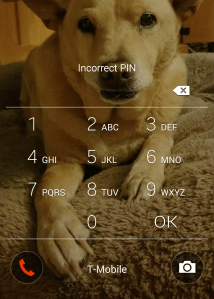
lock screen, incorrect pin, dog, emergency call

The red phone icon would have let me dial for help without keying the pin number on my locked screen … if I’d remembered. (Screenshot of photo by Teresa TL Bruce)

I’d seen items in the road and eased the car around them.

Passing the parallel-parked cars — and the things strewn on the road — I realized they weren’t things. I threw the motor into park, blocking the road. My hands shook. I jumped from the car.

On the ground, a backpack hid someone’s back; a baseball cap covered his head. His upper body jutted into the street from between two cars.

“Sir, are you okay?” He was breathing but didn’t respond. I fumbled the numbers to unlock my phone. (I forgot about the red emergency call icon.)

The man lay facedown on the road. His legs and hips hung above the ground, tangled in an upside-down bicycle between the sidewalk and the street.

Another man snaked his motorcycle around my car to see what happened. He quieted his motor and stepped close to the red pavement under the baseball cap.

I entered my unlock code, then tried keying 9-1-1. “Don’t move him!” I yelled as Mr. Motorcycle approached the unconscious man. I knew never to move anyone with possible back injuries — but this passerby didn’t.

An employee from the nearby school hurried over. Calling “9-1-1” felt more complicated than it should have been. Again I hit the wrong combination of digits.

You'd think hitting 9 once and then hitting 1 twice would be easy...

You’d think hitting 9 once and then hitting 1 twice would be easy…

Mr. Motorcycle laughed, pointing at the spilled beer can nearby. “He’s not hurt — he’s just drunk.”

I finally got through to 9-1-1.

“Sir!” I yelled again. “DON’T MOVE HIM!”

Mr. Motorcycle ignored me. He tugged and pulled the bike from between the unconscious man’s legs, lowering half his body with a thud.

The dispatcher barraged me with questions I couldn’t answer. “I don’t know. I found him like this.” How old was the person, how long had he been there, did anyone else see what happened, did the fall make him unconscious, or was it the other way around … ?

She kept asking, as if I hadn’t already answered.

Meanwhile, my car blocked the narrow street; I needed to make room for the ambulance. I told Mr. Motorcycle and the school employee to stay by the injured man (to protect him from approaching vehicles).

The dispatcher reprimanded me, telling me not to leave the scene — which I wasn’t doing! — and interrupted my disclaimers.

My hands shook as I fastened my seat belt. “I’m putting you on speaker,” I told her. She demanded I not relocate my car but rather return to make sure no one moved the man. (She’d already heard me tell Mr. Motorcycle — and that he ignored me.)

With one hand on the gearshift and one on the wheel, I jumped. Mr. Motorcycle pressed both hands against my window, talking at me through the glass.

The dispatcher fussed at me — loudly — as I lowered the window.

Mr. Motorcycle had to leave before the bank closed (it was barely three o’clock) and would be “right back.” (At least, I think that was what he said — it was hard to hear over the dispatcher’s voice.)

That was the last I saw of him.

The school employee (thank heaven for her!) “stood guard” while I drove (seven whole car-lengths away) to an empty space alongside the curb. (If you’ve never parallel parked while a 9-1-1 dispatcher berates you for making room so an emergency vehicle can reach the emergency, you can’t imagine how long that short drive was.) “I’ve parked and I’m walking back to the injured man now,” I told the dispatcher.

“Don’t give him anything to eat or drink,” she warned.

“He’s unconscious!” (I’d already told her.)

“Paramedics are on the way,” the dispatcher said, “but if he wakes before they arrive, don’t let anyone feed him or give him anything to drink.”

Between the dispatcher’s assurance of help on the way and the siren’s affirmation that it was, a gut-punching thought took my breath: These first responders were coming from that station — the station whose paramedics entered our home that night.

Please, oh, please, oh, please, oh, please, let it not be them…

I’d seen them out before — the same team — at the grocery store. I’d fallen apart, emotionally thrown back to the ground of that traumatic night.

Please oh please oh please let it not be them.

But the side of the truck bore that station number.

Please-ohplease-ohplease-not-them!

I turned and faced the prostrate man. I wouldn’t look at the paramedics’ faces.

Too many PTSD triggers of that night…

Behind me a man said, “I remember you…”

Oh, please, no!

My stomach heaved.

“Weren’t you in my radio class?”

I breathed again — How long was I holding my breath? — and turned toward the firefighter who’d taught my CERT group about the science and protocols of amateur radio back when I got my ham operator license. Way back, before the night my husband died.

It’s okay, I told myself. Not them. 

But. What if the others were on duty that night?

I blurted a summary of all I’d told the dispatcher, then asked whether I needed to stay.

“No, we’ve got him now. Thanks for helping out. Good seeing you.”

As I turned away, I heard the injured man respond to the rescue crew. I felt tremendous relief; he was conscious, but I didn’t linger. (I scurried to my car to avoid seeing other rescuers’ faces.)

Then I drove away.

Life went on, for me, anyway. I hope and assume it did for that man…

pavement, stain

“Stained pavement only seems compelling if you understand the story that soiled it. … Learning the story of another’s grief will help you understand the marks of mourning on the soul.” — Teresa TL Bruce (TealAshes.com)

It’s been a couple of weeks since that afternoon. I’ve wondered about the man whose name I don’t know. (Did he have a head injury? Did Mr. Motorcycle harm his back?) And I’ve worried. (Is that his bicycle locked against the fence near where he fell? If so, why hasn’t he come back for it?).

After two weeks in the Florida sun and rain, as of yesterday the pavement still showed stains from that day. I can’t pass the street without remembering.

It’s made me consider other marks on the roadways, discolorations I never thought twice about before. Stained pavement only seems compelling if you understand the story that soiled it.

How many of us see the behavioral or emotional “stains” in those around us and walk by — or turn our backs — without practicing emotional triage? For those who are grieving, it’s not enough (and often not a good idea) to simply ask, “Are you okay?” or “How are you?”*

Make sure your grieving friends breathe deeply. Stand guard against those who would take advantage of their vulnerability. Offer support, even if it comes in a drink of water or a bite to eat. Help them back onto their feet — physically and emotionally. Don’t ride away just because you have other things to do. Listen to their words and their tears and their assertions.

Learning the story of another’s grief will help you understand the marks of mourning on the soul.

___

*Better Questions than “How Are You?” Part 2–What to Ask When Grief Is New


Thanksgiving and Thanks-Grieving — Serving Mashed Gratitude with a Side of Grief

In previous years I wrote about grief and gratitude intermingling during Thanksgiving.* Whether someone died recently or long ago, the holiday season is forever altered for surviving family and friends.

For families who have lost loved ones within a few days, weeks, or even months, the shock of new grief might mask the sharpest pain of the first holiday season — or not.

The pain can be overwhelming. Getting through my first widowed Thanksgiving (only a couple of months after my husband’s unexpected death) was like waking up in a surgical recovery room. I was groggy with grief, unable to focus on anything but the faces of my family, too aware of the open wound where half my heart had been removed without my consent.

Our post-death holiday menu abstained from all things traditional. Instead of cooking favorite dishes, we went out to eat. Instead of verbalizing what we were grateful for as a family, I privately listed my many blessings in a notebook. Instead of putting up our Christmas tree the day after Thanksgiving for the 25th year in a row, I forgot. (I even forgot we’d bought an artificial tree two years before he died.)  I forgot Christmas was coming.

Seasoning my every acknowledgement of personal gratitude was the GAPING HOLE of his absence. My husband — my children’s father — WAS NOT THERE … and would NEVER return.

Sometimes the pain of loss can be motivating; not every loss means all tradition must be avoided. Mom died two months before Thanksgiving a decade and a half earlier. (Yes, my husband’s death was the same time of year as my mother’s.) Our family did everything we could that first Thanksgiving and Christmas to serve up “sameness” — as much as was possible without her presence. (Though we did have her presents, sort of. She left behind — or more accurately purchased ahead — ornaments for her grandchildren.) Thanksgiving and Christmas were bittersweet commemorations (not exactly celebrations) that year; her sweet reminders and attitude of gratitude surrounded us, tempered by our distress and longing for her, softened and lightened by everyone’s anticipation of her third grandchild’s birth between the two holidays.

These examples from my household illustrate one of the most important things to remember if you want to support a bereaved friend or if you are yourself grieving: There is no “right” way to grieve, and (short of recklessly dangerous behaviors) there’s no “wrong” way to grieve, either.

Every loss is unique. Everyone’s journey of adjustment after a death takes its own time. Like people attending an all-day Thanksgiving buffet, no two plates of grief will hold identical quantities, and few will eat all their items in the same order or at the same time.

Let your friends know you’re aware of their losses. If you haven’t said it lately, say it again. (Grief is ongoing; your concern should be, too.) Invite them to share your table. Reassure them they’re going about it the best they can.

___

*Here are links to my other posts on this topic:

Thanksgiving and Thanksgrieving

Happy Thanks-Grieving: Grief-Enhanced Gratitude

Speak the Names of the Dead

what to say when someone dies

Speak the Names of the Dead (word cloud created on WordItOut.com)

People often mistakenly worry they’ll “make” grieving survivors feel sad by mentioning or alluding to their friends’ deceased loved ones. They’re afraid speaking up will remind them of the loss. There are two reasons this isn’t so:

  • You can’t “remind” a person of something they cannot (and should not and don’t want to) forget. Grief is rooted in love, and that love doesn’t die with the deceased. For the one grieving, no matter the relationship — bereaved parent, sibling, child, grandparent, best friend, spouse, aunt, uncle, niece, cousin, in-law, or other loving mourner — the loss is never forgotten. With time — more time than you can possibly imagine unless you’ve mourned a similar loss — the sadness will thin from a suffocating deluge to a gentle mist that moistens but no longer threatens drowning. It may at times seem imperceptible, but it never evaporates completely.
  • Most people who mourn loved ones fear that others will forget them. They may feel they have to hold tighter to the memories of their dear dead ones — because if they don’t, who will remember? Hearing others speak their dear ones’ names acknowledges they aren’t — and won’t be — forgotten. It frees them to mourn without fear of losing their memories.

Yes, your friends’ eyes may glisten (or pour) when you speak their loved ones’ names, but that’s not a bad thing. Sometimes grief fills a mourner full to bursting — and tears act as a pressure release valve.

It’s been nearly five years since my husband’s death and nearly twenty years since my mom’s. My life is rich and full (sometimes too full) and I’ve learned to live with the grief I still — yes, still — feel for them. (Thank heaven I’m way past the awful days, er, months when I blurted out variations of “My husband died” to everyone I encountered.)

But there are days when grief gets ugly again, not just for me, but for everyone who has lost someone dear. It sneaks up behind us and whispers cruel doubts about whether anyone else still cares they’re gone, about our ability to keep on keeping on, about the disloyalty of moving forward in our lives without them.

Those are some of the days when we most need to hear others speak their names. Tell us stories of what they did — good or bad.* If you knew them, tell us you miss them, too (no matter how long it’s been). If you didn’t know them, tell us you remember (and understand) that missing them goes on . . . long after they have.

___

*I realized after writing this that part of my thinking (and post title) draws on echoes of Orson Scott Card’s Speaker for the Dead. Its title character cautions survivors that he will speak the truth — the full truth — about the dead they wish memorialized.

Lost, Found, and Lost Again–Goodbye, YWBB

Several weeks after my husband died, a friend of a friend suggested I visit a website for young widows. Like me, she’d been widowed not long before, and she’d found it a balm for her wounded, bereaved soul. When our mutual friend mentioned it to me, I balked. How could I — why would I — ever consider putting my most raw, vulnerable feelings “out there” under a made-up user name to converse with strangers in a forum that anyone in the world could read?

(Says the woman whose blog now does just that, but in her own name …)

I resisted the invitation to check out the website, but my friend persisted, insisting it had helped her friend and that it could help me, too. After fending off several promptings from her, I finally typed in the site address. (I figured I’d give it a quick glance so I could tell her I’d done it — so she’d stop asking.)

What I didn’t know then, but quickly learned upon my first look at the site, was that it was FILLED with others who’d suffered their own similar, devastating losses. I believe there were about 17,000 registered users at the time — a staggering number considering I was the only young widow I knew then.  It was one thing for friends and family to reassure me, “You’ll be okay, Teresa. You’ll get through this.” Their words were positive and encouraging and appreciated and … emotionally unbelievable.

How could any of the people in my “real life” know what it meant to suddenly, unexpectedly be “relieved” of 24/7 soul mate caretaking? How could they relate to the weight of being the sole, surviving parent of college and high school students? How could they assure me that things would “be okay” for my kids (and me) while life as we knew it tumbled apart and away in grief and loneliness and shock and a thousand other irrevocable daily changes…

Within seconds — yes, seconds — of my first glance at the Young Widows Bulletin Board (YWBB), I felt the weight of “aloneness” slip from my shoulders. These people were my people, from all walks of life, from just about every corner of the globe. All knew the self-severing pain of losing their other halves. All wore the wounds of widowhood.

They assured me it was okay to cry whenever (and wherever) I needed to. They reminded me I needed to breathe deeply and drink more water to cope with the physical stresses of bereavement. They understood why I couldn’t remember to prepare meals (or eat them), why I got lost driving within my neighborhood, and why simple errands left me sobbing. They shared the same physical cravings for their companions.

With these, my new peers, I was home.

They didn’t tell me to “be happy” for his lack of ongoing suffering or to “be glad” it was quick. They didn’t tell me when I “should” feel this way or that. They didn’t reassure me he was “in a better place,” even when they believed it as firmly as I did. They didn’t minimize his absence by “consolation” that I was “young enough” to marry again.

They acknowledged, and therefore validated, my pain.

In the years since I took that first glance, I grew to know and care about many of “the regulars” and before long I found myself in the role of nurturer for the newly widowed. I’ve met with many of my friends from the site and formed lifelong bonds. In time, I leaned on the YWBB less frequently as I grew and healed and found other sources of solace and support.

But it was always there as an emotional backup.

Until today.

The site recently announced it would forever close as of March 20, 2015. Over the last couple of weeks, I’ve frantically poured spare minutes into the painstaking, time consuming process of copying and pasting my archived posts into my personal journal. I’d made a lot of comments over the years, so the process took HOURS. I had about 60 comments to go (out of more than 1300) when at midnight this message appeared:

Young Widows Bulletin Board signs off

It is gone. I knew it was coming, and yet … I mourn anew at its passing.

Worse, far worse, early this morning — between the time I began drafting this post and the time I finished it — a friend joined the ranks of the young widowed. She’s a woman of great faith; please offer a prayer (or two or more) in behalf of my friend and her family. My heart hurts for her (and for her children) and I want to — I wish I could — walk her gently to the place of my now-missing lifeline. 

There are other sites available now, and I’m sure they will offer complete camaraderie and sustaining support, too. But they won’t be the same.

___
(By the way, Cynthia and Eileen, thanks again for your kind, well-aimed nudges toward what became a source of strength and encouragement when I so badly needed it.)

People Aren’t Interchangeable (and Neither Are Their Pets)

Loved ones can’t be replaced. So please don’t suggest otherwise.

Loved ones can't be replaced, so don't suggest otherwise.

An empty blanket, an empty collar, and an empty ring: Loved ones can’t be replaced, so don’t suggest otherwise.

When people (or pets) expire, mourners can’t scoop up “bargain-priced offspring” from the children’s department; they won’t rush to the store and click a collar around a “brand new best friend” package in the pet aisle; they shouldn’t be driven to the mall for sniffing and squeezing current models in order to select a “ripe new spouse” from the potential mates display window. (At least, for most people it doesn’t work that way…)

Forgive me, please, if it sounds as if I’m making light of the seriousness of death. My intent is to point out the ridiculous assumptions made by well-meaning people who treat the bereaved in this foolish way.

For example, the first variation I heard on “You’re young. You can marry again” was less than 48 hours after my husband’s death. It was an (arguably misguided) attempt to assure me I need not feel lifelong devastation and solitude. But deep as I was in that personal place of raw, recent loss,  life as I knew it had already immersed me in devastation and loneliness.

I could no more have “replaced” my late husband while thus submerged (nor contemplated the idea of it) than I could have inhaled deeply from the bottom of a full swimming pool.

For those who mourn the death of a child, there’s nothing assuring in the agony-increasing comments of those who try to “comfort” them by promises of possible future children. Doing so ignores the life-altering, soul-searing loss of THAT precious, beloved child.

Pet owners face their own grief at the passing of beloved companions. Well-meaning friends might suggest it’s “only a pet” or “you can always get another one,” but the bonds between pet owners and their furry (or feathered or scaly) friends are as unique — and can run as deep as — friendships (and deeper than some kinships) between members of the same species.

More helpful than such “reassurances” of suggested “replacements” are acknowledgements of the loss. Offer comments like:

  • He was such a ____ [kind, thoughtful, funny, interesting…] soul. I’ll miss him, too.
  • I’m so sorry about the death of your ____ [child, parent, friend, sibling…]. I know you’re hurting.
  • Fluffy was a good ____ [cat, dog, hamster, sugar glider…]. She’ll be missed.

In time, grieving parents might have another child; bereaved animal lovers might adopt other pets; mourning widows (or widowers) might date and perhaps even marry again. But they might not. There may be reasons they cannot, reasons that are no one’s business but their own.

In the distant future, even if the mourning parent welcomes another child, even if the grieving owner takes in another pet, even if the bereaved widow(er) finds a second soul mate, each newly loved one finds his or her OWN place within the healing heart once broken by the death of the deceased.

Remember: Beloved souls aren’t interchangeable — even within species. You can’t remove one from a person’s life and simply plop another into the deceased one’s place.