Mother’s Day Mourning

With Mother’s Day looming, my grief ratchets up several levels. It’s been over 18 years since Mom died, and I’m dreading this year’s annual event as much as I have each year since her death. It’s a selfish misery — I acknowledge that — because my mom deserved the “World’s Best” title that’s printed in flowery fonts on all kinds of merchandise this time of year.  Too many dear friends had opposite relationships with their mothers, so I truly appreciate how lucky I was.

I ought to spend Mother’s Day bathed in a warm glow of gratitude over how incredibly blessed I’ve been that my mom’s heart and hands shaped my life. But I miss her. I miss her.

She was an adoring grandmother, and I wanted my children to grow up with her creative, optimistic, spiritual, fun-loving, nurturing, curious, accepting influence and presence in their day-to-day lives. I feel cheated that they could not. I miss her for their sakes as well as my own.
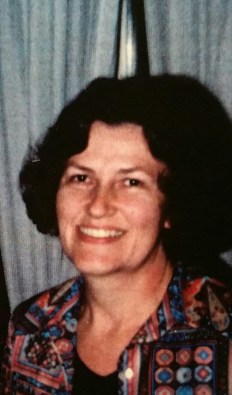
My Mom (from family photos of Teresa TL Bruce)

My Mom (from the family photos of Teresa TL Bruce, TealAshes.com) 

Mom was my best friend.  (She was everybody’s friend. When I was in high school, one boy I dated sometimes called our house to talk to her.) Typing these words about her reopens the rip that began tearing around my heart the moment I heard the word “cancer” over the phone two short years before it took her. I “still” miss her.

My deep longing for Mom’s voice and warmth, for her wisdom and presence, isn’t the only reason I dread the advent of every Mother’s Day. Years ago I attended a church council planning discussion of upcoming tributes and honors for that year’s commemoration of the day. The suggestions were thoughtful and generous, but as I listened I became more and more uncomfortable until I finally blurted, “Lots of women hate Mother’s Day.

All eyes turned toward me. Other women in the room nodded their heads, but most of the men looked as if they’d been slapped. The first to recover his speech asked what I meant, and as soon as I began explaining, my church sisters’ voices joined mine:

  • “We can’t live up to the glowing superlatives on the cards.”
  • “Do you know how many women want children but can’t have them?”
  • “Some of us had terrible mothers. We don’t get along with them at all.”
  • “Some of us have bad relationships with our kids, and Mother’s Day makes it even worse.”
  • “I’ve hated the day ever since my mom passed on. It hurts too much.”
  • “And it’s agony for the ones who’ve lost a child.”
  • “And women who’ve miscarried …”

A few mouths remained open when we’d finished. One by one, all in the room acknowledged that a special sensitivity was needed in planning that particular Sunday’s services.

Men and children also struggle with missing their deceased mothers, or they may feel conflicted about poor relationships with theirs.

In the years following Mom’s death, I dragged myself into the chapel for every Mother’s Day service (though I’d have preferred staying at home to linger over my annual child-poured breakfast in bed, a bowl of Cheerios or Lucky Charms*) because that’s what I felt I needed to do, what a “good mom” should do. All the children in the congregation — including my own — were singing to all the moms, and I did want to experience seeing and hearing my daughters beam as they sang “Mother, I Love You.” That part I didn’t mind — it was always delightful! (You never know what you’ll see and hear where kids are concerned, no matter how well they’ve practiced ahead …)

But it hurt to be there. I knew the shortfalls of how my mothering compared to my mom’s. (Did I mention how great she was?) And I missed her.

What helped make it easier? While it’s true that time eased the sharpest of my grief’s pain (though it’s not true that it “heals all wounds”), eventually, at least in part, there was one thing that comforted me immediately. Whenever someone acknowledged awareness that I mourned Mom’s absence, the weight of my grief lightened enough to keep me going. It still does.

  • It always helped to hear, “I’m sure you’re missing your Mom. I’m sorry.”
  • It never helped to hear, “Don’t be sad.”
  • It never helped to hear, “Are you still upset about your mother?”
  • It can be helpful to say, “You’re in my thoughts as Mother’s Day approaches.”
  • It’s also appropriate to say, “I’m thinking of you this Mother’s Day weekend.”

As with other aspects of mourning, the best condolence you can offer is the comfort of your presence, the reassurance of your willingness to listen, and the sensitivity of your acknowledgment of the loss.

___

(*In case you were wondering, I have no affiliation with General Mills — or any cereal-making company. Cheerios and Lucky Charms just happen to be my favorites.)

Never Tell Mourners You Know How They Feel

Yesterday I heard the umpteen-hundredth expression of “I know what you’re going through.” I felt as angry this time as I have every time well-meaning people sympathized with the same sentiment over the last three and a half years. Equally infuriating is hearing “I know exactly how you feel.”

stop telling mourners you know how they feel, grief, teal scarf, hand stop, orange tree, TealAshes.com

Stop telling mourners you know how they feel — even if you think you do. (photo of and by Teresa TL Bruce, TealAshes.com)

No, you don’t.

I’ve attempted civility by biting my tongue. (Yesterday I bit my lips together, too.) When in person, I’ve tried to neutralize my facial expression and body language, and over the phone I’ve modulated my voice with care. Grief (and repeated experience over and over and over) can inspire Academy Award-worthy performances, I’ve learned.

Inside my head, though, each time someone tells me they “know” how I feel, my honest response is more visceral than a simple “No, you don’t.” Fight-or-flight takes over. My heart hammers as claws and fangs extend, my legs tense as if readying to spring, and my mouth screams, snarls, and spits the red-inked, italicized, underlined, highlighted, bold-faced, all caps reply: NO! YOU. DON’T. KNOW!

Even at my most feral moments, I acknowledge that most of those who say such things are trying to relate their pain to mine. They want to empathize, which is a good thing. Their claims, however, do the opposite. Asserting their acquaintanceship with my deeply personal pain and my struggles through grieving minimizes the unique nature of my loss, and minimizing a mourner’s experience is never a good thing. Never. Not ever.

Every relationship is unique, so no two losses are the same. When a person loses a loved one, that loss colors every aspect of life. It creates irrevocable change. It is devastating and overwhelming and pervasive and personal. When I was newly widowed, very few widowers or widows made such a claim to me. Instead, they acknowledged aspects of my loss that they didn’t share. Rather than minimizing my experience by comparison to their own, they validated the multifaceted components of my overturned, grief-ridden world.

Need an example of what offered helpful acknowledgement rather than hurtful comparison? Here are a few:

  • “I can’t imagine what you’re going through. It must be awful that you didn’t have the chance to say goodbye.”
  • “I’m so sorry you’re going through this. I know it isn’t the same, but I know how badly I hurt over my husband’s death.”
  • “I wish I could say something to make it better, but I know my words can’t help. I’m here to listen to you.”
  • “When my husband died we’d already raised our kids and retired. I can’t imagine what this is like for you.”
  • “I lost my [loved one of whatever relationship], but I know it isn’t the same. I’m so sorry.”

As I recalled and wrote the examples above, I thought, “How bleak they sound …” The truth is that in the bleakest of life’s circumstances — the loss of a loved one — the most easily absorbed consolation comes in compassionate yet dispassionate commiseration. There will be time for cheering and lightening in the weeks and months and years to come (so stick around to help provide that in its eventual time), but in the meantime, in the immediacy of the misery of the loss, acknowledging the darkness will help your friend adjust better than stories of how you made it through your own dark times — unless your friend asks for them.

You don’t know what a mourner is going through — even if you think you do. In fact, the same should be said of other sources of trial and bereavement in life. Death isn’t the only cause of grief; a true friend will acknowledge the unique, acute, life-altering nature of the bereaved’s pain.

Michelle L. wrote You Don’t Know What You Don’t Know for the Segullah.org blog on April 17, 2014. While her writing addresses other kinds of life trials facing “broken and struggling families,” her admonitions equally apply to comforting and supporting the bereaved. With her permission to share this, I’m quoting Michelle L.’s main points below, but please visit her post (http://segullah.org/daily-special/you-dont-know-what-you-dont-know/) to see the full text.

  1. If you read nothing else, remember this: extend love; refrain from judgment.
  2. Don’t even talk about taking sides. … When a family is destroyed, there isn’t a side to take.
  3. You don’t know what you don’t know. Don’t make assumptions. 
  4. Offer kindness to those who are broken. The very best words to say: “I’m so sorry you are hurting.”
  5. Avoid trite phrases. 
  6. Your experience doesn’t translate into mine. 
  7. Don’t make assumptions about anyone’s spiritual state. 
  8. Statistics don’t matter. 
  9. Don’t offer advice or chastisement. 
  10. Talk about other subjects. Look beyond the wounds to the whole person. 

Why My Grieving Friend “Still” Cries–A Walkthrough

Do you worry that a grieving friend or loved one still cries?*

It’s true that time will help, but it takes longer than you expect. Your friend’s 2013 loss is “still” very recent. That she still cries is normal. She’s still stepping through the year of “firsts.” Every season, every holiday, every public (and private) anniversary, birthday, or commemoration has to be re-framed without her loved one’s presence. Some of it may be on a conscious level, but much of it is a visceral adjustment.

Until August I walked with a cane for 10 years after a misstep — a very costly misstep.** (Stay with me, please. You’ll see how this relates to grief by the end.) When I first injured my ankle, it hurt all the time. All. The. Time. When it didn’t keep me from sleeping, pain invaded my dreams and awoke me from them. It wrought tears I didn’t realize I was crying, and it happened as often when at rest as when I tried using it.

I did all the right things — ice (at first, then heat), anti-inflammatory medicine, elevation, and rest. When days brought no improvement, I sought professional treatment. X-rays ruled out fractures and physicians confirmed the appropriateness of what I’d already been doing. I hobbled around in a pressurized walking boot for nearly nine months, but when my ankle emerged from its plastic-and-Velcro womb, I’d delivered only atrophied muscles, tired tendons, and limp ligaments. Months of intensive physical therapies followed, and TEN spinal nerve blocks later … I still needed medication 24/7 to manage the pain.

I can’t remember how many prescriptions doctors had me try before finding one that let me go about my day-to-day mom duties. Some were ineffective or made me so loopy I could scarcely walk down the driveway, much less drive from it. One worked fairly well (for a few weeks) before painting my leg with a red, itchy please-scratch-with-sandpaper rash. Another worked perfectly — I felt almost zero pain and I could drive safely — until the day my hands began shaking and my hair abandoned scalp by every brush- and finger-stroke.

It was between the second and third years after my missed step when I found medicine that relieved enough pain for me to function without involuntary tears — as long as I walked only upon 100 percent flat surfaces and carried nothing as heavy as a full milk jug. Stepping across grass, sidewalks, parking lots, dirt and/or sand, ramps, the slope of my bathtub, and thick carpeting still overrode my damaged ankle badly enough to alter my life every hour of the day — even with the more effective medicine — and the pain still invaded my dreams by nightmares and awakenings.

In the eighth year I tried acupuncture. Friends had recommended it earlier, and I’m not sure why it took so long for me to try it considering all the other methods and approaches I’d embraced. I wasn’t ready until I was ready. After the first treatment I cut the dosage of pain medicine in half. After the third treatment I stopped using it altogether.

That doesn’t mean I no longer felt pain in my ankle — far from it — but I became better able to handle it. Even so, I still had to tread lightly and carefully using my cane over all but the smoothest indoor surfaces — until this 10th year’s miracle allowed me to step freely again.

My grief as a widow has been similar, though the emotional pain was/is/was far worse than the physical. I consulted with experts (other mourners) and sought treatment (with a grief counselor) and I still face many sleep-interrupted nights due to grief. At three and a half years into my healing, I’m still figuring out how to balance my “dosage” of day-to-day living with my adapted way of walking on the uneven surfaces of widowhood.

At less than (or more than) a year since your friend’s loss, she is still adjusting the Velcro straps on her walking boot with every hobbled step she takes. Time will help her toward healing, but she must also maneuver through the emotions and realities along her altered footpath. She’s got a long road ahead as she learns to walk with a new gait. Offer her your arm — and your ear — in patient support, but “still” your tongue about how long it’s taking her.

___

A couple of important notes on this post:

*I adapted this post from my answer to a friend’s query on behalf of a loved one.

**The miracle of how I got rid of my cane is a separate story, one for which I am truly grateful!

How to Filter What You Say for Others’ Comfort

The ones at the center of the ring of loss/grief/suffering can dump whatever they want into outer rings. Those outside the core may dump into larger rings, but ONLY COMFORT goes from an outer to an inner ring.

Ring Theory of Kvetching, Illustration by Wes Bausmith

When you’re upset over the death of someone dear to you and dear to others around you, it can be difficult to filter what you say to whom. A little over a week ago, a reader on another blog* shared this illustration of “Comfort IN, Dump OUT” as expressed by Susan Silk and Barry Goldman in the Los Angeles Times post “How not to say the wrong thing.”  (Please read the full article at http://articles.latimes.com/2013/apr/07/opinion/la-oe-0407-silk-ring-theory-20130407)

The concept is simple. The center of the “Ring of Kvetching” is the person to whom the bereavement, illness, crisis, or other distress belongs — the patient, the dying, the widow(er), the orphaned, the laid-off, the divorced, the ripped-off, etc. People affected in peripheral ways — immediate family, extended family, closest friends, other friends, neighbors, coworkers, etc.–are in the outer rings.

Quoting the post by Silk and Goldman:

“When you are talking to a person in a ring smaller than yours, someone closer to the center of the crisis, the goal is to help. Listening is often more helpful than talking. But if you’re going to open your mouth, ask yourself if what you are about to say is likely to provide comfort and support. If it isn’t, don’t say it. Don’t, for example, give advice. People who are suffering from trauma don’t need advice. They need comfort and support. So say, ‘I’m sorry’ or ‘This must really be hard for you’ or ‘Can I bring you a pot roast?’ Don’t say, ‘You should hear what happened to me’ or ‘Here’s what I would do if I were you.’ And don’t say, ‘This is really bringing me down.'”

If everyone applied such a “comfort IN, dump OUT” filter, it would be much easier to support one another through all kinds of grief, not just due to the death of a loved one but to other losses as well.

It can be tough to see which ring is closer to the center than your own.

It can be tough to see which ring is closer to the center than your own.

Within grieving families, though, it isn’t always easy to figure out — or remember — whose pain is at the center of the rings. Families are filled with primary relationships that could all be seen as the innermost rings:

  • spouse — spouse
  • parent — child
  • sibling — sibling

Also important are these other familial relationships:

  • grandparents — grandchildren
  • aunts/uncles — nieces/nephews
  • cousins
  • godparents
  • “like family” or “family by choice” friends

Loss is loss. If you’re in the inner rings, try to remember that those closest to you and your departed loved one are also hurting. Be gentle with each other’s feelings. Try to think before you speak, especially in response to comments that seem hurtful or insensitive to your own loss. If you’re not sure whether the person you’re about to unload on is in a broader, more “distant” ring than you, err on the side of caution, offering only your condolences and willingness to listen.

___

*Many thanks to Ana of the Nine+Kids for sharing the Los Angeles Times story and graphic in her comment on my guest blog post at The Sister, the Beast, and the Invitation to Love

Supporting Those Who Are Grieving–Video Clip

Julianna Sellers, a friend from one of my widow and widower support groups, created this five-minute video called “Supporting Those Who Are Grieving.” She answers the questions of what to say when you go to a funeral and what to say and do when you know someone who has lost a loved one. She also provides examples of what the grieving process is like. If you haven’t been through such a loss yourself, you’ll be especially surprised about what happens “after the one-year mark.”

In preparing this project, she researched many sites with similar themes, including this one (Thanks for the TealAshes.com mention, Julianna!) and Megan Devine’s refugeingrief.com (also referenced in the clip). Additionally, Julianna compiled the responses from an informal poll of the 1300+ members of our “W/W” group of all ages from around the world.

There are brief religious references in the clip, but all the suggestions she offers apply universally to the bereaved (and to those of you wishing to help grieving friends) regardless of religious affiliation or outlook.

If you know someone who has lost a loved one, please listen to what Julianna has to say.

___

To learn more about Julianna, visit her blog at http://chaostamingmomma.com/.