A Widow’s Thoughts about Mother’s Day

What should you say to a widow or widower on Mother’s Day? In my last post*, I shared reasons the day can be difficult for many people. I told how my Mom’s death “still” impacts the way I feel about Mother’s Day, but I avoided expressing how I feel about it as a widow.

To be blunt, most widows and widowers don’t look forward to Mother’s Day — we dread it.** And yet, we still want it acknowledged.

I became a wife before I became a mother, so Mother’s Day was — for me — as much about being my husband’s wife as it was about being my children’s mother. My no-longer-little girls were in their teens and twenties when their dad died. For 24 years he’d honored me as his wife every Mother’s Day, over and above the way he honored me as the mother of his children. Suddenly, half the “wife and mother” adulation was wrenched from that day’s annual pampering.

Mother’s Day is confusing now — and painful. I’m still my husband’s wife, but as a widow — his widow — I have no husband. I’m still our children’s mother, but with their father deceased I’m no longer the “wife and mother” I was for more than half my life. Honoring my motherhood is interwoven with recognizing my severed wife-hood. Mother’s Day reminds me of what I had … and of what I’ve lost … and of what I still have. As I said, it’s confusing.

Handmade Mother's Day Card

My husband made this Mother’s Day card for me just a few months before his unexpected death.

How can you help a widow or widower through Mother’s Day? Here are a few practical tips:

  • If the loss is recent, saying “I’m thinking of you this Mother’s Day” shows more sensitivity than saying “Happy Mother’s Day.”
  • For a widow with children: Let her know you realize that Mother’s Day will be difficult without her spouse. Ask her if you can take the kids shopping or create an art project or craft or make a card with them. It’s not about the gift. It’s about having someone show her children that she’s appreciated — and that her kids should also express appreciation for her — without her having to prompt it. She’s no longer “just” their mother; she’s got to handle all the responsibilities that were once shouldered by both parents.
  • For a widower with children: Let him know you realize that Mother’s Day will be difficult without his spouse. Offer to help him in the same way you might help a widow with kids. He’s now handling all the responsibilities of both father and mother. Remember: He’s still grieving the loss of the mother of his children and he’s facing the lifelong pain of helping his children (no matter their ages) as they grieve their mom’s absence.
  • For widows and widowers without children: Let them know you’re aware of them, and, if it’s appropriate, let them know you realize that Mother’s Day may be more difficult without their spouses. Exercise discretion. Some may have wanted children but been unable to have them. Others may have chosen to remain childless. Don’t base your interaction on assumptions.
  • It’s better to say something than to say nothing. You won’t “make” your friends feel sadder by speaking of their lost loved ones or “remind” them of their pain. (The sadness always exists, simmering below calm exteriors even when time and “healing” have taken place.) Even hearing “I don’t know what to say” can comfort and uplift a mourning heart.

___

*Mother’s Day Mourning

**I recognize that everyone reacts differently. Some widows and widowers may still look forward to the day. More of the ones I’ve spoken with, though,  view days like this the way I do.

Here’s one fantastic alternate (but overlapping) view by my widowed friend Julie Toone: Appreciation for Mother’s Day…

If you have other suggestions that might be helpful, please share them in the comments below.

Mother’s Day Mourning

With Mother’s Day looming, my grief ratchets up several levels. It’s been over 18 years since Mom died, and I’m dreading this year’s annual event as much as I have each year since her death. It’s a selfish misery — I acknowledge that — because my mom deserved the “World’s Best” title that’s printed in flowery fonts on all kinds of merchandise this time of year.  Too many dear friends had opposite relationships with their mothers, so I truly appreciate how lucky I was.

I ought to spend Mother’s Day bathed in a warm glow of gratitude over how incredibly blessed I’ve been that my mom’s heart and hands shaped my life. But I miss her. I miss her.

She was an adoring grandmother, and I wanted my children to grow up with her creative, optimistic, spiritual, fun-loving, nurturing, curious, accepting influence and presence in their day-to-day lives. I feel cheated that they could not. I miss her for their sakes as well as my own.

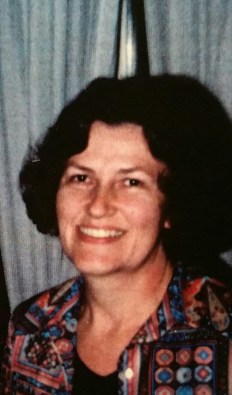
My Mom (from family photos of Teresa TL Bruce)

My Mom (from the family photos of Teresa TL Bruce, TealAshes.com) 

Mom was my best friend.  (She was everybody’s friend. When I was in high school, one boy I dated sometimes called our house to talk to her.) Typing these words about her reopens the rip that began tearing around my heart the moment I heard the word “cancer” over the phone two short years before it took her. I “still” miss her.

My deep longing for Mom’s voice and warmth, for her wisdom and presence, isn’t the only reason I dread the advent of every Mother’s Day. Years ago I attended a church council planning discussion of upcoming tributes and honors for that year’s commemoration of the day. The suggestions were thoughtful and generous, but as I listened I became more and more uncomfortable until I finally blurted, “Lots of women hate Mother’s Day.

All eyes turned toward me. Other women in the room nodded their heads, but most of the men looked as if they’d been slapped. The first to recover his speech asked what I meant, and as soon as I began explaining, my church sisters’ voices joined mine:

  • “We can’t live up to the glowing superlatives on the cards.”
  • “Do you know how many women want children but can’t have them?”
  • “Some of us had terrible mothers. We don’t get along with them at all.”
  • “Some of us have bad relationships with our kids, and Mother’s Day makes it even worse.”
  • “I’ve hated the day ever since my mom passed on. It hurts too much.”
  • “And it’s agony for the ones who’ve lost a child.”
  • “And women who’ve miscarried …”

A few mouths remained open when we’d finished. One by one, all in the room acknowledged that a special sensitivity was needed in planning that particular Sunday’s services.

Men and children also struggle with missing their deceased mothers, or they may feel conflicted about poor relationships with theirs.

In the years following Mom’s death, I dragged myself into the chapel for every Mother’s Day service (though I’d have preferred staying at home to linger over my annual child-poured breakfast in bed, a bowl of Cheerios or Lucky Charms*) because that’s what I felt I needed to do, what a “good mom” should do. All the children in the congregation — including my own — were singing to all the moms, and I did want to experience seeing and hearing my daughters beam as they sang “Mother, I Love You.” That part I didn’t mind — it was always delightful! (You never know what you’ll see and hear where kids are concerned, no matter how well they’ve practiced ahead …)

But it hurt to be there. I knew the shortfalls of how my mothering compared to my mom’s. (Did I mention how great she was?) And I missed her.

What helped make it easier? While it’s true that time eased the sharpest of my grief’s pain (though it’s not true that it “heals all wounds”), eventually, at least in part, there was one thing that comforted me immediately. Whenever someone acknowledged awareness that I mourned Mom’s absence, the weight of my grief lightened enough to keep me going. It still does.

  • It always helped to hear, “I’m sure you’re missing your Mom. I’m sorry.”
  • It never helped to hear, “Don’t be sad.”
  • It never helped to hear, “Are you still upset about your mother?”
  • It can be helpful to say, “You’re in my thoughts as Mother’s Day approaches.”
  • It’s also appropriate to say, “I’m thinking of you this Mother’s Day weekend.”

As with other aspects of mourning, the best condolence you can offer is the comfort of your presence, the reassurance of your willingness to listen, and the sensitivity of your acknowledgment of the loss.

___

(*In case you were wondering, I have no affiliation with General Mills — or any cereal-making company. Cheerios and Lucky Charms just happen to be my favorites.)

Why My Grieving Friend “Still” Cries–A Walkthrough

Do you worry that a grieving friend or loved one still cries?*

It’s true that time will help, but it takes longer than you expect. Your friend’s 2013 loss is “still” very recent. That she still cries is normal. She’s still stepping through the year of “firsts.” Every season, every holiday, every public (and private) anniversary, birthday, or commemoration has to be re-framed without her loved one’s presence. Some of it may be on a conscious level, but much of it is a visceral adjustment.

Until August I walked with a cane for 10 years after a misstep — a very costly misstep.** (Stay with me, please. You’ll see how this relates to grief by the end.) When I first injured my ankle, it hurt all the time. All. The. Time. When it didn’t keep me from sleeping, pain invaded my dreams and awoke me from them. It wrought tears I didn’t realize I was crying, and it happened as often when at rest as when I tried using it.

I did all the right things — ice (at first, then heat), anti-inflammatory medicine, elevation, and rest. When days brought no improvement, I sought professional treatment. X-rays ruled out fractures and physicians confirmed the appropriateness of what I’d already been doing. I hobbled around in a pressurized walking boot for nearly nine months, but when my ankle emerged from its plastic-and-Velcro womb, I’d delivered only atrophied muscles, tired tendons, and limp ligaments. Months of intensive physical therapies followed, and TEN spinal nerve blocks later … I still needed medication 24/7 to manage the pain.

I can’t remember how many prescriptions doctors had me try before finding one that let me go about my day-to-day mom duties. Some were ineffective or made me so loopy I could scarcely walk down the driveway, much less drive from it. One worked fairly well (for a few weeks) before painting my leg with a red, itchy please-scratch-with-sandpaper rash. Another worked perfectly — I felt almost zero pain and I could drive safely — until the day my hands began shaking and my hair abandoned scalp by every brush- and finger-stroke.

It was between the second and third years after my missed step when I found medicine that relieved enough pain for me to function without involuntary tears — as long as I walked only upon 100 percent flat surfaces and carried nothing as heavy as a full milk jug. Stepping across grass, sidewalks, parking lots, dirt and/or sand, ramps, the slope of my bathtub, and thick carpeting still overrode my damaged ankle badly enough to alter my life every hour of the day — even with the more effective medicine — and the pain still invaded my dreams by nightmares and awakenings.

In the eighth year I tried acupuncture. Friends had recommended it earlier, and I’m not sure why it took so long for me to try it considering all the other methods and approaches I’d embraced. I wasn’t ready until I was ready. After the first treatment I cut the dosage of pain medicine in half. After the third treatment I stopped using it altogether.

That doesn’t mean I no longer felt pain in my ankle — far from it — but I became better able to handle it. Even so, I still had to tread lightly and carefully using my cane over all but the smoothest indoor surfaces — until this 10th year’s miracle allowed me to step freely again.

My grief as a widow has been similar, though the emotional pain was/is/was far worse than the physical. I consulted with experts (other mourners) and sought treatment (with a grief counselor) and I still face many sleep-interrupted nights due to grief. At three and a half years into my healing, I’m still figuring out how to balance my “dosage” of day-to-day living with my adapted way of walking on the uneven surfaces of widowhood.

At less than (or more than) a year since your friend’s loss, she is still adjusting the Velcro straps on her walking boot with every hobbled step she takes. Time will help her toward healing, but she must also maneuver through the emotions and realities along her altered footpath. She’s got a long road ahead as she learns to walk with a new gait. Offer her your arm — and your ear — in patient support, but “still” your tongue about how long it’s taking her.

___

A couple of important notes on this post:

*I adapted this post from my answer to a friend’s query on behalf of a loved one.

**The miracle of how I got rid of my cane is a separate story, one for which I am truly grateful!

Why Daylight Savings Time (Still) Gives Me (More) Grief

I don’t know anyone who likes the twice a year body-clock havoc wrought by Daylight Savings Time. I never did — even before my husband’s death.

I thought it would get easier with time, but here I am, not long before the “official” hour to reset my clocks, writing about how much this spring’s time change “still” hurts. This will be my eighth widowed shifting of the digits. I thought I’d be used to it “by now.”

Changing my clocks hurts for two main reasons. The first is as personal to me as my grief is (and let me be clear — all grief is personal). The second applies to bereavement in general.

My husband was a stickler for timepiece accuracy. I am not. He liked having the seconds on the clock line up with “official” time. I prefer clocks set at least three minutes early to nudge myself toward being on time. Our first Daylight Savings Time weekend as newlyweds brought confusion — and comedy — as we both set and reset our few shared timepieces. As the number of clocks in our household grew over the next 24 years, so did our semi-annual scramble to set them according to his time or mine. It became a twice-yearly game (except when we lived in sensible, non-DST Arizona), and it was a fun prelude to the discomfort of adjusting our sleep-wake cycles.

The first time I changed our clocks by myself after he died felt wrong. It felt like cheating on our game. I couldn’t bring myself to change them all. How I wanted to walk into each room and find that room’s clock set to exactly the right time!

It felt just as improper the following spring — and the fall after, and the spring and fall after that. It felt equally wrong last spring and fall. It still feels awful.

Tonight’s anticipation of Daylight Savings Time brings me to the second, more general reason why DST and Standard Time changes make “the grief monster” more fierce.

When grief is new, every event that marks the passage of time — including the semi-annual time change — lands like a portcullis between life Before and life After the loved one’s death. Each event is a mile marker documenting the ever-increasing distance separating one soul from another.

With time markers such as holidays, birthdays, and anniversaries of all sorts, there are usually emotional histories and future plans connecting them. They each carry a particular pain of their own. But the regular shift from Standard to Daylight Savings Time happens year after year after year … just because legislators decided it should.

For those less new to their grief, it’s true that time will help it become less raw, but don’t try to tell them that unless they ask. Instead, listen to them. “In time” their grief will become seasoned. “With time” their grief will soften. “Over time” their grief can heal–but only in the way a deep, lacerating cut can heal — with a big, permanent scar. “Recovering” from bereavement doesn’t mean the bereaved will ever be able to turn back time to life Before, but it does mean they’ll someday be able to “spring forward.”

“Springing” may be a bit much. Reassure your mourning friends they’ll eventually move forward when they’re ready. Meanwhile, even “inching forward” shows progress.

How to Filter What You Say for Others’ Comfort

The ones at the center of the ring of loss/grief/suffering can dump whatever they want into outer rings. Those outside the core may dump into larger rings, but ONLY COMFORT goes from an outer to an inner ring.

Ring Theory of Kvetching, Illustration by Wes Bausmith

When you’re upset over the death of someone dear to you and dear to others around you, it can be difficult to filter what you say to whom. A little over a week ago, a reader on another blog* shared this illustration of “Comfort IN, Dump OUT” as expressed by Susan Silk and Barry Goldman in the Los Angeles Times post “How not to say the wrong thing.”  (Please read the full article at http://articles.latimes.com/2013/apr/07/opinion/la-oe-0407-silk-ring-theory-20130407)

The concept is simple. The center of the “Ring of Kvetching” is the person to whom the bereavement, illness, crisis, or other distress belongs — the patient, the dying, the widow(er), the orphaned, the laid-off, the divorced, the ripped-off, etc. People affected in peripheral ways — immediate family, extended family, closest friends, other friends, neighbors, coworkers, etc.–are in the outer rings.

Quoting the post by Silk and Goldman:

“When you are talking to a person in a ring smaller than yours, someone closer to the center of the crisis, the goal is to help. Listening is often more helpful than talking. But if you’re going to open your mouth, ask yourself if what you are about to say is likely to provide comfort and support. If it isn’t, don’t say it. Don’t, for example, give advice. People who are suffering from trauma don’t need advice. They need comfort and support. So say, ‘I’m sorry’ or ‘This must really be hard for you’ or ‘Can I bring you a pot roast?’ Don’t say, ‘You should hear what happened to me’ or ‘Here’s what I would do if I were you.’ And don’t say, ‘This is really bringing me down.'”

If everyone applied such a “comfort IN, dump OUT” filter, it would be much easier to support one another through all kinds of grief, not just due to the death of a loved one but to other losses as well.

It can be tough to see which ring is closer to the center than your own.

It can be tough to see which ring is closer to the center than your own.

Within grieving families, though, it isn’t always easy to figure out — or remember — whose pain is at the center of the rings. Families are filled with primary relationships that could all be seen as the innermost rings:

  • spouse — spouse
  • parent — child
  • sibling — sibling

Also important are these other familial relationships:

  • grandparents — grandchildren
  • aunts/uncles — nieces/nephews
  • cousins
  • godparents
  • “like family” or “family by choice” friends

Loss is loss. If you’re in the inner rings, try to remember that those closest to you and your departed loved one are also hurting. Be gentle with each other’s feelings. Try to think before you speak, especially in response to comments that seem hurtful or insensitive to your own loss. If you’re not sure whether the person you’re about to unload on is in a broader, more “distant” ring than you, err on the side of caution, offering only your condolences and willingness to listen.

___

*Many thanks to Ana of the Nine+Kids for sharing the Los Angeles Times story and graphic in her comment on my guest blog post at The Sister, the Beast, and the Invitation to Love