For Grieving Children, Wear BLUE on Children’s Grief Awareness Day

Image from the Children's Grief Awareness Day Facebook page (https://www.facebook.com/photo.php?fbid=346620602055569&set=a.121173784600253.18290.121173094600322&type=1&theater)

This HOPE Butterfly image is from the Children’s Grief Awareness Day Facebook page: https://www.facebook.com/ChildrensGriefAwarenessDay

Children’s Grief Awareness Day is November 21 this year.* Please wear blue to show your support for grieving children!

Children grieve as deeply as adults, but they lack the maturity and experience to identify and put words to their feelings. Their needs and attention-demanding behaviors may be overlooked or misunderstood by their own surviving family members, friends, teachers or other school officials.

Here are some things NOT to say to a grieving child (of any age):

  • “You’re the man [or lady] of the house now.” This is a cruel burden to place on a child, especially one who is grieving!
  • “You need to take care of your [surviving parent or siblings] now.” While compassion for one’s family is worthwhile, the job of a child is to be a child, not a head of household. Children (especially older teens) will resent being told what they should do, especially if it is an area they are already considering on their own.
  • “God needed him/her more than you did.” Really?! To grieving children, no one (especially not an all-powerful God) could “need” their loved ones more than they do!
  • “God took him/her to heaven.” To very young children already facing traumatic upheaval, the notion of God (whom they cannot see) randomly “taking” people can be frightening rather than comforting. To older children, whose fledgling faith may be quavering in their bereavement, such statements can prick rebellion rather than consolation. Allow children’s immediate caretakers to address all faith-related aspects of grieving unless they specifically ask for your input.
  • “At least you had your [parent, sibling, relative, friend] for X [years, months, days]. That’s longer than some …” Instead of acknowledging the significance of a child’s loss, this (and every other “at least” statement) demeans the reason the child is mourning.
  • “Don’t cry” or “He/she wouldn’t want you to be sad.” Crying is an essential part of grieving, and sadness is a natural response to separation from loved ones. Suppressing such emotional expression can be harmful.

Here are  HELPFUL things to say to a bereaved child (of any age):

  • “It’s okay to feel ____.” Fill in the blank with whatever emotions you see the child displaying. Naming the emotions will help the child identify and label otherwise overwhelming feelings. Being angry, sad, confused, frustrated, afraid, and resentful are all normal responses to grief. A child also needs “permission” to feel happy and optimistic about things, even while grieving. Experiencing and enjoying moments of play are an important part of processing difficult feelings!
  • “Would you like to talk about your [friend, sibling, parent, grandparent, etc.]?” Children take their behavioral cues from the adults around them. However, family members are likely to handle their collective grief in individual ways. The bereaved–including children–should never be forced to discuss their absent loved ones, but they should be offered opportunities to do so.

For more on how you can support Children’s Grief Awareness Day, visit the website: http://www.childrensgriefawarenessday.org/cgad/index.shtml

You can also show your support by visiting and clicking “Like” on the Facebook page: https://www.facebook.com/ChildrensGriefAwarenessDay?fref=ts

Tweet awareness: #CGADHOPE

*Children’s Grief Awareness Day is held the third Thursday each November (one week before Thanksgiving) as a way to build awareness for the special needs of grieving children, particularly during the holiday season.

Typhoons, Tornadoes, and Other Disasters Wreak Havoc on Individuals

Typhoons. Tornadoes. Terrorism. Turmoil. Large-scale disasters all, impacting dozens, hundreds, thousands of souls.

Life-shattering, publicly viewed, world-watched tragedies, displaying agonies of individuals: children, wives, husbands, parents, siblings, relatives, friends.

Fragmented sentences, fragmented lives.

I admit, I seldom watch the news. Not anymore. Not since my husband’s death.

It’s not that I don’t want to be informed. I do. But I’m now expertly informed in the one area the glowing rectangle cannot convey, no matter how eloquent its writers, nor inspired its photographers, nor supernal its composers, nor gifted its news gatherers and broadcasters may be:

I know how grief feels.

And when I see the shocked, huddled faces of survivors’ physical pain and discomfort …

And when I see the decimated rubble  of one-time homes, hospitals, and houses of worship…

And when I see the eyes of those whose loved ones are no more…

…I see their grief, their public grief,
and I feel a degree of it.
I remember the excruciating feel of
my own, private anguish.

Large-scale grief-events require large-scale generosity and cooperation (to rebuild community infrastructure and provide day-to-day resources for residents to live on). They also require one-on-one generosity and compassion (to refashion–not rebuild–individual survivors’ lives).

Please, as much as you are able, help.

Image from the Children's Grief Awareness Day Facebook page (https://www.facebook.com/photo.php?fbid=346620602055569&set=a.121173784600253.18290.121173094600322&type=1&theater)

Blue butterfly image from the Children’s Grief Awareness Day Facebook page

Donate time, money, or expertise. Give a little or give a lot, but please also give from your heart. Though emergencies have an impact on everyone, with Children’s Grief Awareness Day coming this week, please consider the affected children’s needs, too. Already grieving children (and parents) not directly touched by today’s tragedies will nevertheless feel for–and with–those who are.

You Shouldn’t Say “You Should”

When you want to  help someone whose friend, relative, or coworker has died, avoid saying “you should” or “you shouldn’t.”

Grieving is some of the hardest work people ever undertake — perhaps the hardest. When the loss is new and raw, when bereaved parents  or widowed spouses or parentless children face the realities of never seeing loved ones again, the pain is beyond description. In the grief-laden, foggy-minded months after my husband’s death, someone told me the human brain doesn’t have the capacity to imagine that kind of pain. Though I still can’t remember the context (whether written or spoken) nor who said it, the accuracy of the assertion burned itself into my core.

Grief doesn’t affect mourners 24/7; it lurks 48 hours a day, 14 days per week. (Whether “the math” agrees or not, that is how it feels.) Grief doesn’t visit the homes or workplaces of those who have lost; without permission it becomes an unwelcome squatter inside the cells and hearts of the bereaved. It tosses beloved furnishings out onto rainy streets while arranging its own dark goods in every corner of memory and thought.

Already facing such life-altering changes, the bereaved don’t deserve to be told they “should” or “shouldn’t” … anything.

Don’t say, “You should be…” or “You shouldn’t be…”
Don’t say, “You should feel” or “You shouldn’t feel…”
Don’t say, “You should already…” or “You shouldn’t yet…”
Don’t say, “You should have…” or “You shouldn’t have…”

Instead of helping, these and other shoulds and shouldn’ts send the bereaved the message they are not grieving the “right” way, that their best efforts are inadequate, that those best efforts fall short.

Telling the bereaved what they should or shouldn’t do (unless you’re a professional whose advice they are seeking) is like whipping a horse with a broken leg because it refuses to run — pointless and cruel.

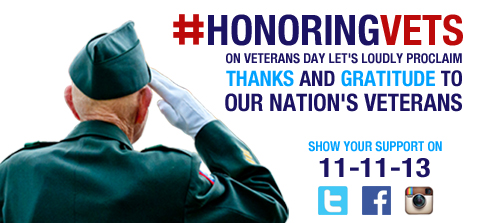
Veterans Day Thanks

Say THANK YOU to veterans--and their families.

Say THANK YOU to veterans–and their families.

What is the purpose of Veterans Day? “A celebration to honor America’s veterans for their patriotism, love of country, and willingness to serve and sacrifice for the common good.” *

One of the best ways to honor those who have served is to say “thank you” to them — and to their families — acknowledging awareness of their service and sacrifice on behalf of their nation.

I was raised in a patriotic home by parents whose reverence for and “allegiance to the flag of the United States” was founded in acknowledgement of all the souls who perished — from the Revolutionary War to the present — in paying the price for the freedoms that bless my life. (Most patriotic songs have brought tears to my eyes since I was old enough to understand their lyrics.)

As a widow, however, my appreciation for veterans has multiplied a hundred-fold. I have a better grasp of the fragility of the time we spend with (and away from) our loved ones. I’m grateful to those whose service cost them precious days away from home and whose service-related health issues continue exacting a price.

And now, because I know the pain of losing a spouse and have met many military widows (and a few military widowers), I view the sacrifices of the fallen in a more personal way than I did before.

THANK YOU, Veterans, for leaving home and hearth to serve your country. And thank you to the loved ones who wished you well as you did so.

*quoted from “History of Veterans Day,” U.S. Department of Veterans Affairs (http://www.va.gov/opa/vetsday/vetdayhistory.asp)

I’ve Added a Resource Page

I’ve created a page of “Helpful Grief Resources” with examples of what to say when someone dies (and what not to say).  I’ll add new sources as I encounter them, so check back from time to time.

  • Have you found useful sites, books, articles–even songs–that helped you interact with the bereaved?
  • If you’ve suffered a significant loss in your life, what comments or gestures from friends were most (or least) helpful to you?

Please share your experiences in the comments below or you can contact me via

email: writeTealAshes@gmail.com

Twitter: @TealAshesTBruce

Facebook: https://www.facebook.com/TealAshesbyTeresaBruce/

Together we can ease the anxieties of those who wish to help their grieving friends — and thereby help the mourners, too.

To reach (or share) the “Helpful Grief Resources” page, click on the menu above or go directly to:

Helpful Grief Resources