You Can’t Put a Bandage on Grief

When my daughters were little, they often bruised or scraped themselves in the course of everyday play. A kiss from Mommy or Daddy (and perhaps a Sharpie-drawn smiley face on a Band-Aid — whether necessary or not) was all it took to make things okay again.

Sometimes other tots grabbed toys, knocked over blocks, or cut their Barbies’ hair — oh, wait … it was my child who did that (as practice before “trimming” her friend’s bangs). All it took to reset their emotional footing was distraction — manufactured by word or sleight-of-hand. Almost at once, they got back to the business of learning by play.

As they grew older their minds and hearts grew into increasingly complex, interdependent organs. It became harder to “fix” what upset them. The inevitable day came. A daughter spurned my offer to “kiss it better” as she clutched at the reddened skin on her forearm. “That won’t help,” she pouted, her eyes daring me to contradict her. My offer to read her a story elicited the same response.

She was right, of course. A hug or kiss didn’t take away the sting of the injury. A bandage could cover the wound (at least temporarily) and hopefully keep out germs that would otherwise impede healing, but beneath its plain (or decorated) facade, remained a wound that required time — and the right circumstances — to mend. A kiss of affection, a favorite toy to hold, or a new story to distract might momentarily provide another focal point, but every heartbeat fueled throbbing reminders that all was not well.

It’s the same for grief. Bandages don’t work.
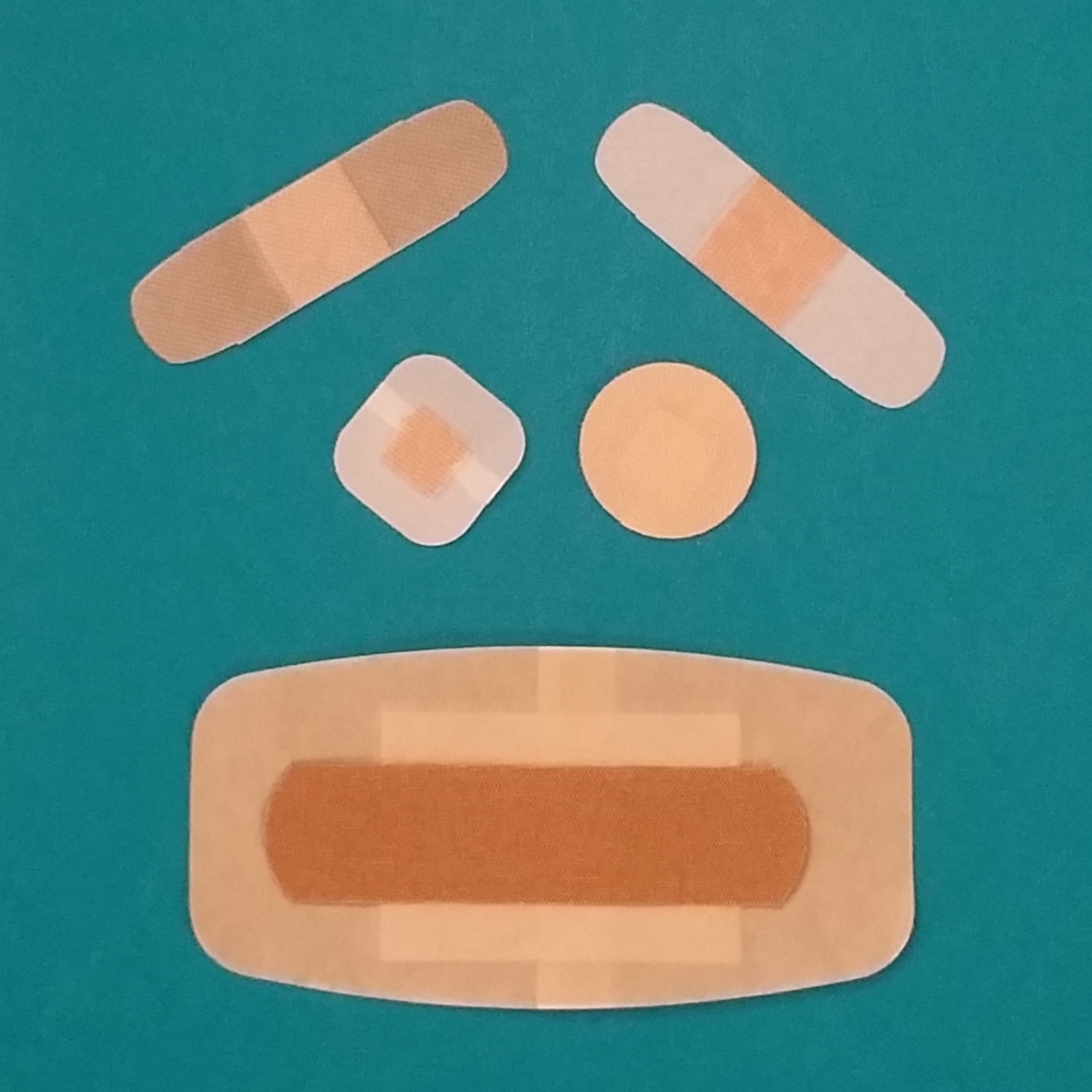
You can't put a bandage on grief to "fix it" or "make it better." Like any wound, it takes time.

You can’t put a bandage on grief to “fix it” or “make it better.” Like any wound, it takes time.

When grief is new (and by “new” I mean the loss occurred within two years — yes, I said years), the bereaved often bruise and scrape their psyches against circumstances of living in the course of everyday survival. Such emotional abrasions include (but aren’t limited to):

  • Significant dates — birthdays, holidays, anniversaries (of both positive and negative events). For many within the first 18 months after a loved one’s death, that day of the week (every week) and that date of the month (every month) feels like ripping off a fresh scab, re-traumatizing survivors.
  • The “business” of death — deeds, accounts, titles, plots, medical bills, insurance … The list of accounts can seem endless for an adult or unfairly incomplete for a child. Making each phone call or office visit is excruciating. Every time I called another provider, I sobbed. Removing my husband’s name from each document felt like erasing him. It felt disloyal. It felt violent. Horrible.
  • Routine “first since” appointments — the dentist, the doctor, the pharmacist, the mechanic, the accountant … Anywhere a person has done business in an ongoing manner, that first visit since the death occurred forces yet another face-to-face bout of admitting a loved one is no longer living. As a new widow, I cried every time. Many forms had boxes to check that offered only the options of single, married, or divorced. I wrote in “widowed” on paper forms. Online forms frustrated me so badly I shrieked at the computer (and I’ve never been a “yeller”). If I checked “married,” they required ongoing contact information no longer applicable, but for a long, long time I refused to consider myself “single,” so that option didn’t work, either.
  • Getting groceries — ugh! Walking through the aisles was awful, awful, awful. “His” foods stood out on the shelves. I couldn’t find things I wanted right in front of me (on rare occasions when I actually knew what I wanted). I couldn’t even remember to consult the list in my hand. The first time I saw THE paramedics from the nearby fire station in the store, oh, how I lost it!

Recently, Megan Devine of Refuge in Grief wrote “grief & the grocery store.” If you want to understand what your grieving friend experiences in the ordeal of getting groceries, please read what she has to say:

http://www.refugeingrief.com/groceries/

You can’t cover your grieving friends’ loss with a bandage. You can’t “fix it” or “make it better.” But you can offer them momentary distraction from their pain by including them in your plans (whether they accept your invitations or not). You can aid them in their healing by acknowledging significant dates, offering to fill out paperwork (or make other business calls), accompanying (or taking) them for routine appointments, and going with them to the store to help them navigate the perils of produce.*

Be with them in their grief. Be patient as they heal.

___

*For an in-depth look at one element of grocery-intensified grief, see my essay Eggplant Elegy” in the online journal Segullah.


Laughter and Tears–Where Grief Meets Humor

This morning I wrote such a long comment on another blog I realized I’d written a post-length response. Heather O., author of “There are two possibilities” on Segullah.org, wrote,

“Humor. I think it’s important. I’m not sure how you can best use it, or when you should use it, but I still think it’s important. Somehow it fits into the comfort paradigm. Or at least, I think it does. What do you think?”*

Here’s how I answered:

My daughter told me this yesterday. One scientist: “Tell me the joke about potassium.”
Second scientist: “K.”

Every person grieves differently, and every loss is different, whether it be loss of health, a job, a pet, or a loved one, or a different loved one. In most cases I’ve known, before a person CAN see or be comforted by humor, they must be mourned WITH.

So glad I coaxed Aunt Ginny and Granddad (her brother) into sitting for portraits that day.

I’m so glad I coaxed Aunt Ginny and Granddad (her brother) into sitting for portraits that day. (Picture didn’t appear in my Segullah comment.)

My beloved great-aunt died last weekend. Her funeral is today in another state and I can’t be there. She was nearly 96, and all the family is relieved (though with teary eyes) for her sake that she didn’t linger long after falling and suffering multiple breaks two days earlier. As we go through her lived-through-the-Depression-so-never-discarded-anything house just around a few corners from mine, there’s a lot of laughter. My biggest laugh so far? The discovery of a beautiful little antique glass bottle … labeled and filled with her late husband’s kidney stones. He passed in the mid-70s, though he probably passed the stones much earlier. (Pun intended!)

On the other hand (of possible reactions), even in my relief for her release and return to long-gone loved ones, I’m forever going to miss her sweet, rose-colored, glass nearly-full (never just half-) day-to-day presence. I ache in her absence. My most sentimental sob-inducing find so far? A 3×4-inch scrap of paper drifted out from the pages of a huge stack of ancestral research. On it that sentimental woman had jotted down my youngest daughter’s birth information (name, time, size, etc.) when I called her from the hospital that morning … She’d even written down “Teresa doing well and breakfast just delivered to her room.”
___
When I became a widow at 44 it was completely unexpected. Blindsided by grief, I deeply resented those who said, “You’re kidding!” or “You’re joking!” to the news of my 47-year-old husband’s death. (Four years later, I understand they thought they were as blindsided as my daughters and I.) I also resented (and was repelled by) those who in any way tried to make light of our loss. What I (and my daughters) needed was to be mourned with before we could be comforted.

On the other hand (of possible reactions), I quickly recognized, took solace in, and quickly developed the dark widowed humor of others who’d experienced the deaths of their spouses. (Now there’s no need to shave your legs in the winter, no one will steal the covers from your side of the bed, you can have the last word in every argument, stick a red paper hourglass on a black T-shirt and you’ll never have to create another Halloween costume…) Coming from people who hadn’t walked in widowhood’s path, their comments would have felt like minimizing slaps in the face; coming from a community of the also-widowed, they felt like encouraging “you’ll get through this — I did” pats on the back.

(In one widows and widowers group, one of the longest-running, most commented on threads was about leg shaving. If that isn’t funny, I don’t know what is!)

Be very, very careful about using humor while interacting with the newly bereaved. Laughter that has nothing to do with the death can be cathartic. Offer to watch a great comedy with them — if they are up to it — because humor can promote belly laughs that bring sorely-needed oxygen to mourners’ lungs. (See Taboo Topics When Someone Dies–Part 4, Appearance.) Sometimes those who grieve need participation in activities unrelated to their loss, but without an invitation they may not think to on their own.

However, unless you’ve walked a very similar path of loss, tread oh so lightly when bringing humor into conversations about the loss. Laughter over funny memories of the deceased is usually welcome. Laughter over the loss itself is not.

___

* I recommend you read Heather O.’s full post. It made me think. http://segullah.org/daily-special/there-are-two-possibilities/

Grief Reboots after Holidays

(Please forgive the shouting capitals that follow.)

The tinsel and lights are down, the trees await recycling, and the yearly battle (or pretense) to lose holiday pounds has begun. Around the globe, people brush hands together in satisfaction (and relief) that “the holidays” are past while life slips back into normal routines. Except … In the post-holiday “normalcy” of decorations coming down and social calendars clearing, the emptiness of bereavement surges.

Have you ever unwillingly started over? Imagine access to NONE of your personal or professional contacts or calendars, property, medical records and appointments, project files, programs, passwords, accounts, or data? Multiply that by at least a thousand and you may begin to imagine the rewriting that occurs in the hearts and minds of the bereaved. (In many cases, when a loved one’s or business partner’s death left unknown account passwords or non-transferable titles, this rewriting is not only in emotional and mental processes but also in practical matters.)

For those whose loved ones have died, “normal” no longer exists. (So please, please, please, NEVER tell a mourning friend that “life goes on.” Never ever. It is NOT comforting! Ever.) It’s true that in the earliest months after my husband’s death, I observed that (A) other people’s lives “went on” exactly as they had before, and (B) I was more-or-less alive, so in some fragmented slivers of my soul I (eventually) saw for myself that life continued. I didn’t want (or need) to hear “life goes on,” because life for my family and me was FOREVER ALTERED. Our lives did NOT “go on.” They shut down without warning in an agonizing rebooting that left no backup files and required each of us to learn unfamiliar operating systems in a foreign language not compatible with our hardware.

I’d like to thank you if you were among the neighbors who dropped off casseroles, the friends who attended funerals, or the well-wishers who sent notes of condolences to coworkers, family, or even acquaintances who lost loved ones in the past year. Well done. (And on a personal note, I’m forever grateful to those of you who have comforted me and my family by mourning alongside us in both trials and triumphs through the years!) Thank you all for “being there” at the beginnings of friends’ grief journeys.

Now, whether you did or didn’t step up at that time, pardon me for sounding bossy, but GET BACK TO WORK at it. (Please.) Your grieving friends probably need your support more now than they did in the earliest days, weeks, and months after the deaths.

For those whose loss(es) occurred recently, the blurring fog of shock obscured traditional transitions from the old year to the new. As they reawaken to the disorienting world around them — life as they did NOT know it before — caring gestures of friendship and concern may help them reorder their surroundings. They won’t be ready to rebuild yet, but gestures of kindness (whether messages of ongoing awareness or invitations to interact) will help newly bereaved friends begin to feel the ground under their feet, even if they aren’t yet strong enough to stand upon it.

For those approaching anniversaries of loved ones’ deaths (whether in the first year or beyond), such demonstrations of caring and commitment are just as important. People need to know their beloved departed aren’t forgotten. Let them know that you know it has been a year (or two) since their dear ones died. Let them know that you are thinking of them on the birthdays their loved ones will not be present to celebrate.

Let your friends know you respect their grieving as acknowledgment that love lives on, even past death.

New Year, New Grief

You might assume the New Year’s arrival will bring healing relief to friends whose loved ones died during the last year. You might think, “Now that it’s a new year, not the year of their loss, things will be better, right?”

Not necessarily.

For some mourners, replacing their calendar from the year of a significant loss might feel like it offers a “fresh start.” For many of the recently bereaved, though, the New Year marks another level of removal from beloved ones, another severing of increasingly tenuous connections to them and/or their memories. In previous years their loved ones lived; in all the years to come, they won’t. Once that calendar changes, shared years are forever left behind.

New Year’s Eve (just like other holidays) can trigger renewed feelings of loss in those who have already begun the long, long, long process of learning to live while grieving loved ones. From traditions like setting New Year’s resolutions (a.k.a. “goals”), to swapping “Who were you with when the ball dropped?” stories, to serving special New Year’s Day foods (like black-eyed peas), the day — and day after — can be full of painful reminders of grief.

The end of one year and the beginning of another can be difficult for those mourning with anticipated grief, too. If your friends are facing a terminal illness or condition for themselves or their loved one, the imminence of knowing the coming year might — or will — be their last together can be overwhelming.

How can you help your grieving friends through the New Year?

  • Acknowledge that you know this holiday, like others, marks a difficult time of year.  Whether the loss is recently raw or it has been years, with the ending/beginning nature of this worldwide change from one year to the next, New Year’s Eve and Day have the potential to reopen grief’s partly- or not-yet-healed wounds.
  • Invite your grieving friends to join you in your celebration or commemoration of the event. Let them know you’d like them to be with you for your sake (“I’d like your company”) as well as for their sakes (“I’d like y’all to join me so you won’t have to be alone or plan anything yourselves”). If they decline at once, let them know the invitation remains open in case circumstances change or they change their minds.
  • Repeat the invitation, but don’t push. Offer your grieving friends the choice, but respect that they will know best for themselves whether solitude or socializing will help. For some of my widowed friends, going to friends’ homes to ring in the New Year lifted their spirits better than staying home. For me, some years I’ve needed to stay home watching chick flicks with my daughters and other years I’ve preferred to go out dancing with friends.
  • Offer an oasis. Sometimes the bereaved can happily engage with others one moment and feel hit by tsunami-sized waves of grief the next. Let your grieving guest(s) know ahead of time where they can go if they need a few moments to themselves. (Sometimes a private cry is priceless for channeling emotions.)

If your mourning friends choose not to join you, you can still offer an oasis of listening, awareness, and concern. When “life moves on” for the rest of the world on January 1st (and by the way, do NOT ever tell mourners “life moves on”), let your friends know that you know that this year will be different and that you will still be there for them.

___

For more on this topic, see Don’t Say “Happy New Year” after a Death.


Holiday grief–LISTEN up!

Holidays are hard when you’re mourning. Like performing your own root canal with only elevator Muzak for anesthesia. Blindfolded. While wearing oven mitts and running down the middle of Alligator Alley with hungry gators sunning nearby.

I wish I were exaggerating, but that ridiculous example far understates it.

I’m doing well this year, my fifth widowed Christmas.  Last year, my fourth, I was doing “meh.” Okay.

But the first three? (I just shuddered as I typed those four words.I no longer feel that agonizing, raw pain of new grief, but even its memory kept me from posting earlier this month, when it might have helped someone going through the indescribable anticipation of the first holiday season without their parent, child, sibling, spouse, or other dear one.

I couldn’t revisit those feelings — that pain — while heading into my own “doing better” holiday season. Not this year. Not yet.

So if I — a person in every way “moving forward” with my life — shied away from addressing the agonies of “new” grief during the holidays, imagine how much harder it is for your friends who have lost someone within the last year (or two).

Here are some ways you can show you care:

  • Acknowledge the loss. The best condolence doesn’t attempt to “cheer up” the mourner. Rather, it validates the survivors’ feelings of grief. “I know this is/was your first [second, etc.] Christmas [Hanukkah, New Year’s…] without your husband [father, daughter, sister, friend…]. You’ve been in and will continue to be in my thoughts.”
  • Ask, and then listen. This isn’t a time to tell about you and yours (unless the mourner asks). This is a time to offer your bereaved friends the chance to speak of what their aching hearts need to share.
    “Would you like to tell me about how you and ____ celebrated ____ together?”
    “What were _____’s favorite holiday traditions?”
  • Do something. For those who are grieving, even small gestures — a handwritten note, a quick text, a dropped off candy bar or flower, an act of service (like shoveling sidewalks or, for those of us in warmer climates, pulling weeds) — can mean the difference between despair and hope during one of the hardest times of year.
  • Repeat. Once you’ve checked in and done one (or all) of the above, start over. Unlike the holidays, which hit the calendar once in the year and cycle away for a year, grief is ever-present. Moments of sorrow can yield to moments of joy and acceptance in the kindnesses shown by friends, but they are temporary.

It takes time — LOTS of time — before the excruciating fog of new grief lifts, and after the holidays, when the rest of the world seemingly goes back to normal, the contrast between “peace on earth” and the sorrow of the mourning heart can seem even greater. Your ongoing thoughtfulness will help your friends through.