Halloween Grief

My husband died about a month before Halloween. Fake tombstones and skeletons lined store aisles. I was a new widow, the unwilling owner of his cemetery plot. Holiday prop inscriptions labeled Rest in Peace were anything but peaceful.

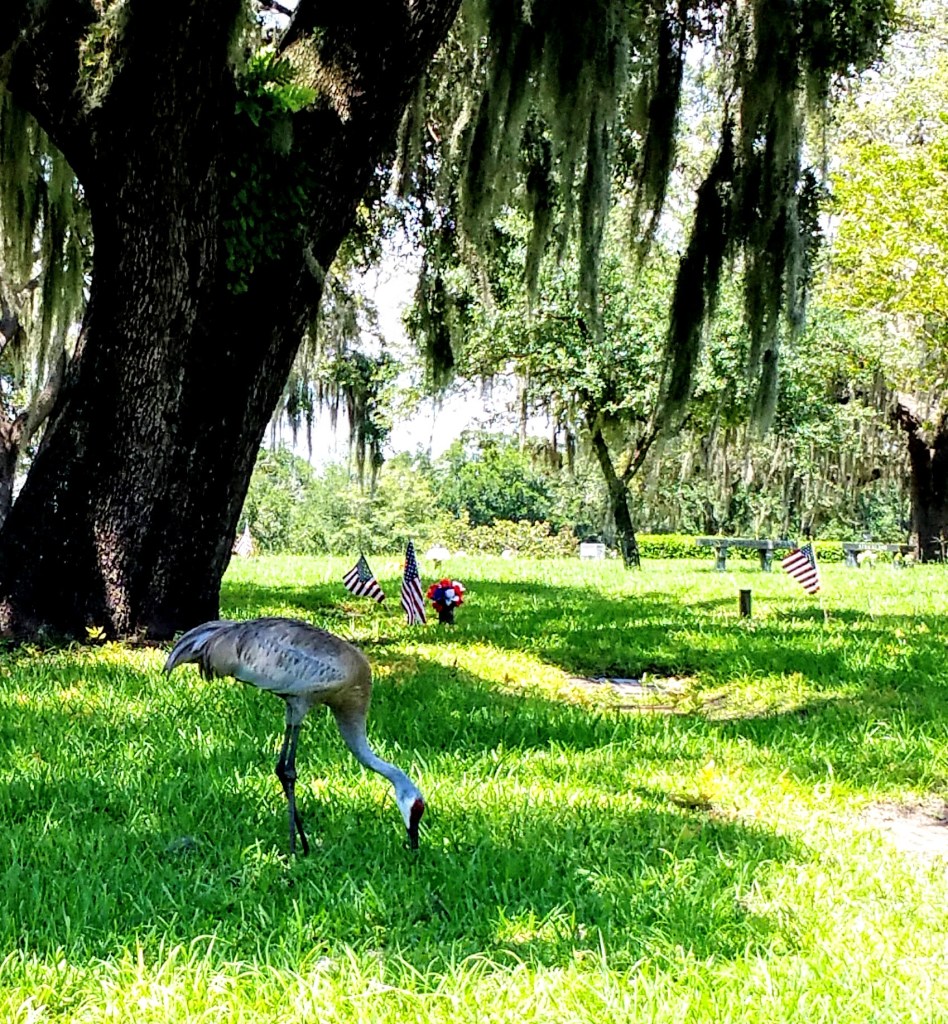
Mock cemetery displays (complete with fake tombstones and skeletons) contradict the "peaceful" invocation to "rest in peace" (RIP). Many mourners despise them. (Photo by Teresa TL Bruce)

Mock cemetery displays (complete with fake tombstones and skeletons) contradict the “peaceful” invocation to “rest in peace” (RIP). Many mourners despise them. (Photo by Teresa TL Bruce)

He loved Halloween. He delighted in seeing our daughters’ excitement as they dressed up in costumes. I think trick-or-treating was as much fun for him as it was for them. Even when he had to work nights, his favorite annual activity at church was taking our girls “trunk-or-treating” right up until the moment he had to leave for his job.

That first year, just weeks after his passing, I sat in the decorated gym more out of habit (for our youngest daughter’s sake) than because I wanted to be there. I wasn’t quite numb anymore — the shock was beginning to erode — but I wasn’t myself yet, either (and wouldn’t be for a long, long time).

Sights and sounds buzzed and blurred around me. Kids played, adults conversed. I tried eating the food in front of me, but taste and appetite were as irrelevant as they’d been since the night my husband died.

I was an auto-pilot version of myself. I had no desire (or ability) to socialize, and the sight of couples enjoying the event together evoked irrational but undeniable guilt-inducing envy and resentment.

One woman, a person of refinement and decorum, sat beside me. She looked at me without staring yet she saw the pain I was too raw to conceal. “I won’t ask you how you’re doing,” she said.

I nodded my thanks, trying not to let the gathering moisture in my eyes spill onto my face.

“It just sucks,” she said.

Her words, so unlike the lexicon of culture and propriety I’d come to expect from her, were exactly what I needed to hear. Those three little words acknowledged my life had taken a turn, that the “fun” event was anything but, that my soul ached.

And in her acknowledgment of my hurt, a tiny bit of healing began.

Fast forward four, then five years.

Last year I manned games at the children’s trunk-or-treat. It was great fun, and I looked forward to doing the same again this year.

But grief doesn’t always behave in an orderly way. The closer I got to this year’s event, the stronger my aversion grew. Finally, I backed out of my plan to help. (And felt much, much better as soon as I did.)

I don’t mind the cutesy witches and ghouls and goblins decorating houses and buildings. I have nothing against the rows of tiny costumes and candy totes lining store aisles. I still think it will be fun to see little ones dressed up and going door to door again, yelling, “Trick or treat!”

But I still dislike neighborhood “cemeteries” like the one I photographed while out walking the dog early one morning. There’s nothing restful or peaceful about mock burial sites when you’ve had to buy a real one.


Remembering 9/11 can help you understand the bereaved

On September 11, 2001, life in the United States skidded to a stop when nearly 3,000 people perished because of terrorist attacks. If you were the age of a young school child or older, you remember the moment you heard the news.

Dismay.

Shock.

Denial.

Distress.

Panic.

Fury.

It was a few minutes after 9:00 a.m. when the phone rang. My friend’s voice was clipped. “Are you watching TV?”

My husband was sound asleep after his night shift. I’d taken our younger children to elementary school. Back at home I folded laundry while our oldest daughter painted on canvas. Soon we’d delve into the academic part of her seventh grade curriculum. My friend knew I homeschooled during the day, so it was odd she’d call, let alone assume the TV might be on during school hours. “No. Why?”

“Turn it on.”

“To what?”

“Anything. Any channel.”

Dismay. Shock. Denial. Distress. Panic. Fury.

I cried for those whose lives were lost. I cried harder for the loved ones who lost them.

It was a huge thing. A devastation.

A travesty. An assault.

A violation.

In the days that followed, the attacks were all anyone talked about — even when mentioning the heroics of the many, many selfless souls who stepped into the fray to help others.

None of us knew then the long-term impact of that day’s events. First responders from New York City’s police and fire departments, and others, continued losing life and health in the aftermath of the initial casualties.

(Casualties. What a calloused, indifferent word — as if any of those killed or maimed or bereaved came to that definition by casual, effortless chance.)

Families were shattered by death, disability, and despair. Businesses and livelihoods were lost along with the lives they’d once supported.

For those of us living far away, not personally knowing victims or their families, and not having our everyday routines disrupted beyond that first day’s screeching halt, we felt for them and we cried with them and we sacrificed and contributed for them. But our everyday life, for the most part, went on.

The impact of 9/11 changed us all, some more than others. Global news coverage and the scale of the tragedy made it difficult to ignore, and visible memorials and annual commemorations ensure we will never forget.

For those whose loved ones were lost, the personal impact of 9/11 is impossible to forget. Visual reminders of their absent loved ones are everywhere they look. Annual commemorations extend beyond Patriot Day on September 11 to include every holiday, birthday, anniversary, and seasonal tradition.

A decade and a half later, mourning survivors I’ve met since have “moved forward” with their lives. I won’t diminish their losses by claiming they “resumed” life in the same manner as those of us who were not personally impacted. Life, as it was Before, ended that day. Life, as they eventually learned how to live again, evolved slowly in the After.

Of course, other people died that day, too. People all around the world. One was Karl, a sweet, elderly man in my congregation at church. His death received no national fanfare. No acclaim. His kindly widow’s loss was overshadowed by the quantity of publicized loss, but Ruth’s private grief was just as real.

At the time I felt badly for her. I admired her courage and strength as she tearfully expressed her beautiful belief that her husband was needed in heaven to help soothe and greet the many souls who’d been taken from mortality that day. I prayed for her, and I told her I was praying for her, and I sent notes once in a while.

But I was clueless. I had no idea of what her loss meant to her. How could I? That was a decade before I shared the designation of widow. A decade before new bereavement taught me the private manifestations of receiving the news that another loved one was dead.

Dismay. Shock. Denial. Distress. Panic. Fury.

In the months that followed my husband’s death, coping with that was all I could think about, even though there were many selfless souls who reached out to me in compassionate gestures. But their everyday lives went on.

Now, whenever our nation pauses for a moment of silence to honor the victims and heroes of 9/11, my understanding of what they experienced remains fractional, but I am more aware than I was. I will never be able to fully understand what any of them endured. But I do know how I felt in my own dismay-shock-denial-distress-panic-fury grieving. And my empathy for them has grown.

(Ruth, I don’t know where you live now, but please know I think of you and Karl today, as I think of the thousands of others for whom September 11 has such significance.)

I remember.

Why Memorial Day Isn’t For You | SpouseBUZZ.com

I seldom repost other blog articles, but this one by Traci Moran has stayed with me since I read it a few days ago. My friend, Lynette Wilson, brought it to my attention on Facebook. This is what she said:

Please, for so many of us, Memorial Day is a solemn occasion, one meant to honor those men and women who gave the ultimate sacrifice in defense of their country. Please don’t trivialize the emotions by including “Happy” before it. Please know this weekend shouldn’t be about the big sales, the big barbecues, the big parties.

Take a moment and think of the fatherless and motherless children, the parents who outlived their sons and daughters, the wives and girlfriends, the husbands and boyfriends who miss their sweethearts every day. Remember those lives lost in defense of your freedoms. Freedom is never free. ——Lynette Wilson

Generations of my family have commemorated Memorial Day with graveside readings and remembrance gatherings for departed ancestors, including emphasis on those who gave their lives in service. On Memorial Day I cannot help but be mindful of my recently deceased great-aunt who belonged to the DAR and who every year made sure fresh flowers covered ancestors’ otherwise obscure graves. I’m achingly aware of my husband, mother, nephew, cousin, brother-in-law, father-in-law, grandparents, and all other loved ones who’ve crossed behind the veil where I can no longer see, hear, or touch them.

However, I also know Memorial Day isn’t about me or my losses. It’s about those who have served and died. It’s about remembering them, honoring them, mourning them, and living in gratitude to the debt we owe them — and their families. It’s about recognizing the prices they paid.

Please read Ms. Moran’s article:

Why Memorial Day Isn’t For You | SpouseBUZZ.com.

And please remember.

You Can’t Put a Bandage on Grief

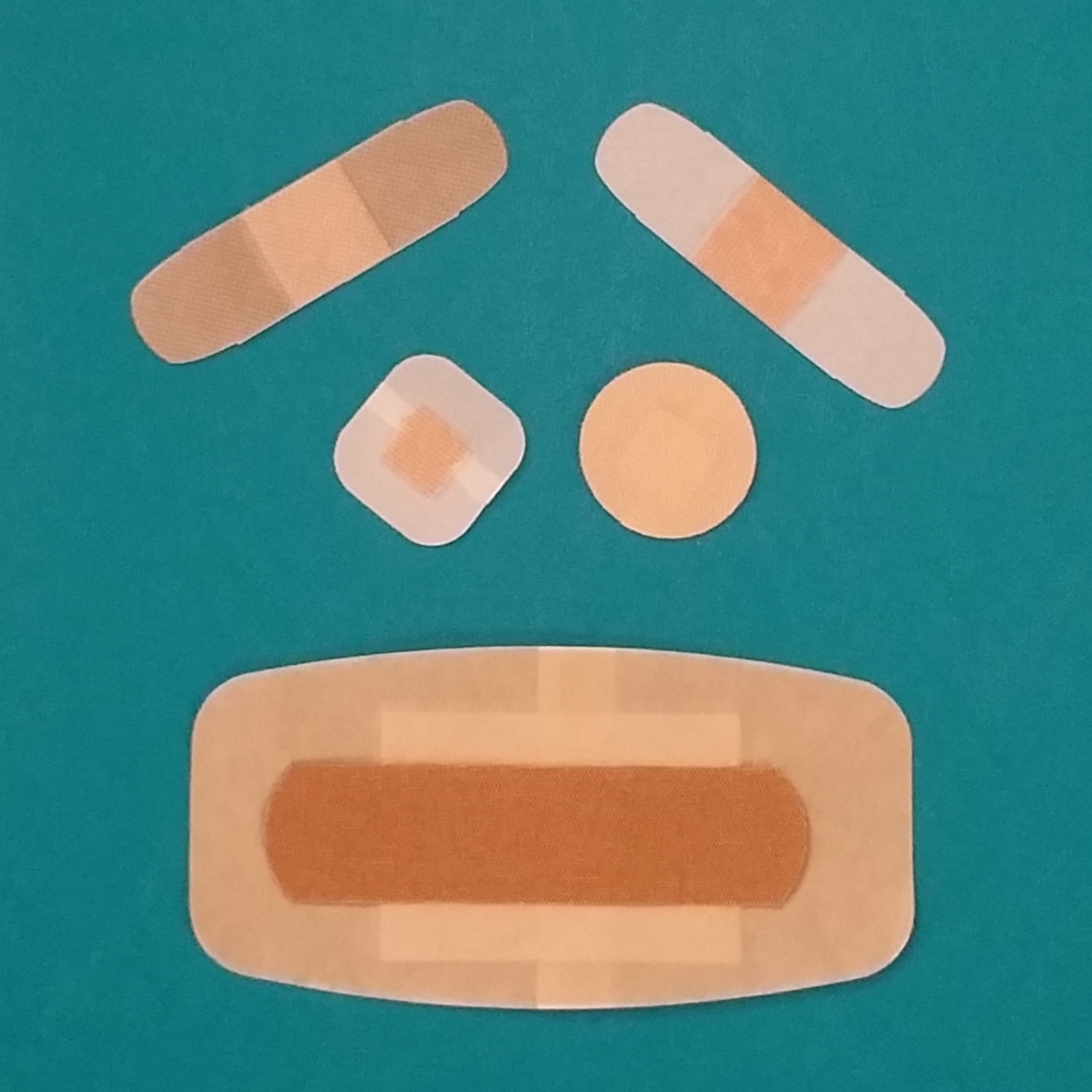
When my daughters were little, they often bruised or scraped themselves in the course of everyday play. A kiss from Mommy or Daddy (and perhaps a Sharpie-drawn smiley face on a Band-Aid — whether necessary or not) was all it took to make things okay again.

Sometimes other tots grabbed toys, knocked over blocks, or cut their Barbies’ hair — oh, wait … it was my child who did that (as practice before “trimming” her friend’s bangs). All it took to reset their emotional footing was distraction — manufactured by word or sleight-of-hand. Almost at once, they got back to the business of learning by play.

As they grew older their minds and hearts grew into increasingly complex, interdependent organs. It became harder to “fix” what upset them. The inevitable day came. A daughter spurned my offer to “kiss it better” as she clutched at the reddened skin on her forearm. “That won’t help,” she pouted, her eyes daring me to contradict her. My offer to read her a story elicited the same response.

She was right, of course. A hug or kiss didn’t take away the sting of the injury. A bandage could cover the wound (at least temporarily) and hopefully keep out germs that would otherwise impede healing, but beneath its plain (or decorated) facade, remained a wound that required time — and the right circumstances — to mend. A kiss of affection, a favorite toy to hold, or a new story to distract might momentarily provide another focal point, but every heartbeat fueled throbbing reminders that all was not well.

It’s the same for grief. Bandages don’t work.

You can't put a bandage on grief to "fix it" or "make it better." Like any wound, it takes time.

You can’t put a bandage on grief to “fix it” or “make it better.” Like any wound, it takes time.

When grief is new (and by “new” I mean the loss occurred within two years — yes, I said years), the bereaved often bruise and scrape their psyches against circumstances of living in the course of everyday survival. Such emotional abrasions include (but aren’t limited to):

  • Significant dates — birthdays, holidays, anniversaries (of both positive and negative events). For many within the first 18 months after a loved one’s death, that day of the week (every week) and that date of the month (every month) feels like ripping off a fresh scab, re-traumatizing survivors.
  • The “business” of death — deeds, accounts, titles, plots, medical bills, insurance … The list of accounts can seem endless for an adult or unfairly incomplete for a child. Making each phone call or office visit is excruciating. Every time I called another provider, I sobbed. Removing my husband’s name from each document felt like erasing him. It felt disloyal. It felt violent. Horrible.
  • Routine “first since” appointments — the dentist, the doctor, the pharmacist, the mechanic, the accountant … Anywhere a person has done business in an ongoing manner, that first visit since the death occurred forces yet another face-to-face bout of admitting a loved one is no longer living. As a new widow, I cried every time. Many forms had boxes to check that offered only the options of single, married, or divorced. I wrote in “widowed” on paper forms. Online forms frustrated me so badly I shrieked at the computer (and I’ve never been a “yeller”). If I checked “married,” they required ongoing contact information no longer applicable, but for a long, long time I refused to consider myself “single,” so that option didn’t work, either.
  • Getting groceries — ugh! Walking through the aisles was awful, awful, awful. “His” foods stood out on the shelves. I couldn’t find things I wanted right in front of me (on rare occasions when I actually knew what I wanted). I couldn’t even remember to consult the list in my hand. The first time I saw THE paramedics from the nearby fire station in the store, oh, how I lost it!

Recently, Megan Devine of Refuge in Grief wrote “grief & the grocery store.” If you want to understand what your grieving friend experiences in the ordeal of getting groceries, please read what she has to say:

http://www.refugeingrief.com/groceries/

You can’t cover your grieving friends’ loss with a bandage. You can’t “fix it” or “make it better.” But you can offer them momentary distraction from their pain by including them in your plans (whether they accept your invitations or not). You can aid them in their healing by acknowledging significant dates, offering to fill out paperwork (or make other business calls), accompanying (or taking) them for routine appointments, and going with them to the store to help them navigate the perils of produce.*

Be with them in their grief. Be patient as they heal.

___

*For an in-depth look at one element of grocery-intensified grief, see my essay Eggplant Elegy” in the online journal Segullah.


When a Friend Is Grieving

What should you say to someone who is grieving the anniversary of a death that happened a year ago? What about two years? There’s never really a “good” time of year for someone to die, but the timing of any death can be hard on those left behind. Not just in the immediate days and months after the loss, but in the years ahead as well. Anniversaries of death (and other occasions) can make “old” grief feel newly raw again. There’s no time limit on how long a friend will grieve.

For the last week I’ve heard lyrics proclaiming “death and darkness gather all around me.(*See below.) I’m not living my life in gloomy obsession, but I can’t help but feel compassionate awareness. Too many friends (and family) have lost loved ones around this pre-Valentine’s Day time of year. These couple of weeks in my calendar mark days of deep significance — and mourning — to friends and family: Death and/or funeral dates of friends’ children, friends’ friends, and friend’s spouses. Wedding anniversaries of now-widowed half-couples. The day a friend’s beloved pet died.

It’s not only my friends whose grief is reinforced during this part of the calendar. These same weeks include the “angelversary” dates for my father-in-law and for one great-aunt.

At nearly 95 last last year, Aunt Ginny was still eager to try something new.

At nearly 95 last year, Aunt Ginny was still eager to try something new.

Now for two.

Last night, when I drafted this post and went to bed to sleep on it, the next line I wrote described that great-aunt’s sister, “another beloved great-aunt whose nearly ten decades appear to be … slowing.” When I woke up I learned my sweet Aunt Ginny passed in the early hours this morning. Part of me rejoices for the reunion she’s having with her parents and siblings and my mom and my husband! For her sake, I’m relieved her fragile, increasingly confused, and recently fractured nearly 96-year-old body isn’t hurting. But for me and for all of our family, and for all who knew her, having her gone — actually gone — leaves a painful, gaping hole of mourning.

The next words I wrote last night (immediately below) seem even more appropriate in the light of today’s sadness.

Three, four years — or however long — after a death, many of the right (and wrong) ways to support a grieving friend are the same things that apply in brand new bereavement:

1. Remember that grief is a by-product of love. Mourners have the right to grieve in their own ways and times. Grief doesn’t just “go away,” nor is it to be “gotten over.” Rather, it must be worked through, often over the course of a lifetime. Be patient and accepting of your friend’s grief.

2. Acknowledge the loss. Speaking the loved one’s name shows they aren’t forgotten. Their survivors need to know they aren’t the only ones who miss the deceased.

3. Listen — without curtailing or dismissing emotional outbursts or nostalgic reflections about dead loved ones. Ask if the bereaved would like to share stories of their loved ones. Ask if they’d like to hear your stories of their loved ones.

4. Do something. A kind gesture as simple as a text message or a handwritten note or a dropped off casserole or a quick run to the store…

5. Don’t minimize the loss. Avoid any statements including the words “at least” — they do not offer consolation when uttered to the bereaved. (If they say it themselves, that’s fine. Consoling mourners isn’t about you. It’s about them.)

___

*Because I’ve had this phrase on my mind all week, and because of the beautiful lives I wish to honor by actively remembering them, I’m adding this excerpt from a YouTube video featuring Roger Whittaker’s “The Last Farewell.” (The lyrics at 2:00 and 2:45 have been especially on my mind.) [Added this morning: Aunt Ginny, “you are beautiful, and I have loved you dearly, more dearly than the spoken word can tell…”]
https://youtube.com/watch?v=sGWs1HK8iDU%3Frel%3D0frameborder%3D0allowfullscreen