Taboo Topics When Someone Dies–Part 3, Money

Part 3 in this series on taboo topics (*see below) focuses on money matters and why you should leave them alone.

Would you walk up to random people and pat them on the stomach? Of course not, except… Have you ever noticed that insensitive relatives, acquaintances, or even strangers will do that to women in the latter months of pregnancy? No matter that it’s intrusive, rude, and creepy. (It happened to me, more than once.)

Would you walk up to random people and ask them about their finances? Of course not, except… Have you ever noticed that insensitive relatives, acquaintances, or even strangers will do that to mourners in the earliest days and months of bereavement? No matter that it’s intrusive, rude, and creepy. (It happened to me, more than once.)

Here is what you need to know about the finances of those who are grieving:

1) Their finances are none of your business — unless

the bereaved asks you about money matters, concerns, or questions (in which case, you should limit your words to providing direct answers, not asking them questions or making assumptions), or

… you already have a professional financial relationship to the bereaved (and/or the deceased) as their financial or insurance adviser, accountant, broker, loan officer, etc., and your inquiries are

relevant to that relationship,

timely for the altered needs of the survivors, and

mindful that most major decision-making should be delayed for at least a year.

2)  Financial gifts may be desperately needed by bereaved families, even though mourners’ finances are none of your business. If the deceased was the primary (or even secondary) breadwinner in a family, the sudden loss of income can be financially devastating. Even small monetary gifts can help offset expenses, and they will show your tangible support for friends who have lost loved ones.

3) Death is expensive for its survivors.

Whether the death was expected (due to age and/or health issues) or unexpected (due to undiagnosed health matters or external forces), there are likely medical expenses. Big medical expenses. These may include (but aren’t limited to) doctor, hospital, and ambulance services (**see below for a digressive rant). The financial costs can be huge, and the emotional costs of drawn-out payments for treating the already-deceased loved one can be just as difficult to pay.

Funeral, burial, and cremation expenses can be prohibitive and drain a family’s financial reserves. Payments are often required up front. My home (and the land it stands on) still belongs to my mortgage company as much as it does to me. Even after it’s paid off, I’ll still owe property taxes as long as I own it. How awful it is that the only land I’ve purchased and own “free and clear” is fully uninhabitable: my husband’s burial plot.

Legal and business fees add up. I remember the sticker shock of having to pay for changing the title of my husband’s car to my name before I could sell it. Various accounts and deeds can cost even more. Eventually, every legal document or business account once in the name of the deceased must be updated, closed, or renamed, and these transactions can be costly.

 4) Not everyone has adequate — or any — life insurance (***see below).

Don’t assume.

Don’t judge.

Preexisting health conditions, finances, or emotional constraints may have prevented purchasing such policies.

5) Life insurance payments feel like blood money. They are not windfalls or fun lotto winnings. Their intent is to pay for current and future life expenses for the surviving beneficiaries.

ONLY named beneficiaries have the right to decide how such funds should be spent. Period. If you have an opinion on how it should be spent, keep it to yourself.

Do NOT ask about or comment on life insurance amounts. The subject is not only private — it’s painful. Survivors who are asked about whether they received life insurance payments may feel cornered or pressured into discussing details that only their financial advisers should be privy to. (Remember #1 on this list!)

Don’t ask to borrow money from life insurance funds.

I apologize if this post feels stern. I’ve developed a pretty thick skin by now, but I still remember some people’s intrusions during my earliest months of widowhood. Many meant well. I understood their concern for my well-being, and I continue to feel gratitude for the gifts generous souls sent our family at that time. However, I also recall the inappropriate questions of those who were more interested in satisfying curiosity than consoling my family.

___

*I talk about other taboo topics — politics, religion, appearance, and legal status — in separate posts (while, yes, talking about the very things you shouldn’t talk about).

**My digressive rant:
The ambulance bill provided a double shock. The 5-minute “ride” cost more than $150 per mile, and when I received my credit card statement verifying payment, the expense was listed under “travel and entertainment.” While I appreciated the efforts of the EMTs who responded to my 911 call, and I didn’t begrudge paying for their efforts (fruitless as they were), seeing the cost listed as “travel and entertainment” infuriated me. Still does.
(Okay. Rant over now.)

***If you’re on the fence about purchasing life insurance and you have dependent family members, do it. NowEven small policies can help. I hope you outlive your policy, but if — Heaven forbid! — The Worst Thing (your death) should happen to your loved ones (as it did to me and mine when my husband died), having a financial cushion may be of indescribable help to them, even if it is a small one. [Note: I’m not endorsing any company or industry by saying this. I’m sharing first- and secondhand experience.]

Taboo Topics When Someone Dies–Part 2, Religion

If you know me in person (or through my writing) I hope you’ll find this post title disconcerting. I hope you’ll think it seems downright odd for me to discourage would-be comforters from referring to religion as they console the bereaved, because I hope I’ve conveyed (in clear, though never in-your-face ways) how integral religion is to who I am.*

So in part 2 of Taboo Topics**, WHY in the heck do I insist you should not invoke religious topics when speaking to the bereaved?

Too many people spurt inconsiderate spiritual platitudes at mourners, reaching for the first handy sayings that come to mind.

Spraying spiritual platitudes on the bereaved is as effective in helping them as when inexperienced cooks spray water on grease fires — flames spread, burning a larger area.

Consider these brimstone-scattering thoughts as you approach your grieving friends:

  • Not all family members have the same religious views or attitudes. What offers comfort to one may deeply wound (or even offend) another.
  • Unresolved familial disagreements about faith-related matters may leave the bereaved feeling anxious or guilty. Pointing out those differences does not help.
  • No one fully knows any heart or soul but their own. Assumptions about the deceased’s “heavenward” status can cause mourners more pain than condolence.
    • Sometimes “outsiders” (even within a family) aren’t privy to all the circumstances of the departed one’s life (or death, or both). The deceased may have lived a praiseworthy public facade but presented an altogether different reality behind closed doors.Grief can be complicated for these survivors.
    • In cases where the deceased secretly (or openly) abused family members, feelings of relief may overshadow (or battle alongside) grief.
  • Survivors of suicide face offensive outbursts from people whose words can’t possibly be intended to console (“Suicide’s a sin, so your loved one’s going to hell”). Survivors also hear too many insensitive assumptions by those who may mean to console but who instead inflict more injury (“Don’t worry. God will forgive your loved one”). Never assume you know what prompted the suicide, and never make spiritual assumptions about it or about the survivors.
  • Avoid using these religious platitudes (and others like them):
    • “She’s gone home to God.”
    • “He’s in a better place.”
    • “You just have to trust in God’s will.”
    • “God needed him more than you do.”
    • “It was her time.”
    • “You’ll see him again.”
    • “It won’t be long before you see her again.”
    • “Heaven needed another angel.”
    • “Now you’ve got an angel in heaven watching over you.”

Remember, I’m not anti-religion. On the contrary. My faith has remained the one constant, the one source of comfort and sanity and security when the box of my life felt soaked in mud, ripped open, overturned, shaken out, and run over. Often I agreed with the sentiments of the platitudes (that he was in a better place, that I did trust in God’s will, that I knew I’d see him again…).

However, hearing them thrust upon me did not help. It felt like the people who said them wanted to cover up or erase my pain, as if it were a thing to be lightly brushed aside. What I needed was to have my loss acknowledged.

If you have an already established pastoral relationship with the bereaved, it may (as in it might possibly, but it might not necessarily) be appropriate to offer spiritual counsel, scriptural comfort, or doctrinal comments. But before you preach at your congregant, listen.

For everyone else who wishes to console a grieving friend, don’t bring religion into your condolences unless your grieving friend first invites you into the topic.

As in all aspects of grieving, LISTEN to the bereaved and follow their lead. IF your grieving friends express an interest in speaking of spiritual matters, by all means share your thoughts, but do so carefully and from your heart, not from the first trite words that come to mind.

___

*I don’t say this to be preachy but to acknowledge the core of my survival during the most difficult part of my life. My reliance on God’s unwavering love and my faith in His absolute awareness of me (and my grieving children) is what kept me going when my soul was flayed raw with grief.

___

**I talk about other taboo topics — politics, money, physical appearance, and legal status — in other posts.

Comfort after Mom’s Funeral

When my mom’s mother died, I was a preteen child. I remember looking up as grandma’s best friend put her arms around my mom and cried along with her. Through her own tears, she told my mom, “I know I’ll never replace your mother, but I’ll try to mother you for her.”

Twenty years later, after my mom’s funeral, that same dear woman (who was then widowed and had long since become Mom’s best friend) embraced me and said, “I know how much it hurt when I lost my mama. It has been years and years, and sometimes it still breaks me up. I won’t tell you it will stop hurting, because you never lose the hurt when you miss the ones you love. But it won’t always hurt as much or as deeply as it does now. One day you’ll feel the sweetness of your love as much as the pain.

I found comfort in her acknowledgement of my grief. Her words validated the pain I felt. They promised I wouldn’t forget the love I’d always felt from my mom. They assured my love for her would remain significant, even in her absence.

In that time and place of acute, agonizing new loss, I didn’t want to hear anything that diminished the significance of my grief.

  • I knew I wasn’t the only person to have had a loved one die, but I didn’t want my grief compared to theirs.
  • It was helpful to hear, “I know how much I hurt when my mom died. I’m here for you,” but it never helped to hear people say, “I know exactly how you feel,” because they didn’t lose my mother.
  • I was grateful that Mom no longer suffered from the cancer that killed her, but I hated hearing other people say, “At least she’s not suffering anymore.” 
  • I fully believed then and continue to believe now that my mother’s soul IS “in a better place,” but it felt hurtful and trite to hear would-be consolers say, “You can take comfort that she’s in a better place now,” because the important, essential fact was that she was gone.

I didn’t want to hear that I would stop hurting, because in that moment of bereavement when my LOSS surrounded me, the pain of mourning preserved my connection to Mom. To think of not missing her or to consider that I might stop mourning her felt like thinking of dismissing the bond between us and dismissing the significance of her role in my life.

I was pregnant with our second daughter when Dad’s mother died, and I was pregnant with our youngest daughter when my mom died. I can’t count how many well-meaning souls attempted to console me by saying, “At least you have the new baby to look forward to,” as if I should be content and ignore my grief because welcoming a new life should “undo” my bereavement over the end of my grandmother’s life — and then over my mother’s. As much as I glowed and grinned in the anticipation of each child’s arrival, I grieved for their yet-unborn losses, too, knowing they’d never get to know their great-grandma who’d nurtured and inspired me as much in my adulthood as she had in my childhood. I mourned for my youngest, that she’d never know the grandmother who’d rejoiced in putting as much loving energy into her too-brief years of grand-mothering as she’d put into decades of mothering me.

The condolences that offered me the greatest comfort in my new, raw grief (as a granddaughter, a daughter, and more recently as a widow) were the simplest, most spontaneous and heartfelt expressions of acknowledgment:

  • I’m sorry. I’m sorry for your loss. I’m so sorry to learn of the death of your mother, your grandmother, your husband.
  • I wish I knew what to say. I can’t imagine what you’re going through.
  • This is awful news. I’m devastated for you.
  • I’m keeping you in my thoughts. You’re in my prayers.

A Widow’s Thoughts about Mother’s Day

What should you say to a widow or widower on Mother’s Day? In my last post*, I shared reasons the day can be difficult for many people. I told how my Mom’s death “still” impacts the way I feel about Mother’s Day, but I avoided expressing how I feel about it as a widow.

To be blunt, most widows and widowers don’t look forward to Mother’s Day — we dread it.** And yet, we still want it acknowledged.

I became a wife before I became a mother, so Mother’s Day was — for me — as much about being my husband’s wife as it was about being my children’s mother. My no-longer-little girls were in their teens and twenties when their dad died. For 24 years he’d honored me as his wife every Mother’s Day, over and above the way he honored me as the mother of his children. Suddenly, half the “wife and mother” adulation was wrenched from that day’s annual pampering.

Mother’s Day is confusing now — and painful. I’m still my husband’s wife, but as a widow — his widow — I have no husband. I’m still our children’s mother, but with their father deceased I’m no longer the “wife and mother” I was for more than half my life. Honoring my motherhood is interwoven with recognizing my severed wife-hood. Mother’s Day reminds me of what I had … and of what I’ve lost … and of what I still have. As I said, it’s confusing.

Handmade Mother's Day Card

My husband made this Mother’s Day card for me just a few months before his unexpected death.

How can you help a widow or widower through Mother’s Day? Here are a few practical tips:

  • If the loss is recent, saying “I’m thinking of you this Mother’s Day” shows more sensitivity than saying “Happy Mother’s Day.”
  • For a widow with children: Let her know you realize that Mother’s Day will be difficult without her spouse. Ask her if you can take the kids shopping or create an art project or craft or make a card with them. It’s not about the gift. It’s about having someone show her children that she’s appreciated — and that her kids should also express appreciation for her — without her having to prompt it. She’s no longer “just” their mother; she’s got to handle all the responsibilities that were once shouldered by both parents.
  • For a widower with children: Let him know you realize that Mother’s Day will be difficult without his spouse. Offer to help him in the same way you might help a widow with kids. He’s now handling all the responsibilities of both father and mother. Remember: He’s still grieving the loss of the mother of his children and he’s facing the lifelong pain of helping his children (no matter their ages) as they grieve their mom’s absence.
  • For widows and widowers without children: Let them know you’re aware of them, and, if it’s appropriate, let them know you realize that Mother’s Day may be more difficult without their spouses. Exercise discretion. Some may have wanted children but been unable to have them. Others may have chosen to remain childless. Don’t base your interaction on assumptions.
  • It’s better to say something than to say nothing. You won’t “make” your friends feel sadder by speaking of their lost loved ones or “remind” them of their pain. (The sadness always exists, simmering below calm exteriors even when time and “healing” have taken place.) Even hearing “I don’t know what to say” can comfort and uplift a mourning heart.

___

*Mother’s Day Mourning

**I recognize that everyone reacts differently. Some widows and widowers may still look forward to the day. More of the ones I’ve spoken with, though,  view days like this the way I do.

Here’s one fantastic alternate (but overlapping) view by my widowed friend Julie Toone: Appreciation for Mother’s Day…

If you have other suggestions that might be helpful, please share them in the comments below.

Mother’s Day Mourning

With Mother’s Day looming, my grief ratchets up several levels. It’s been over 18 years since Mom died, and I’m dreading this year’s annual event as much as I have each year since her death. It’s a selfish misery — I acknowledge that — because my mom deserved the “World’s Best” title that’s printed in flowery fonts on all kinds of merchandise this time of year.  Too many dear friends had opposite relationships with their mothers, so I truly appreciate how lucky I was.

I ought to spend Mother’s Day bathed in a warm glow of gratitude over how incredibly blessed I’ve been that my mom’s heart and hands shaped my life. But I miss her. I miss her.

She was an adoring grandmother, and I wanted my children to grow up with her creative, optimistic, spiritual, fun-loving, nurturing, curious, accepting influence and presence in their day-to-day lives. I feel cheated that they could not. I miss her for their sakes as well as my own.

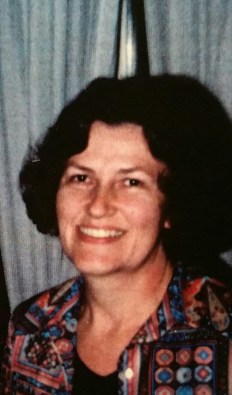
My Mom (from family photos of Teresa TL Bruce)

My Mom (from the family photos of Teresa TL Bruce, TealAshes.com) 

Mom was my best friend.  (She was everybody’s friend. When I was in high school, one boy I dated sometimes called our house to talk to her.) Typing these words about her reopens the rip that began tearing around my heart the moment I heard the word “cancer” over the phone two short years before it took her. I “still” miss her.

My deep longing for Mom’s voice and warmth, for her wisdom and presence, isn’t the only reason I dread the advent of every Mother’s Day. Years ago I attended a church council planning discussion of upcoming tributes and honors for that year’s commemoration of the day. The suggestions were thoughtful and generous, but as I listened I became more and more uncomfortable until I finally blurted, “Lots of women hate Mother’s Day.

All eyes turned toward me. Other women in the room nodded their heads, but most of the men looked as if they’d been slapped. The first to recover his speech asked what I meant, and as soon as I began explaining, my church sisters’ voices joined mine:

  • “We can’t live up to the glowing superlatives on the cards.”
  • “Do you know how many women want children but can’t have them?”
  • “Some of us had terrible mothers. We don’t get along with them at all.”
  • “Some of us have bad relationships with our kids, and Mother’s Day makes it even worse.”
  • “I’ve hated the day ever since my mom passed on. It hurts too much.”
  • “And it’s agony for the ones who’ve lost a child.”
  • “And women who’ve miscarried …”

A few mouths remained open when we’d finished. One by one, all in the room acknowledged that a special sensitivity was needed in planning that particular Sunday’s services.

Men and children also struggle with missing their deceased mothers, or they may feel conflicted about poor relationships with theirs.

In the years following Mom’s death, I dragged myself into the chapel for every Mother’s Day service (though I’d have preferred staying at home to linger over my annual child-poured breakfast in bed, a bowl of Cheerios or Lucky Charms*) because that’s what I felt I needed to do, what a “good mom” should do. All the children in the congregation — including my own — were singing to all the moms, and I did want to experience seeing and hearing my daughters beam as they sang “Mother, I Love You.” That part I didn’t mind — it was always delightful! (You never know what you’ll see and hear where kids are concerned, no matter how well they’ve practiced ahead …)

But it hurt to be there. I knew the shortfalls of how my mothering compared to my mom’s. (Did I mention how great she was?) And I missed her.

What helped make it easier? While it’s true that time eased the sharpest of my grief’s pain (though it’s not true that it “heals all wounds”), eventually, at least in part, there was one thing that comforted me immediately. Whenever someone acknowledged awareness that I mourned Mom’s absence, the weight of my grief lightened enough to keep me going. It still does.

  • It always helped to hear, “I’m sure you’re missing your Mom. I’m sorry.”
  • It never helped to hear, “Don’t be sad.”
  • It never helped to hear, “Are you still upset about your mother?”
  • It can be helpful to say, “You’re in my thoughts as Mother’s Day approaches.”
  • It’s also appropriate to say, “I’m thinking of you this Mother’s Day weekend.”

As with other aspects of mourning, the best condolence you can offer is the comfort of your presence, the reassurance of your willingness to listen, and the sensitivity of your acknowledgment of the loss.

___

(*In case you were wondering, I have no affiliation with General Mills — or any cereal-making company. Cheerios and Lucky Charms just happen to be my favorites.)