Honoring Memorial Day

Memorial Day was originally intended as a day of solemn remembrance.*[See the end of this post for a link to a short video about the day’s origins and evolution.] Once called Decoration Day (on which widows, orphans, and other war survivors decorated soldiers’ graves), its purpose was to honor and reflect on those who died while in service to their country.

Memorial Day, military, honor, remember, sacrifice, survivors

Memorial Day honors the sacrifices of those who died in service to their country. Please remember the loved ones they left behind, too. (This photo called “Memorial Day” is from history.com.)

Within my extended family, the day also developed a broader meaning as descendants of my great-grandparents gathered every year to honor the memories not just of all our honored military dead but of all deceased family members. In my grandmother’s hometown, kin from all over began the day at her parents’ graves, filling the weathered cemetery — for one day each year — with as many folks above- as below-ground.

My long-widowed grandmother’s features took on a different expression there. Hindsight — now having lost all my own grandparents, mother, and husband — allows me to better understand the nostalgia, the sadness, the love, and the gratitude that shone from her lined face during this annual meeting of family from afar. It was a chance for Grandma’s children, grandchildren, great-grandchildren, nieces and nephews (and all their “grands,” too) to greet and get to know (by place and by story) her long-lost grandparents, parents, siblings, husband, daughter, and — in later years before her death — grandson.

The cemetery on that day was not a place of sadness — though there were tears — but of reunion (both in the here-and-now gathering and in the looked-to-someday future).  After beginning the day with respects paid on the sacred ground there and with family news updates shared by all, we relocated to the place and time I looked forward to when I was little: the park. Nearby, the entire city park (rented by the extended family for that day every year since long before my birth) was open to exploration.

When I was a child, Memorial Day meant family reunions with buffet-style picnic foods (including as many dill pickles as I could eat from a jar that was nearly as big as I was). It meant wondering why the grownups cheered and jeered (in good fun) during their annual singles versus marrieds softball game. Close cousins and distant kin walked around wearing similar noses, foreheads, and jawlines while gesturing in mannerisms either inherited or learned in a trickle down the pyramid of  Great-grandma Inez’s and Great-grandpa Edwin’s descendants.

As a widow, my appreciation of Memorial Day has shifted. I’d always been taught to acknowledge that the price of my daily freedoms was paid for by the lives of those who served my country long before me. My parents taught me reverence for our flag, not as an item to be worshiped but as a tangible representation of the blood sacrificed by those who served. War was awful because of the lives it ended; warriors — of whatever nationality — were respected for their service to their nation(s). Although my family celebrated with fun traditions on such holidays, in a very real sense Memorial Day, Flag Day, and Independence Day were holy days, too.

Now that I’ve experienced the loss of my own husband and witnessed my children’s thus-altered lives, my appreciation for the families of fallen soldiers has increased hundred-fold. I’m not a military widow, though I have been honored by friendships with many who are.  I do not know their pain, but I have greater reverence for theirs because of my own.

How can you  honor and support such families on Memorial Day? Start with acknowledging their soldiers’ service and their families’ losses. Express appreciation. Share memories. Speak up. Such days are not for politicizing the “should”s or “should-not”s of specific military campaigns or politics. They are days of succoring, support, and solidarity.

If you have other suggestions, please share them below!

___

*See the video clip at http://www.history.com/topics/holidays/memorial-day-history

A Widow’s Thoughts about Mother’s Day

What should you say to a widow or widower on Mother’s Day? In my last post*, I shared reasons the day can be difficult for many people. I told how my Mom’s death “still” impacts the way I feel about Mother’s Day, but I avoided expressing how I feel about it as a widow.

To be blunt, most widows and widowers don’t look forward to Mother’s Day — we dread it.** And yet, we still want it acknowledged.

I became a wife before I became a mother, so Mother’s Day was — for me — as much about being my husband’s wife as it was about being my children’s mother. My no-longer-little girls were in their teens and twenties when their dad died. For 24 years he’d honored me as his wife every Mother’s Day, over and above the way he honored me as the mother of his children. Suddenly, half the “wife and mother” adulation was wrenched from that day’s annual pampering.

Mother’s Day is confusing now — and painful. I’m still my husband’s wife, but as a widow — his widow — I have no husband. I’m still our children’s mother, but with their father deceased I’m no longer the “wife and mother” I was for more than half my life. Honoring my motherhood is interwoven with recognizing my severed wife-hood. Mother’s Day reminds me of what I had … and of what I’ve lost … and of what I still have. As I said, it’s confusing.

Handmade Mother's Day Card

My husband made this Mother’s Day card for me just a few months before his unexpected death.

How can you help a widow or widower through Mother’s Day? Here are a few practical tips:

  • If the loss is recent, saying “I’m thinking of you this Mother’s Day” shows more sensitivity than saying “Happy Mother’s Day.”
  • For a widow with children: Let her know you realize that Mother’s Day will be difficult without her spouse. Ask her if you can take the kids shopping or create an art project or craft or make a card with them. It’s not about the gift. It’s about having someone show her children that she’s appreciated — and that her kids should also express appreciation for her — without her having to prompt it. She’s no longer “just” their mother; she’s got to handle all the responsibilities that were once shouldered by both parents.
  • For a widower with children: Let him know you realize that Mother’s Day will be difficult without his spouse. Offer to help him in the same way you might help a widow with kids. He’s now handling all the responsibilities of both father and mother. Remember: He’s still grieving the loss of the mother of his children and he’s facing the lifelong pain of helping his children (no matter their ages) as they grieve their mom’s absence.
  • For widows and widowers without children: Let them know you’re aware of them, and, if it’s appropriate, let them know you realize that Mother’s Day may be more difficult without their spouses. Exercise discretion. Some may have wanted children but been unable to have them. Others may have chosen to remain childless. Don’t base your interaction on assumptions.
  • It’s better to say something than to say nothing. You won’t “make” your friends feel sadder by speaking of their lost loved ones or “remind” them of their pain. (The sadness always exists, simmering below calm exteriors even when time and “healing” have taken place.) Even hearing “I don’t know what to say” can comfort and uplift a mourning heart.

___

*Mother’s Day Mourning

**I recognize that everyone reacts differently. Some widows and widowers may still look forward to the day. More of the ones I’ve spoken with, though,  view days like this the way I do.

Here’s one fantastic alternate (but overlapping) view by my widowed friend Julie Toone: Appreciation for Mother’s Day…

If you have other suggestions that might be helpful, please share them in the comments below.

Mother’s Day Mourning

With Mother’s Day looming, my grief ratchets up several levels. It’s been over 18 years since Mom died, and I’m dreading this year’s annual event as much as I have each year since her death. It’s a selfish misery — I acknowledge that — because my mom deserved the “World’s Best” title that’s printed in flowery fonts on all kinds of merchandise this time of year.  Too many dear friends had opposite relationships with their mothers, so I truly appreciate how lucky I was.

I ought to spend Mother’s Day bathed in a warm glow of gratitude over how incredibly blessed I’ve been that my mom’s heart and hands shaped my life. But I miss her. I miss her.

She was an adoring grandmother, and I wanted my children to grow up with her creative, optimistic, spiritual, fun-loving, nurturing, curious, accepting influence and presence in their day-to-day lives. I feel cheated that they could not. I miss her for their sakes as well as my own.

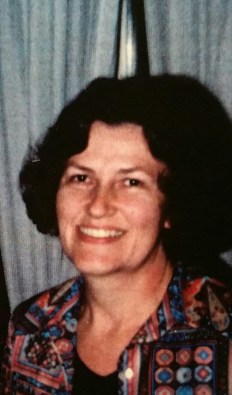
My Mom (from family photos of Teresa TL Bruce)

My Mom (from the family photos of Teresa TL Bruce, TealAshes.com) 

Mom was my best friend.  (She was everybody’s friend. When I was in high school, one boy I dated sometimes called our house to talk to her.) Typing these words about her reopens the rip that began tearing around my heart the moment I heard the word “cancer” over the phone two short years before it took her. I “still” miss her.

My deep longing for Mom’s voice and warmth, for her wisdom and presence, isn’t the only reason I dread the advent of every Mother’s Day. Years ago I attended a church council planning discussion of upcoming tributes and honors for that year’s commemoration of the day. The suggestions were thoughtful and generous, but as I listened I became more and more uncomfortable until I finally blurted, “Lots of women hate Mother’s Day.

All eyes turned toward me. Other women in the room nodded their heads, but most of the men looked as if they’d been slapped. The first to recover his speech asked what I meant, and as soon as I began explaining, my church sisters’ voices joined mine:

  • “We can’t live up to the glowing superlatives on the cards.”
  • “Do you know how many women want children but can’t have them?”
  • “Some of us had terrible mothers. We don’t get along with them at all.”
  • “Some of us have bad relationships with our kids, and Mother’s Day makes it even worse.”
  • “I’ve hated the day ever since my mom passed on. It hurts too much.”
  • “And it’s agony for the ones who’ve lost a child.”
  • “And women who’ve miscarried …”

A few mouths remained open when we’d finished. One by one, all in the room acknowledged that a special sensitivity was needed in planning that particular Sunday’s services.

Men and children also struggle with missing their deceased mothers, or they may feel conflicted about poor relationships with theirs.

In the years following Mom’s death, I dragged myself into the chapel for every Mother’s Day service (though I’d have preferred staying at home to linger over my annual child-poured breakfast in bed, a bowl of Cheerios or Lucky Charms*) because that’s what I felt I needed to do, what a “good mom” should do. All the children in the congregation — including my own — were singing to all the moms, and I did want to experience seeing and hearing my daughters beam as they sang “Mother, I Love You.” That part I didn’t mind — it was always delightful! (You never know what you’ll see and hear where kids are concerned, no matter how well they’ve practiced ahead …)

But it hurt to be there. I knew the shortfalls of how my mothering compared to my mom’s. (Did I mention how great she was?) And I missed her.

What helped make it easier? While it’s true that time eased the sharpest of my grief’s pain (though it’s not true that it “heals all wounds”), eventually, at least in part, there was one thing that comforted me immediately. Whenever someone acknowledged awareness that I mourned Mom’s absence, the weight of my grief lightened enough to keep me going. It still does.

  • It always helped to hear, “I’m sure you’re missing your Mom. I’m sorry.”
  • It never helped to hear, “Don’t be sad.”
  • It never helped to hear, “Are you still upset about your mother?”
  • It can be helpful to say, “You’re in my thoughts as Mother’s Day approaches.”
  • It’s also appropriate to say, “I’m thinking of you this Mother’s Day weekend.”

As with other aspects of mourning, the best condolence you can offer is the comfort of your presence, the reassurance of your willingness to listen, and the sensitivity of your acknowledgment of the loss.

___

(*In case you were wondering, I have no affiliation with General Mills — or any cereal-making company. Cheerios and Lucky Charms just happen to be my favorites.)

Never Tell Mourners You Know How They Feel

Yesterday I heard the umpteen-hundredth expression of “I know what you’re going through.” I felt as angry this time as I have every time well-meaning people sympathized with the same sentiment over the last three and a half years. Equally infuriating is hearing “I know exactly how you feel.”

stop telling mourners you know how they feel, grief, teal scarf, hand stop, orange tree, TealAshes.com

Stop telling mourners you know how they feel — even if you think you do. (photo of and by Teresa TL Bruce, TealAshes.com)

No, you don’t.

I’ve attempted civility by biting my tongue. (Yesterday I bit my lips together, too.) When in person, I’ve tried to neutralize my facial expression and body language, and over the phone I’ve modulated my voice with care. Grief (and repeated experience over and over and over) can inspire Academy Award-worthy performances, I’ve learned.

Inside my head, though, each time someone tells me they “know” how I feel, my honest response is more visceral than a simple “No, you don’t.” Fight-or-flight takes over. My heart hammers as claws and fangs extend, my legs tense as if readying to spring, and my mouth screams, snarls, and spits the red-inked, italicized, underlined, highlighted, bold-faced, all caps reply: NO! YOU. DON’T. KNOW!

Even at my most feral moments, I acknowledge that most of those who say such things are trying to relate their pain to mine. They want to empathize, which is a good thing. Their claims, however, do the opposite. Asserting their acquaintanceship with my deeply personal pain and my struggles through grieving minimizes the unique nature of my loss, and minimizing a mourner’s experience is never a good thing. Never. Not ever.

Every relationship is unique, so no two losses are the same. When a person loses a loved one, that loss colors every aspect of life. It creates irrevocable change. It is devastating and overwhelming and pervasive and personal. When I was newly widowed, very few widowers or widows made such a claim to me. Instead, they acknowledged aspects of my loss that they didn’t share. Rather than minimizing my experience by comparison to their own, they validated the multifaceted components of my overturned, grief-ridden world.

Need an example of what offered helpful acknowledgement rather than hurtful comparison? Here are a few:

  • “I can’t imagine what you’re going through. It must be awful that you didn’t have the chance to say goodbye.”
  • “I’m so sorry you’re going through this. I know it isn’t the same, but I know how badly I hurt over my husband’s death.”
  • “I wish I could say something to make it better, but I know my words can’t help. I’m here to listen to you.”
  • “When my husband died we’d already raised our kids and retired. I can’t imagine what this is like for you.”
  • “I lost my [loved one of whatever relationship], but I know it isn’t the same. I’m so sorry.”

As I recalled and wrote the examples above, I thought, “How bleak they sound …” The truth is that in the bleakest of life’s circumstances — the loss of a loved one — the most easily absorbed consolation comes in compassionate yet dispassionate commiseration. There will be time for cheering and lightening in the weeks and months and years to come (so stick around to help provide that in its eventual time), but in the meantime, in the immediacy of the misery of the loss, acknowledging the darkness will help your friend adjust better than stories of how you made it through your own dark times — unless your friend asks for them.

You don’t know what a mourner is going through — even if you think you do. In fact, the same should be said of other sources of trial and bereavement in life. Death isn’t the only cause of grief; a true friend will acknowledge the unique, acute, life-altering nature of the bereaved’s pain.

Michelle L. wrote You Don’t Know What You Don’t Know for the Segullah.org blog on April 17, 2014. While her writing addresses other kinds of life trials facing “broken and struggling families,” her admonitions equally apply to comforting and supporting the bereaved. With her permission to share this, I’m quoting Michelle L.’s main points below, but please visit her post (http://segullah.org/daily-special/you-dont-know-what-you-dont-know/) to see the full text.

  1. If you read nothing else, remember this: extend love; refrain from judgment.
  2. Don’t even talk about taking sides. … When a family is destroyed, there isn’t a side to take.
  3. You don’t know what you don’t know. Don’t make assumptions. 
  4. Offer kindness to those who are broken. The very best words to say: “I’m so sorry you are hurting.”
  5. Avoid trite phrases. 
  6. Your experience doesn’t translate into mine. 
  7. Don’t make assumptions about anyone’s spiritual state. 
  8. Statistics don’t matter. 
  9. Don’t offer advice or chastisement. 
  10. Talk about other subjects. Look beyond the wounds to the whole person. 

Malaysia Airlines Flight 370, the Washington Mudslide, and Other Tragic Headlines Bring Grief Home Again 

One look at grieving faces on the TV news sucks me backward to 3 1/2 years ago. The agonized sobs in sound bites shove me once more into that bleak, table-sized, hospital waiting room. Again I feel the doctor’s unthinkable, impossible, unbearable words rip into my heart and shred my world. In the days, weeks, and months that followed that moment, one odd symptom of my grief was that I couldn’t bear looking in the mirror. It only took a glance to see the grief that covered my features more completely than any mask could do. Mourning permeated my pores and rewrote the face they formed.

In earlier years I’d known families forever altered by publicly acknowledged deaths. Unavoidable traffic accidents and, in one case, intentional homicide, made their personal, private bereavement subject to local news coverage.* I’d witnessed their grief up close, but I shared only a thin shadow of a sliver of the pain of their losses. I remembered how I’d felt after the expected passings of my grandparents — and my mother — and after the unexpected death of my young adult cousin. I knew my own pain, but I also knew it differed from those families’ pain in their losses.

Now, in the present, I don’t know any of the  passengers and crew who went down with Malaysia Airlines Flight MH370; I’m not acquainted with any Washington residents impacted by the massive mudslide. Yet I recognize the faces of the survivors. I once wore similar expressions of shock and horror. I’ve felt that intense, disbelieving grief that colored both the appearance and the perceptions of my eyes.

Even so, I do not claim to understand their losses. I do NOT understand their losses. Even other survivors who share the same tragic circumstances alongside them do not fully understand one another’s losses, because every loss is unique.

Let me repeat: EVERY loss is unique. Some aspects of grieving are universal, though. Remember these points when your friends grieve lost loved ones:

  1. Acknowledge the loss. (A simple, sincere expression of “I’m sorry” is one way.) Follow up with them over the lonely weeks, months, and years ahead, particularly around the date of the death. Let them know you remember their loved ones, too, and that you remember the significance of the timing.
  2. Don’t make their loss about you and your woes. Supporting the bereaved means listening, not counseling, advising, comparing, or admonishing. Every person grieves differently, and such un-listening communications invalidate the bereaved for their ways. Don’t feel the need to fill contemplative silences, either. (What you perceive as uncomfortable may be comforting simply because you are there.)
  3. Find specific, physical ways to show your support, then act on them. Whether families are in shock over a sudden death or drained from the exhaustion of care-taking prior to an expected death, survivors will find it difficult (if not impossible) to carry out the day-to-day tasks of living. Even if they realize they need help, they may not be capable of asking for it. Asking, “Do you need any help?” is likely to get a negative reply, even if the need is dire. Lend a hand (with meal preparation, grocery shopping, laundry, child care, transportation, yard work, car maintenance, dish washing …). Don’t ask, “Can I help you with ___?” Instead say, “I’d like to help you with ___. Is today okay, or would it be better [give a specific alternative time]?”
  4. Avoid platitudes; bite your tongue on most of the “condolence” phrases that come to mind. To grieving ears they sound trite and insincere. (Some are even offensive, though their speakers intend them kindly.) To the bereaved, life does not “go on” as it did before, the cemetery or crematorium is not “a better place” for their loved ones, and whether or not the deceased is “at peace” does not diminish the survivors’ sense of loss.
  5. Let them know your thoughts are ongoing. Grieving is difficult, painful, lonely work, and it can help to know others are aware of that. Be specific in expressing your support:
    “I’m thinking of you and your family daily.”
    “You’re in my prayers.”
    “My Thursday morning prayer group will pray for you every week.”
    “I’m sending positive energy your way during my daily walks.”
  6. Where appropriate, offer financial support. Even small sums can make a big difference for families struggling to pay funerary costs and adjust to a lost source of income, too.
  7. Ask if they’d like to tell you about their loved ones. Give them “permission” to talk about them and say their names. Sometimes people fear that bringing up the name(s) of the deceased will bring sorrow, but in most cases the opposite is true. Offer the bereaved the chance to talk about their feelings if they wish, but don’t badger them into conversation.
  8. Don’t push your expectations of timing onto grieving survivors. Avoid words such as “still,” “already,” “yet,” “by now,” or “when.” Grief has no timetable, and grieving takes much longer than most people realize unless they’ve experienced a similar loss. Even then, some relationships, because of private concerns, may leave more complex grief issues to be resolved than others.
  9. Remember that nothing you do will “fix” their grief. You can’t bring back their loved one or make their lives “normal” again. Normal is gone. All you can do is offer your unconditional support, understanding, and strength as they make the most difficult adjustments of their lives.
  10. Repeat all of the above. The so-called “stages” of grief wax and wane. As bereaved family members slowly adjust to the shock of their losses, new situations and circumstances will arise that send them back to earlier, more intense phases. Your long-term, ongoing support will be as important in the future as your immediate actions will be now.

___

*See Grief Is Not a Spectator Sport