Speak the Names of the Dead

what to say when someone dies

Speak the Names of the Dead (word cloud created on WordItOut.com)

People often mistakenly worry they’ll “make” grieving survivors feel sad by mentioning or alluding to their friends’ deceased loved ones. They’re afraid speaking up will remind them of the loss. There are two reasons this isn’t so:

  • You can’t “remind” a person of something they cannot (and should not and don’t want to) forget. Grief is rooted in love, and that love doesn’t die with the deceased. For the one grieving, no matter the relationship — bereaved parent, sibling, child, grandparent, best friend, spouse, aunt, uncle, niece, cousin, in-law, or other loving mourner — the loss is never forgotten. With time — more time than you can possibly imagine unless you’ve mourned a similar loss — the sadness will thin from a suffocating deluge to a gentle mist that moistens but no longer threatens drowning. It may at times seem imperceptible, but it never evaporates completely.
  • Most people who mourn loved ones fear that others will forget them. They may feel they have to hold tighter to the memories of their dear dead ones — because if they don’t, who will remember? Hearing others speak their dear ones’ names acknowledges they aren’t — and won’t be — forgotten. It frees them to mourn without fear of losing their memories.

Yes, your friends’ eyes may glisten (or pour) when you speak their loved ones’ names, but that’s not a bad thing. Sometimes grief fills a mourner full to bursting — and tears act as a pressure release valve.

It’s been nearly five years since my husband’s death and nearly twenty years since my mom’s. My life is rich and full (sometimes too full) and I’ve learned to live with the grief I still — yes, still — feel for them. (Thank heaven I’m way past the awful days, er, months when I blurted out variations of “My husband died” to everyone I encountered.)

But there are days when grief gets ugly again, not just for me, but for everyone who has lost someone dear. It sneaks up behind us and whispers cruel doubts about whether anyone else still cares they’re gone, about our ability to keep on keeping on, about the disloyalty of moving forward in our lives without them.

Those are some of the days when we most need to hear others speak their names. Tell us stories of what they did — good or bad.* If you knew them, tell us you miss them, too (no matter how long it’s been). If you didn’t know them, tell us you remember (and understand) that missing them goes on . . . long after they have.

___

*I realized after writing this that part of my thinking (and post title) draws on echoes of Orson Scott Card’s Speaker for the Dead. Its title character cautions survivors that he will speak the truth — the full truth — about the dead they wish memorialized.

Taboo Topics When Someone Dies–Part 5, Legal Status

When someone dies, what should you say to surviving loved ones about their legal status?

[While you wait for the answer, listen for sounds of shy, exhausted crickets …]

[… and wait …]

[… and wait …]

Is the silent treatment getting a bit uncomfortable? Only slightly? Then let’s wait a bit more …

[twiddling thumbs]

[looking around the room, avoiding eye contact]

[clearing throat to break the awkward silence]

… and … you’re still waiting, aren’t you?

Get used to it, because I can’t think of a single thing it’s appropriate to say about the legal status of deceased loved ones — or their survivors. Broaching the subject will cause far more discomfort than a pregnant pause.

What seems like a gazillion grief years ago, I started a mini-series of posts on taboo topics* with these assertions:

All grief is personal, but please don’t impose personal comments on the newly bereaved.

Unless the mourner asks you, or it pertains to your already established professional relationship, don’t bring up the bereaved person’s politics, religion, money, physical appearance, or legal status. 

Last week’s Supreme Court ruling on marriage equality reminded me I hadn’t yet posted about why legal status is a taboo topic if you want to console the bereaved. When your relative, friend, or colleague has lost a loved one, the only legal certification that should matter to you is the word deceased

Whether you’re a fundamentalist Christian preacher or the chief organizer of a pride parade or a number-crunching hospital administrator, whether the departed and their surviving loved ones are old or young, gay or straight, zealots or atheists, when you learn that someone died, your only concern should be to offer nonjudgmental consolation and comfort in any way you can.

  • Do estranged surviving spouses suffer more distress than long-term partners who stood by loved ones in unwavering fidelity? Should one group have a say in making funeral and other arrangements while the other has no say?
  • Does it matter to a mourning mother whether her child’s birth (and death) was connected to her by biology or by adoption? Does a father who truly fathered a stepchild (by day-to-day manning up to meet his kids’ emotional and physical needs — whether he legally adopted them as his own or not) grieve less fervently than one whose birth certificate – documented “fathering” was over and done with long before that child died?
  • Do bereaved best friends (who talked twelve times a day) deserve less consolation and consideration than surviving siblings (who exchanged little more than annual Christmas and birthday cards)?
  • Do legal residents mourn departed kin more than people without papers do?
  • Do felons (or their families) deserve less respect and support when someone they love dies?

Of course not.

Grieving has no limits graphic compiled by Harmony Bruce

Grieving has no limits graphic compiled by Harmony Bruce

Grief is an outcropping of love. When death severs us from those we love, grief pours from the wound. Like love, it cannot be legislated into neat little boxes on government-issued forms. What can be, and should be, and now has been legislated, is greater ability for people to decide who will deal with the business and legal sides of their final goodbyes.

Whatever the mourner’s legal status, whatever the legal definitions of relationships between people, it’s not up to anyone else to concern themselves with the details. For the rest of us, our job is to simply say “I’m sorry” and to show up without comment, bringing with us only our kindness — whether that’s demonstrated by casseroles, consolation, or (if appropriate) even cash.

___

*To see the first post in the taboo topics series, visit
Taboo Topics When Someone Dies–Part 1, Politics

Why Memorial Day Isn’t For You | SpouseBUZZ.com

I seldom repost other blog articles, but this one by Traci Moran has stayed with me since I read it a few days ago. My friend, Lynette Wilson, brought it to my attention on Facebook. This is what she said:

Please, for so many of us, Memorial Day is a solemn occasion, one meant to honor those men and women who gave the ultimate sacrifice in defense of their country. Please don’t trivialize the emotions by including “Happy” before it. Please know this weekend shouldn’t be about the big sales, the big barbecues, the big parties.

Take a moment and think of the fatherless and motherless children, the parents who outlived their sons and daughters, the wives and girlfriends, the husbands and boyfriends who miss their sweethearts every day. Remember those lives lost in defense of your freedoms. Freedom is never free. ——Lynette Wilson

Generations of my family have commemorated Memorial Day with graveside readings and remembrance gatherings for departed ancestors, including emphasis on those who gave their lives in service. On Memorial Day I cannot help but be mindful of my recently deceased great-aunt who belonged to the DAR and who every year made sure fresh flowers covered ancestors’ otherwise obscure graves. I’m achingly aware of my husband, mother, nephew, cousin, brother-in-law, father-in-law, grandparents, and all other loved ones who’ve crossed behind the veil where I can no longer see, hear, or touch them.

However, I also know Memorial Day isn’t about me or my losses. It’s about those who have served and died. It’s about remembering them, honoring them, mourning them, and living in gratitude to the debt we owe them — and their families. It’s about recognizing the prices they paid.

Please read Ms. Moran’s article:

Why Memorial Day Isn’t For You | SpouseBUZZ.com.

And please remember.

Mourning on Mother’s Day

Mother’s Day hurts. I don’t like dwelling on the downside of death (although that may seem like a strange thing from someone who writes about grief), but the best way for me to get through every second Sunday in May is to close the blinds and hunker down in solitude.

Sometimes the light of love (and its loss) shines brighter against the darkness of grief.

Sometimes the light of love (and its loss) shines brighter against the darkness of grief.

It wasn’t always like that. As a kid I picked flowers, drew cards, and poured adulation on Mom. As a young adult, then a new bride, and eventually a mother myself I appreciated her (and my grandmas and aunts) more deeply than before. My cards and gestures of appreciation (which once seemed so grand) paled next to Mom’s lifetime of service — though my daughters’ creative endeavors for me melted my heart.

After Mom died, Mother’s Day went dark. I still went to church that day, but mostly for my children’s sakes. (I wanted them to see me attending weekly even if I didn’t feel like it, and I knew they and their peers had practiced a song for all the moms.) I enjoyed their lovely hugs (and songs) and cards and “interesting” breakfasts in bed that one day of the year.

But the moment memories of Mom meandered into the day, renewed mourning overtook me.

Over the years I’ve learned to live with my mother’s loss, but there were always certain days per year — like Mother’s Day — wherein the pain of being a daughter without a mother hit me again. Hard.

Those hits became all-out assaults after my husband died. The pain of being a wife without a husband knocked the breath out of me.

This is my fifth widowed Mother’s Day. It’s easier … and yet it’s not. (My plastic smile will be a little more convincing as I smile at the children singing at church this year, but I know better than to bother wearing eye makeup.)

If you know someone grieving this Mother’s Day, let them know you’re mindful of their loss. Let them know you’re thinking about them. Let them know you know this year is different than it was.

Don’t say you know how they feel, because you don’t — especially if you’ve never suffered a similar loss. Only bereaved mothers, for instance, can nearly understand the raw feelings of other mothers who have buried a child. Acknowledge the unique, personal, presence of their grief.

Some people need interaction with others to distract them from tender days like this. Reach out and invite them!

But if they ignore or decline your invitation or phone calls, don’t take it personally. They might be like I am, needing to hunker down this year, but also appreciating messages of support. (I’m keeping the “Please do NOT disturb” sign on my door all day.)

Whether they take you up on your offers or don’t bother responding, let them know you’re aware and you care.

You Can’t Put a Bandage on Grief

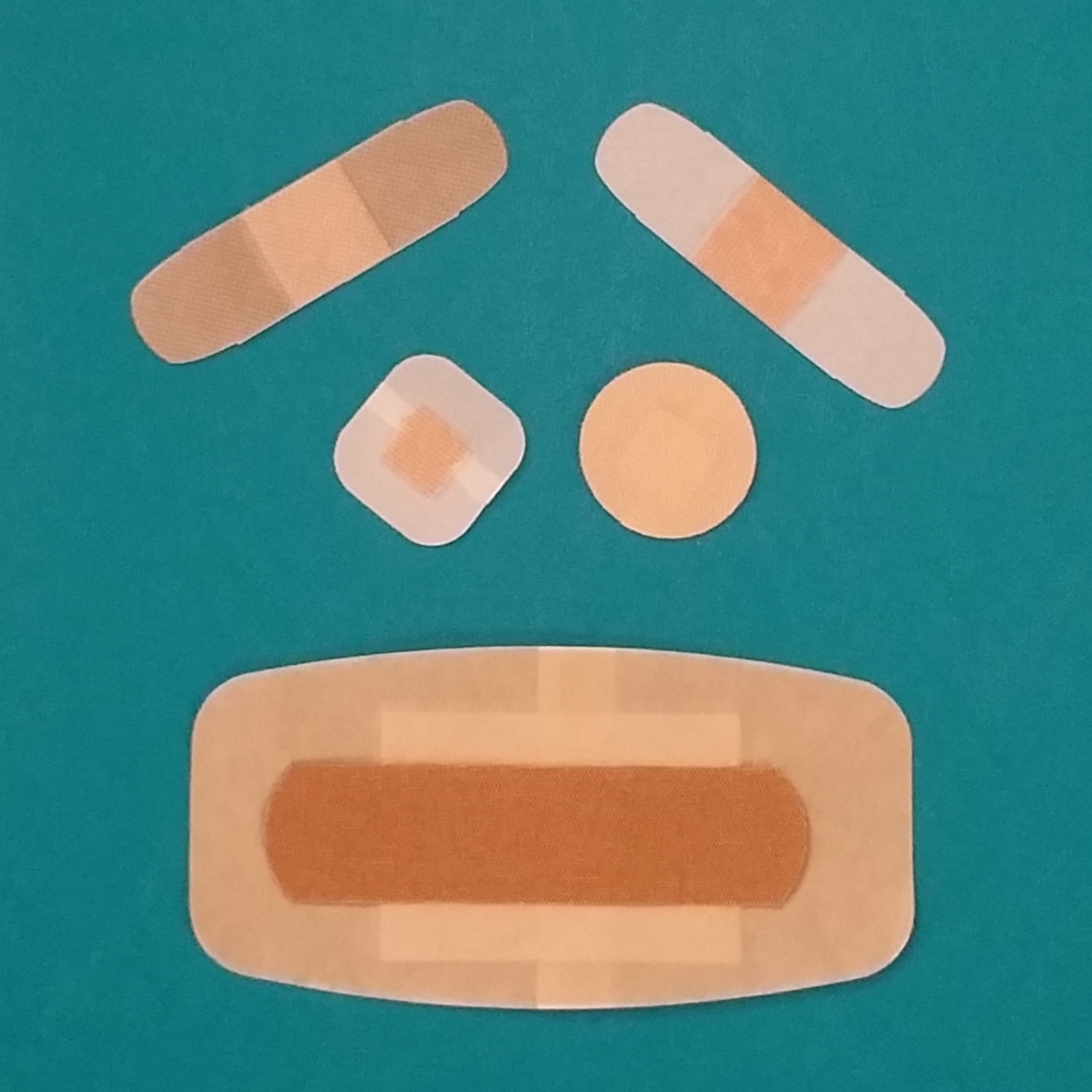
When my daughters were little, they often bruised or scraped themselves in the course of everyday play. A kiss from Mommy or Daddy (and perhaps a Sharpie-drawn smiley face on a Band-Aid — whether necessary or not) was all it took to make things okay again.

Sometimes other tots grabbed toys, knocked over blocks, or cut their Barbies’ hair — oh, wait … it was my child who did that (as practice before “trimming” her friend’s bangs). All it took to reset their emotional footing was distraction — manufactured by word or sleight-of-hand. Almost at once, they got back to the business of learning by play.

As they grew older their minds and hearts grew into increasingly complex, interdependent organs. It became harder to “fix” what upset them. The inevitable day came. A daughter spurned my offer to “kiss it better” as she clutched at the reddened skin on her forearm. “That won’t help,” she pouted, her eyes daring me to contradict her. My offer to read her a story elicited the same response.

She was right, of course. A hug or kiss didn’t take away the sting of the injury. A bandage could cover the wound (at least temporarily) and hopefully keep out germs that would otherwise impede healing, but beneath its plain (or decorated) facade, remained a wound that required time — and the right circumstances — to mend. A kiss of affection, a favorite toy to hold, or a new story to distract might momentarily provide another focal point, but every heartbeat fueled throbbing reminders that all was not well.

It’s the same for grief. Bandages don’t work.

You can't put a bandage on grief to "fix it" or "make it better." Like any wound, it takes time.

You can’t put a bandage on grief to “fix it” or “make it better.” Like any wound, it takes time.

When grief is new (and by “new” I mean the loss occurred within two years — yes, I said years), the bereaved often bruise and scrape their psyches against circumstances of living in the course of everyday survival. Such emotional abrasions include (but aren’t limited to):

  • Significant dates — birthdays, holidays, anniversaries (of both positive and negative events). For many within the first 18 months after a loved one’s death, that day of the week (every week) and that date of the month (every month) feels like ripping off a fresh scab, re-traumatizing survivors.
  • The “business” of death — deeds, accounts, titles, plots, medical bills, insurance … The list of accounts can seem endless for an adult or unfairly incomplete for a child. Making each phone call or office visit is excruciating. Every time I called another provider, I sobbed. Removing my husband’s name from each document felt like erasing him. It felt disloyal. It felt violent. Horrible.
  • Routine “first since” appointments — the dentist, the doctor, the pharmacist, the mechanic, the accountant … Anywhere a person has done business in an ongoing manner, that first visit since the death occurred forces yet another face-to-face bout of admitting a loved one is no longer living. As a new widow, I cried every time. Many forms had boxes to check that offered only the options of single, married, or divorced. I wrote in “widowed” on paper forms. Online forms frustrated me so badly I shrieked at the computer (and I’ve never been a “yeller”). If I checked “married,” they required ongoing contact information no longer applicable, but for a long, long time I refused to consider myself “single,” so that option didn’t work, either.
  • Getting groceries — ugh! Walking through the aisles was awful, awful, awful. “His” foods stood out on the shelves. I couldn’t find things I wanted right in front of me (on rare occasions when I actually knew what I wanted). I couldn’t even remember to consult the list in my hand. The first time I saw THE paramedics from the nearby fire station in the store, oh, how I lost it!

Recently, Megan Devine of Refuge in Grief wrote “grief & the grocery store.” If you want to understand what your grieving friend experiences in the ordeal of getting groceries, please read what she has to say:

http://www.refugeingrief.com/groceries/

You can’t cover your grieving friends’ loss with a bandage. You can’t “fix it” or “make it better.” But you can offer them momentary distraction from their pain by including them in your plans (whether they accept your invitations or not). You can aid them in their healing by acknowledging significant dates, offering to fill out paperwork (or make other business calls), accompanying (or taking) them for routine appointments, and going with them to the store to help them navigate the perils of produce.*

Be with them in their grief. Be patient as they heal.

___

*For an in-depth look at one element of grocery-intensified grief, see my essay Eggplant Elegy” in the online journal Segullah.