St. Patrick and the Green Grief Monster

Balancing bronchitis and work projects took priority over writing a new blog post for this St. Patrick’s Day, so I’m reposting last year’s today. (I’ll have another entry up in a few days.)

TealAshes (Teresa TL Bruce)'s avatarWhat to Say When Someone Dies

Celebrating St. Patrick’s Day (or not) isn’t the same when you’re grieving. Nothing is. The day itself commemorates the death of Ireland’s patron saint — originally it was a religious observation. But in recent years its solemnity appears all but forgotten as popular culture makes it into a day for people to celebrate their Irish heritage (whether real or adapted for the day).

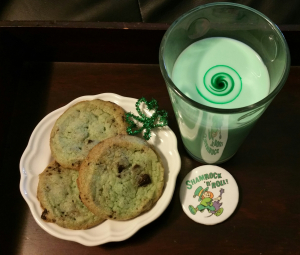
In my family, with Irish ancestors on both my side and my late husband’s side, our St. Patrick’s Days were all about the green. When our kids were little, I’d add green food coloring into milk, pancakes, cookie dough — whatever I could think of — just to infuse the day with a bit more color.

Green milk and other green-dyed foods were a staple of our St. Patrick's Days. Green milk and other green-dyed foods were a staple of our St. Patrick’s Days. (Photo by Teresa TL Bruce/TealAshes.com)

We wore green, of course, because nobody wanted to get pinched.

I made corned beef, cabbage, and potatoes for dinner. A few times I…

View original post 491 more words

Confused by Grief

If your friends grieve lost loved ones, they may show confusion. Some writers have compared the memory loss of bereavement to symptoms of dementia. (In the months after my husband’s death, I got lost within my own neighborhood more times than I counted.) Why does deep sorrow cause such confusion?

Grief tips things sideways and turns them upside down. (photo by Teresa TL Bruce, TealAshes.com)

When a loved one dies, survivors’ lives tilt, tumble, spin. Familiar routes bewilder, and expectations swirl away. Long-term plans shift, dreams evaporate, and unforeseen obstacles loom. Is it any wonder mourners might act muddled?

Don’t blame the bereaved for being baffled. Rather, summon your empathy and extend compassion toward their confusion.

Before you berate a disheveled, bereaved widow for getting her children to school late or forgetting to bring cupcakes to the XYZ fundraiser at work, stop. Instead, acknowledge what she has done right: She got herself (and children) out of bed and took the children to school before showing up at work. (That may sound simple, but in the middle of mourning, it’s not.)

Next, consider the upheaval in her life: Suddenly, she’s a single parent, and she’s exhausted not only from caring for her children’s needs but from grieving, which drains a person in every way. Her deceased partner’s income no longer contributes to the family budget (maybe the cost of cupcakes is too much now), and she may be facing massive funeral, medical, and legal expenses you can’t begin to imagine (unless you’ve had to do the same). But her loss is about far more than finances, although that alone is often significant. She’s also lost her surest source of physical and emotional support. Friends and even family may stand near her, but she’s alone while crying through the night’s insomnia. In the morning, she can’t stand the emptiness in her swollen eyes, so she avoids the mirror while running a hand over her head to smack down the worst of her toss-and-turn hair.

If, after walking a metaphorical mile in her mourning slippers, you still feel judgmental toward that widowed mom, you’re the one who’s confused.

Before you condemn a grieving colleague for collapsing in the middle of a conference call or pleading for a personal day, stop. Instead, remember that people matter more than products, and acknowledge that beneath his position, he’s a person. Whether he and his partner have lost a child or whether he’s just learned his parent’s condition is terminal, his grief will continue beyond the funeral or that phone call.

Grief triggers — dates, events, songs, situations — don’t fit into an after-hours locker to release when convenient. They can’t be scheduled for the off season. They seldom give advance notice, and they can take you down — overwhelm you fully — before you can so much as say, “Shouldn’t you be over that by now?” (Note: Never, ever, ever say that — not even to yourself if you’re mourning. It won’t help. Trust me on this.)

The Grief Monster attacks without advance notice, sending its triggers when and where and how it will.

Imagine working with efficiency, expecting the promotion and raise you’ve always dreamed of. And then, a slight twinge in your gut warns that something you ate disagreed with you. The next moment, you’re running for the bathroom. Besides gastrointestinal distress of every kind, you’re sweating from a fever, shaking with chills, and erupting in boils across exposed skin. Several bones and organs must be trading places.

Meanwhile a supervisor followed you into the restroom, not to dial 911 but to demand, “How soon will you return to your desk? What time will you be in tomorrow? And why haven’t you finished today’s work yet? I expected better of you.”

That’s (a little) like working through grief.

Grieving wreaks havoc with concentration. Given time, understanding, and compassion, mourners’ confusion will clear. They will learn to function again, and will learn — eventually — how to move forward with altered lives.

Meanwhile, ask yourself this: Will you support your friends and coworkers through the rough, confusing process of mourning? Or do you remain too confused by grief to show you care?


Valentine’s Schmalentines — Snarky Widowed Humor

Grief trigger warning for the newly widowed: I’m sorry for the renewed pain this occasion brings you; you’ll find more comfort reading this account of my sweet grandparents — Valentine Loss — A Love Story — than the post below.

If you’re looking for specific words and actions to help a bereaved friend, Valentine Greetings for the Grieving offers a checklist of dos and don’ts.

If you’re still here, bless you!

Back when I shopped with three young daughters, I dreaded Pepto-pink Barbie aisles (for too many reasons to explain here). These days, with my daughters and son-in-law all twenty-somethings, similar aversion rises like bile when I scurry past pink and red aisles of Valentine’s Day LOVE! proclaimed as a shopping to-do list, and my response is much the same toward lovey-dovey declarations flooding Facebook.

Now, please understand. I’m not cynical about celebrating romantic love. It’s a beautiful, wonderful bond that places rose-colored lenses on starry-eyed dreams.

But my 45-year-young husband lost his mind and then, at 47, his life. As a widow, Valentine’s Day annoys (shouldn’t you proclaim your love to your sweetheart 365 days a year?) and hurts (because I still — yes, still, after six-plus years — miss my own sweetheart).

It’s easier this year, but easier doesn’t mean easy. In past Februarys, seeing friends’ “I love my sweetheart so much” posts punched the breath out of me. (Grief hits below the gut, you know.)*

This year, I’m meeting the current Facebook plague — er, trend — head-on with (admittedly warped, slightly irreverent) widowed humor. (I’ve copied the anonymously authored Facebook heading and questions below in bold, italicized font and provided my responses below.)

In honor of Valentine’s Day, all married, engaged, or dating couples: Make this your status and answer honestly.
Who’s oldest? He was but stopped aging, so I am now. (Couldn’t figure out my own age for two years after he died.)
Who was interested first? He called me. Stopped calling several years ago, though.
Better sense of humor? I loved his sense of humor, but he won’t laugh at my jokes anymore.
Most sensitive? I’m not ashamed to cry in public over a touching advertisement, a lovely sunset, or a couple holding hands. My husband, on the other hand,  never shows his feelings these days.
Worst temper? Mine, especially while driving or taking out the trash during the first year after he died. My husband seldom raised his voice when alive. Now he gives me the silent treatment.
• More social? That would be me, the introverted writer, unless I’m in the middle of reading a great book series. Or when when grief reboots my antisocial hibernation hormones. Then my husband might be better company. After all, he does hang out with a large group of people all day, every day — at the cemetery.
Hardest worker? I don’t see him helping me pay the bills or tackle household chores.
Most stubborn? Clearly, I now win all disagreements, set the thermostat where I want it, and have the last word about everything in our marriage.
• More sarcastic? My husband hasn’t made a smart-aleck comment in over six years. I, on the other hand …
Who makes the most mess? I blame him for the clutter in my closet. (His bins of things I can’t quite throw out yet take up a third of the occupied space.)
Wakes up first? Hard to say, unless by “wakes up first” the question means “sleeps less.” Then it’s me. Definitely me.
• Most flexible? (Can’t claim an original reply here. Too many widowed friends posted answers referring to rigor mortis and other morbid conditions we who survive our loved ones sometimes think, talk, and joke about more than we should.)
• Who cooks the most? Hubby cooked better than I when we were newlyweds, but over years as a stay-at-home mom (aka seldom-home-while-chauffeuring-kids-and-volunteering mom), I held my own with Betty Crocker, Better Homes and Gardens, and Joy of Cooking. After he died … hmm … I wonder … What did I feed my daughter while trying to remember how to cook again?
Better singer? (Sigh.) He had an amazing voice. We sang together in choirs and (cliché though it may sound) we made beautiful music together. (Sigh.)
• Hogs the covers? The covers stay where I want them now — what a great perk of widowhood! Hooray!
• Who smells better?  If I don’t smell better than he does, something’s dreadfully wrong.
• How long have you been together? Three decades — married 24 years, widowed 6 — if I count the years he’s slept at the cemetery as “together.”

*Still feeling brave? Here’s a prickly, pre – Valentine’s Day encounter I wrote a few years into widowhood: The Sister, the Beast, and the Invitation to Love.

Grief, PTSD, and Empathy

It’s not about me. It’s not about me. It’s not about me … I chanted aloud when alone, silently while surrounded. The reasoning side of myself knew this grief wasn’t about my grief — no matter how much it felt like it was.

I didn’t know the man who died as last year ended and this one began, but his brother and sister-in-law are my friends.

Shortly after I heard the news, I spoke with my friend. With her was a woman I’d never met before, but my soul recognized her expression, an affect exuding the shock of sudden loss. Just a day and a half earlier, her beloved life partner had collapsed — without warning — in their bathroom. Died without reviving. (As did mine, six years earlier.)

I knew nothing I could say would make it better. How could words — any words — alleviate the agony of their loss?

They couldn’t.

But say something to this newly bereaved woman I must. Must. MUST. MUST. MUST! Must approach — even in her in her unapproachable grief. Must extend sincere condolences — even in her inconsolable situation. Must … say … something …

Yet I — after facing my own similar loss; after networking, conversing with, being befriended by multitudes of widowed and differently bereaved souls; after writing thousands and thousands and thousands of words on the subject of what to say when someone dies (and what not to say) —

I struggled for what to say (and what not to say).

So, I said very little.

“I’m sorry,” I told her, then listened.

After a while, when it seemed appropriate, I said, “My husband also died suddenly.” Remembering the widows who spoke similar words to me, I added, “I don’t know what you’re feeling, but I know it hurts. I’m here to listen.”

She held herself — and her grief — with a quiet dignity. She spoke of her faith in God and how she’s trying to rely upon Him. I admired her attitude even in her anguish.

I remembered similarly drawing strength from my faith during raw, early mourning. My absolute knowledge of God’s love kept (keeps) me functioning. Yet I felt unconsoled and discomforted by those who tried to preach away my sorrow, as if they implied Godly love should negate — rather than enhance — my love-grief for my husband.

I nodded and listened. When she asked me to pray for her, I did. Promised to continue. I still do.

When she apologized for crying, I reassured her she need not. I acknowledged that tears of grief are tears of love. That as she mourned, she need not be ashamed of showing her love in that way.

When we parted, she knew another person outside her family cared about her bereavement.

When I got into my car, I cried for her and all the pain I know she has yet to face. (And I cried for myself as my body and soul felt again the raw pain and shock that enveloped my life six years earlier.)

A few days later, the Saturday morning skies loomed gray the day of the funeral. (As they were for my husband’s, six years earlier.)

Three steps inside the church hallway, my feet slowed. My hands shook. Lungs shrank.

PTSD threatened to do worse if I continued. Empathy insisted I proceed.

I could have turned around. Left the building. Driven away.

The funeral setting felt too familiar.

Like six years ago.

Again.

But it felt like few attended my husband’s funeral.

And I’d gained emotional strength from those who did show up.

And I’d gained physical strength from those who provided food for our family after the burial.

So, I stayed to offer what little support I could.

Despite the uplifting, sometimes hilarious anecdotes shared in the public celebration of this man’s life, and despite the beautiful, spirit-soothing music, my body recognized this was a family’s final, physical farewell to one they cherished.

During the service, I sometimes shook so hard I wrapped my wide scarf around my arms to hide them. My body insisted these traumatic triggers were mine to feel again now (and seemingly forever), but I didn’t wan’t to draw attention to myself.

It’s not about me, not this time. It’s not about me.
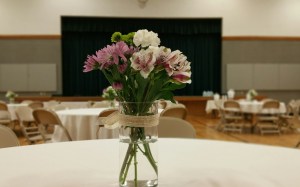
photo by Teresa TL Bruce, TealAshes.com

photo by Teresa TL Bruce, TealAshes.com

After the funeral, while the family and closest friends attended the graveside service, several women from two congregations prepared and set out platters of donated food. Sometimes I worked alongside the others in the kitchen. Sometimes I stepped away, seeking solace in solitude.

In the multipurpose cultural hall, empty chairs waited around linen-covered tables. On each stood a vase of cut flowers, also lovingly donated.

I thought about the exhausted relief and despair and closure and uncertainty I felt after my own husband’s funeral. How feeding myself had felt irrelevant until then, but feeding my extended, gathered family after this event became both impossible and essential — and I couldn’t have done it without my church sisters stepping in and caring for us all …

… as my church sisters and I were now doing. When this grieving family returned, we had a buffet large enough to feed the extensive group.

I watched their expressions — grief, relief, exhaustion, hunger, shock, sorrow, fatigue, appreciation — and remembered seeing the same on the faces of my family six years earlier. Many expressed heartfelt gratitude.

Did I thank the women who served my family following my husband’s burial? I’d like to think I did, but much of that day blurs in memory — it’s possible I didn’t. (If so, I’m sorry. Belated thanks to you all, whoever you were that day.)

It would have been easier — emotionally and physically — to leave before the service or not show up at all. But empathy, as painful as it can be, is a wise leader when interacting with the bereaved.

When you have the chance to step forward to comfort your grieving friend, listen. Listen to your friend. Even if it hurts, because it’s not about you.

Grief after Holidays

You’ve packed lights and ornaments away, hauled your tree to the curb for recycling (or tucked it back into a box), and started (or at least outlined) your battle plan for losing holiday pounds. “The holidays” are past. Whew! It’s time for a return to the security of normal routines … unless you’re grieving.

Emptied of adornments and social obligations, the post-holiday season sometimes leaves mourners feeling more bereaved than before. (photo by Teresa TL Bruce, TealAshes.com)

Emptied of adornments and social obligations, the post-holiday season sometimes leaves mourners feeling more bereaved than before. (photo by Teresa TL Bruce, TealAshes.com)

If your friends are mourning recent losses, the emptiness of bereavement may surge in the post-holiday “normalcy” of unadorned surroundings and cleared social calendars.

Have you ever unwillingly started over? Imagine waking up one morning to discover your contact lists, calendars, medical records, project files, programs, passwords, accounts, data, and personal property were all gone — vanished. Multiply that by a thousand or so, and you might glimpse the disconcerting reset death writes into the hearts and minds of the bereaved. (If a loved one’s or business partner’s death left unknown account passwords or nontransferable titles, this revision upends emotional, mental, and practical matters.)

When my husband died, our family patterns shut down without warning. The agonizing rebooting left no backup files, and those of us left behind faced unfamiliar operating systems written in a foreign language not compatible with our hardware.

In the earliest months after, I observed that others’ lives continued exactly as before. I even recognized myself as more-or-less alive, so in fragmented slivers of my shattered self I (eventually) acknowledged that life continued, sort of. I didn’t want (or need) to hear “life goes on” from those who meant to comfort me. Life for my family was forever altered — our lives did NOT “go on” as they had before.

When loved ones die, “normal” no longer exists. Please, don’t tell a mourning friend “life goes on,” because for their loved one it didn’t; for your friend, life now goes differently.

In the past year, many of you neighbors dropped off casseroles, friends attended funerals, and well-wishers sent notes of condolences to coworkers, family, or even passing acquaintances who lost loved ones. Well done. Thank you for reaching out to comfort and console your grieving friends and coworkers. (On a personal note, I’m forever grateful to those of you who have comforted me and my family by mourning alongside our trials and triumphs through the years.)

Now, whether you did or didn’t step up at soon after your friends’ loved ones died, pardon me for sounding bossy, but GET BACK TO WORK at it. (Please.) Your grieving friends may need your support more now than they did in the earliest days, weeks, and months.

For friends whose loss(es) occurred recently, the blurring fog of shock probably obscured transitions from the old calendar year to the new. As they reawaken to the disorienting world around them — life as they did not know it before — caring gestures of friendship and concern may help them reorder their surroundings. They won’t be ready to rebuild yet, but gestures of kindness (whether messages of ongoing awareness or invitations to interact) will help newly bereaved friends begin to feel the ground under their feet, even if they aren’t yet strong enough to stand upon it.

For friends approaching anniversaries of loved ones’ deaths (whether in the first year or beyond), such demonstrations of caring and commitment are just as important. People need to know their beloved departed ones aren’t forgotten. Let them know you’re aware it has been a year (or two) since their dear ones died. Make note and mention them on birthdays their loved ones won’t be present to celebrate.

Let your friends know you respect their grieving as acknowledgment that love lives on, even past death.

___

(This post is a revised version of 2015’s Grief Reboots after Holidays.)