Are We There Yet? (How Long Does Grieving Take?)

Are we there yet? — one of the most annoying questions parents hear. Invariably, no matter how long remained was too long for our children. When they were young,  we sometimes answered that if they asked one more time, we’d turn the car around and go back home.
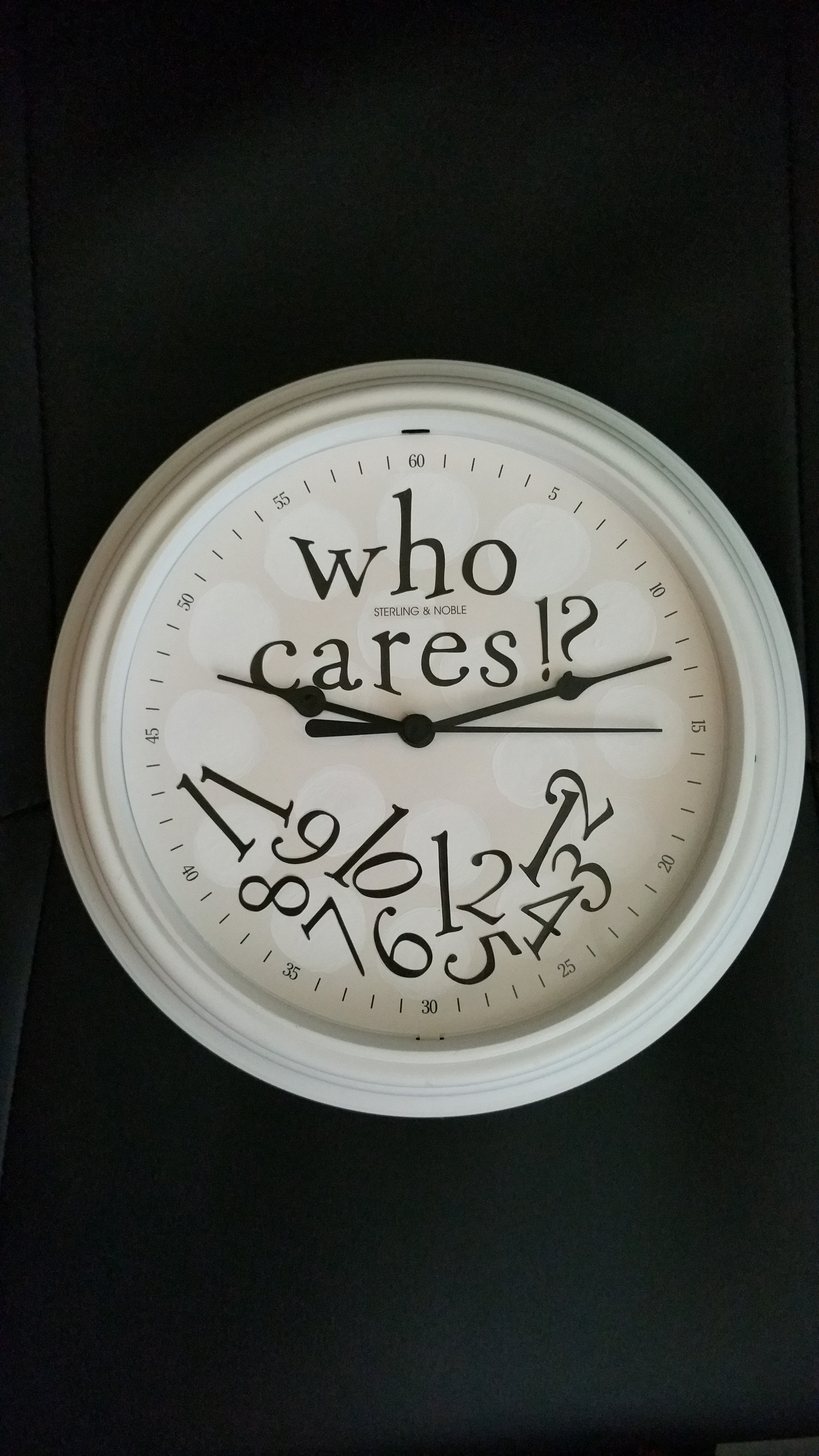
clock with fallen numbers

“who cares?” clock face created and photographed by Teresa TL Bruce (TealAshes.com)

On a few occasions, we circled back to where we started, postponing the excursion for another day.

Their petition came regardless of our destination — rare, days-long, out-of-state road trips; frequent, up-to-an-hour-long, crosstown errands; or thrice-weekly, around-the-corner church meetings . All drives were apt to include variations on the dreaded question.

In hindsight, I realize our kids were eager for the fun to begin (or at least for the end of being strapped into car seats and belts while motion sickness churned their tummies). But while we were behind the wheel, our focus was to convey everyone safely from point A to point B. (If I could manage not getting lost when I was driving — ha! — so much the better.*)

Maybe askingWhen will we get there? reflected part of our kids’ intellectual development, too. They were still learning the basics of how time flows and is measured. They were learning to anticipate upcoming landmarks on familiar routes and weren’t yet able to estimate the amount of time it would take to reach the next location they could relate to during their journey.

And at that point in their lives, they lacked the experience to realize (or in some cases to care) how annoying it was to be asked.

We were more worried about reaching our destination intact than in time. If the Bruces were late, we were late … as long as we didn’t become the late Bruces in our attempt to arrive.

Sometimes detours or road conditions made our best estimates to How long is it gonna take? woefully wrong. (And, oh, did we hear about it!)

Then life’s day-to-day travels crashed into the worst kind of unplanned detour. My husband died.

My estimated arrival times died with him.

Are you better yet? — one of the most annoying questions mourners hear. With precious and dear exceptions, no matter how recent my bereavement felt, it seemed to take too long for those around me. When my grief was still young, I first answered bluntly, “No, of course not.”

If the same person asked more than once, I soon learned my frank answers disappointed them; disapproval showed in their expressions, voices, and words. I turned myself around when I saw them (or their phone numbers). That I was “still” not “better” (meaning not yet my former, pre-widowed self again) shamed me into silence about my real feelings. (Grieving was hard enough without being made to feel I was doing it the wrong way.) I put on my plastic smile and said, “Mm-hmm” — and got away from them as fast as I could.

In hindsight, I realize my friends were still learning the basics of what it meant to be around someone who’d lost a loved one. And they were eager for my sadness to end (as evidenced when I cried my way through conversations). But while I fumbled my  way through learning to cope with life-altering loss, my focus was simply to endure a single day from one moment to the next.

Any planning, any  estimation, any sense of the “when” of things was beyond my capacity. Death detoured my timing in every way. It slowed me down. (I know others who fell into fast-paced flurries of keep-busy actions to try to keep their grief from catching up with them; it sometimes worked — temporarily.)

It took me twice as long to do the dishes (when I remembered to cook — or to eat — and the two didn’t necessarily happen together anymore). It took me twice as long (or more) to get dressed in the morning. Four times as long to pay the bills and attend necessary business transactions. And getting to sleep or staying asleep … (sigh). Let’s just say my internal sleep clock has been at the repair shop for several years now …

I had a trouble estimating how I’d fare on the other side of the next five or ten minutes. Figuring out what would happen another day was tougher. What would the next week hold? (Thinking that far ahead made my head hurt almost as much as my heart.) The following month? Ha! (In case the italicized “Ha” with an exclamation point didn’t convey it clearly the first time, let me repeat. Ha!)

Questions about my five- or ten-year plans were as impossible to answer as “When are you going to act like normal again?

Maybe askingWhen will you be done with grieving? reflected part of my acquaintances’ empathetic development. They were still learning the basics of how grief flowed and ebbed around time-warped detours on an unfamiliar journey they couldn’t relate to. Yet because of what they observed in how I grieved my husband, they were awakened to an uncomfortable realization: they would someday lose a loved one, too.

Their need to ask, So, is everything okay now? stemmed as much from their lack of experience with grieving as it did from their genuine concern for me. And at that point in their lives, they had no way to realize how annoying it was to be asked. 

Instead of asking your grieving friends how long it will take them to “get over” their bereavement, assure them you accept them and support them no matter where (and when) they are in their grief.

___

*I’ve been known to get lost even when following GPS directions. In a future post I’ll share more about getting lost in other ways while finding my way through grief.

___

Feel free to subscribe or follow me on Facebook (https://www.facebook.com/TealAshesbyTeresaBruce) or Twitter (@TealAshesTBruce) for the latest posts.

Letterman’s Last, Rachael Ray’s Recipes, and Loss

David Letterman’s last broadcast. Rachael Ray’s five recipes. May 20, 2015, might be a tough TV day for mourners.

If you’ve watched any late-night American TV in the last 30 years, you’ve seen David Letterman on CBS’s Late Show (or in earlier years on NBC’s Late Night).  Whether you glimpsed him during rare bouts of sleeplessness or your rest depended on counting down his “Top Ten” instead of sheep, you’re probably familiar with his often irreverent and occasionally tender entertainment presence.

Like ocean waves, tax hikes, summer sun, and family genes, I took that presence for granted — until the announcement of his retirement.

Millions will tune in for Letterman’s final show.

I’m not sure whether I will or won’t.

Endings are harder now. My husband seldom watched late-night TV, but when I heard the news my thoughts ran straight to grief: “No! Dave was always on. He was on when my husband was alive. And now they’ll both be gone …”

The retirement of David Letterman and the death of my husband aren’t connected. I know that.

My moving-on-yet-still-grieving brain says otherwise.

___

On a different TV note, I’m definitely avoiding Rachael Ray’s “5 More Recipes to Make Before You Die segment scheduled to air this same day. I usually enjoy her show, so I’ll give you the link to the promo clip that alerted me:

When you’re missing someone who died, you don’t want to hear that food is “to die for” or be told your life will be incomplete if you don’t make a particular meal “before you die.” Such phrases highlight the absence of the deceased, who will never have the chance to taste these decadent dishes because their too-short lifetimes were incomplete.

___

While I’m harping about food and grief, I’ve bitten my tongue (for over a year) about a snack I saw at the Winter Park Art Festival in 2014. The deep-fried potato crisps were covered in bacon, cheese, and — who knows what else? It looked delicious, but they called it something they probably meant to be cutesy: “Heart Attack on a Plate.”

I was with another widow at the time, a woman whose husband died of a heart attack.

Not cool, marketing department. Not cool at all.

Easter Grief: Life and Death and Loss and Hope

At Easter time, what should you say to a grieving friend whose loved one has died? My perspective may surprise you.*

I love Easter, but I don’t like it. I’m grateful for Easter, but it’s painful. I take comfort in Easter, but it’s not comforting.

Confusing enough?

When I was little, reading of Good Friday made me sad. My great-aunt Sarah used to say, “What’s so good about Good Friday? It’s horrible” revisiting the crucifixion story. As I grew older and learned more about the physical afflictions inflicted by that practice when Jesus Christ walked the earth among men, it became harder to sit through sermons about that day.

And yet …

For those of us who believe in the literal resurrection of Jesus Christ (and future resurrection of all mankind), the message and reason for Easter celebrations offers hope for eventual reunions with long-gone (or recently departed) loved ones. My earliest memory of that hope centers on my mother’s reverence toward Easter, especially in the years following her mother’s death. Mom knew she would see Grandma again someday, and she acknowledged her gratitude that God, in his mercy, provided for that gift.

But she wouldn’t buy (or make) Easter dresses. She wanted our focus on why we were there rather than on what we wore. For similar reasons, she gently steered my friends and me from including “pretend Sacrament” (our name for Communion) when we “played church.” I was five or six years old, but I still remember Mom bending down to our eye level. She was glad we enjoyed church enough to include it in our playtime, but that part, she said, was “about Jesus dying for us, so it’s too sacred” to play about.

Coloring eggs, hiding and finding them, and nibbling chocolate bunnies figured into my family’s annual Easter traditions, but my parents made it clear those were merely fun, shiny wrappings around the real Gift of the season. My husband and I tried to do the same with our kids.

sun-blooms-in-snow-TLBRUCE-20150415

Sun Blooms in Snow (photo by Teresa TL Bruce, TealAshes.com)

My appreciation for the significance of Easter deepened after the deaths of my mother, cousin, remaining grandparents, and my husband.  I knew then, as I know now, that our separation is temporary — at least where eternity is concerned. I took (and still do take) solace in that.

However …

It’s one thing for me to say, “I’m grateful I’ll see Mom again. I’m grateful that, because of Jesus Christ, we’ll be reunited.” It’s uplifting when friends agree with me. It’s even nurturing when friends whose views differ acknowledge they’re glad for my sake that my stated beliefs give me comfort (even though they disagree).

It’s entirely different when others tell me to “take comfort” in similar statements. How dare they tell me what I “should” feel about my losses? How dare they tell me what “should” lessen my bereavement? For those already experiencing anger (with God in particular or the universe in general) over loved ones’ deaths, such assertions increase mourners’ feelings of isolation.

When my losses were new, I did NOT want people reminding me of the hope I “should” feel for the future. I did NOT take comfort in platitudes about eventual reunions. I did NOT feel uplifted by efforts to “make” me feel better by reminding me of “the reason for the season.” Such expressions ignored the sorrow of my grief. 

I didn’t (and sometimes still don’t) want to be told “Happy Easter.” I wasn’t happy about my mother’s death, or my husband’s (or my Savior’s either, for that matter). Yes, I rejoice that I will see them again. But looking forward to anticipated reunions makes mourning in the here-and-now all the more painful. Future hope doesn’t erase current absence.

Here are ways to support your grieving friends this Easter, no matter what their faith (or yours) may be:

  • “I’m thinking of you (and your family).” Period. No matter the mourner’s faith (or yours), this will always show that you are aware. You can’t go wrong with this, and you can repeat it often.
  • Drop off a card (or some other tangible sign of your concern) they will see long after your visit.
  • Bring them a treat, a snack, or a bag of groceries. Better yet, invite them over to eat with you.

I also feel comfort when friends acknowledge my faith and my loss together:

  • “I’m thinking of you and your family this Easter.”
  • “You and your family are in my prayers as we celebrate Easter.”
  • “Sending you loving thoughts at Easter time.”
  • “I miss your mother, too, and I look forward to one day seeing her again. Thinking of you and your family at Easter.” (This states the person’s faith and hopes, without imposing them on the mourner.)
  • “I take comfort in the joy of the resurrection to come, but I know you’re missing your husband this Easter season.” (Again, this expression of a friend’s faith acknowledges the current sorrow without imposing that faith on the bereaved.)

If you haven’t yet known what to say to a grieving friend, now’s a great time to reach out.

___

*Please note: My intention isn’t to preach here, but due to the nature of the Easter holiday, I can’t express what I think you should (or shouldn’t) say to mourners at this time of year without referencing elements of my faith. Although faith colors my perspective and shapes my day-to-day life, I respect others’ beliefs. (I’ve never intended to make this a “religious” blog. There are many, many writers who do a beautiful job of that.) My goal has always been to make this a place where people can learn to help grieving friends from any (or no) faith tradition. In most posts, references to my faith and/or my church family do appear, not because I’m trying to proselytize but because they’re as much a part of my life as being a widow with three daughters who has worn bifocals since seventh grade.

Having said that, for those who do share my faith in the resurrection of Jesus Christ:

#BecauseHeLives

How to Filter What You Say for Others’ Comfort

The ones at the center of the ring of loss/grief/suffering can dump whatever they want into outer rings. Those outside the core may dump into larger rings, but ONLY COMFORT goes from an outer to an inner ring.

Ring Theory of Kvetching, Illustration by Wes Bausmith

When you’re upset over the death of someone dear to you and dear to others around you, it can be difficult to filter what you say to whom. A little over a week ago, a reader on another blog* shared this illustration of “Comfort IN, Dump OUT” as expressed by Susan Silk and Barry Goldman in the Los Angeles Times post “How not to say the wrong thing.”  (Please read the full article at http://articles.latimes.com/2013/apr/07/opinion/la-oe-0407-silk-ring-theory-20130407)

The concept is simple. The center of the “Ring of Kvetching” is the person to whom the bereavement, illness, crisis, or other distress belongs — the patient, the dying, the widow(er), the orphaned, the laid-off, the divorced, the ripped-off, etc. People affected in peripheral ways — immediate family, extended family, closest friends, other friends, neighbors, coworkers, etc.–are in the outer rings.

Quoting the post by Silk and Goldman:

“When you are talking to a person in a ring smaller than yours, someone closer to the center of the crisis, the goal is to help. Listening is often more helpful than talking. But if you’re going to open your mouth, ask yourself if what you are about to say is likely to provide comfort and support. If it isn’t, don’t say it. Don’t, for example, give advice. People who are suffering from trauma don’t need advice. They need comfort and support. So say, ‘I’m sorry’ or ‘This must really be hard for you’ or ‘Can I bring you a pot roast?’ Don’t say, ‘You should hear what happened to me’ or ‘Here’s what I would do if I were you.’ And don’t say, ‘This is really bringing me down.'”

If everyone applied such a “comfort IN, dump OUT” filter, it would be much easier to support one another through all kinds of grief, not just due to the death of a loved one but to other losses as well.

It can be tough to see which ring is closer to the center than your own.

It can be tough to see which ring is closer to the center than your own.

Within grieving families, though, it isn’t always easy to figure out — or remember — whose pain is at the center of the rings. Families are filled with primary relationships that could all be seen as the innermost rings:

  • spouse — spouse
  • parent — child
  • sibling — sibling

Also important are these other familial relationships:

  • grandparents — grandchildren
  • aunts/uncles — nieces/nephews
  • cousins
  • godparents
  • “like family” or “family by choice” friends

Loss is loss. If you’re in the inner rings, try to remember that those closest to you and your departed loved one are also hurting. Be gentle with each other’s feelings. Try to think before you speak, especially in response to comments that seem hurtful or insensitive to your own loss. If you’re not sure whether the person you’re about to unload on is in a broader, more “distant” ring than you, err on the side of caution, offering only your condolences and willingness to listen.

___

*Many thanks to Ana of the Nine+Kids for sharing the Los Angeles Times story and graphic in her comment on my guest blog post at The Sister, the Beast, and the Invitation to Love

“Other” Grief (Not Triggered by Death)

For a while I’ve mentally composed this post about “other” grief triggered not by death but by different forms of loss. Not every person has experienced the death of a loved one (yet), but anyone mature enough to read these words has likely suffered their own significant losses, perhaps even grieved them.

If you’ve lost a job, you may have grieved the loss of income or the loss of stability. You may have grieved losing access to the company car (or to the “hottie” in the next cubicle). It didn’t matter that you–or your friends– “knew” you’d find another (source of funds, transportation, or “admiree”). What mattered in your moments of pain was that the situation was awful. It hurt. Long after you may have found your dream job, memories of that loss can still bring pain.

If you’ve lost your health, you may have grieved that loss. Whether illness impacted the whole sum of your parts or injury impaired the function in some of those parts, you might’ve grieved its physical (and/or emotional) pains. Even temporary conditions (a broken leg, a bout of the flu during vacation, a severe allergic reaction …) can trigger acute grief, though it soon fades. More life-altering diagnoses (an amputated limb, a loss of sight or hearing, a metabolic or mental condition, or the awful C-word — cancer …) can cause feelings of grief and despair that may take years to overcome. Life-altering means just that: life is never the same again.

These sources of grief are no less “real” than the death of a loved one. Your friend, relative, neighbor, coworker, random acquaintance or even your arch enemy who stumbles into such sources of “other” grief needs your kindness and understanding. You can apply tips from my related posts — and from sites listed on my Helpful Grief Resources page — to help you support them through whatever crises they face.

In some instances, their grief will be short-lived. They’ll find a better job or have their cast signed by a favorite celebrity. They’ll schedule another “once in a lifetime” trip in place of the one they spent puking instead of parasailing. They’ll heal. In other cases, the grief may linger long after you have “gotten over it” in their behalf; they are the ones still working their ways through the traumas. In either case, the most important grief to your grieving friends is whatever loss they are are feeling right now.

By all means, when comforting your friends, remember how you felt when you grieved your own “other” grief. You may not be a cat person, but you can remember the loss of your childhood dog to help you console the friends who mourn their cat. Draw upon the pain you once felt to help you relate to theirs. But don’t compare it aloud. Comforting them is about them and their pain, not about you and yours.

Has this reminded you of your own “other” grief? If so, please scroll down and share what it was (or is). What helped (or didn’t help) you deal with your “other” loss?