Why Memorial Day Isn’t For You | SpouseBUZZ.com

I seldom repost other blog articles, but this one by Traci Moran has stayed with me since I read it a few days ago. My friend, Lynette Wilson, brought it to my attention on Facebook. This is what she said:

Please, for so many of us, Memorial Day is a solemn occasion, one meant to honor those men and women who gave the ultimate sacrifice in defense of their country. Please don’t trivialize the emotions by including “Happy” before it. Please know this weekend shouldn’t be about the big sales, the big barbecues, the big parties.

Take a moment and think of the fatherless and motherless children, the parents who outlived their sons and daughters, the wives and girlfriends, the husbands and boyfriends who miss their sweethearts every day. Remember those lives lost in defense of your freedoms. Freedom is never free. ——Lynette Wilson

Generations of my family have commemorated Memorial Day with graveside readings and remembrance gatherings for departed ancestors, including emphasis on those who gave their lives in service. On Memorial Day I cannot help but be mindful of my recently deceased great-aunt who belonged to the DAR and who every year made sure fresh flowers covered ancestors’ otherwise obscure graves. I’m achingly aware of my husband, mother, nephew, cousin, brother-in-law, father-in-law, grandparents, and all other loved ones who’ve crossed behind the veil where I can no longer see, hear, or touch them.

However, I also know Memorial Day isn’t about me or my losses. It’s about those who have served and died. It’s about remembering them, honoring them, mourning them, and living in gratitude to the debt we owe them — and their families. It’s about recognizing the prices they paid.

Please read Ms. Moran’s article:

Why Memorial Day Isn’t For You | SpouseBUZZ.com.

And please remember.

Mourning on Mother’s Day

Mother’s Day hurts. I don’t like dwelling on the downside of death (although that may seem like a strange thing from someone who writes about grief), but the best way for me to get through every second Sunday in May is to close the blinds and hunker down in solitude.

Sometimes the light of love (and its loss) shines brighter against the darkness of grief.

Sometimes the light of love (and its loss) shines brighter against the darkness of grief.

It wasn’t always like that. As a kid I picked flowers, drew cards, and poured adulation on Mom. As a young adult, then a new bride, and eventually a mother myself I appreciated her (and my grandmas and aunts) more deeply than before. My cards and gestures of appreciation (which once seemed so grand) paled next to Mom’s lifetime of service — though my daughters’ creative endeavors for me melted my heart.

After Mom died, Mother’s Day went dark. I still went to church that day, but mostly for my children’s sakes. (I wanted them to see me attending weekly even if I didn’t feel like it, and I knew they and their peers had practiced a song for all the moms.) I enjoyed their lovely hugs (and songs) and cards and “interesting” breakfasts in bed that one day of the year.

But the moment memories of Mom meandered into the day, renewed mourning overtook me.

Over the years I’ve learned to live with my mother’s loss, but there were always certain days per year — like Mother’s Day — wherein the pain of being a daughter without a mother hit me again. Hard.

Those hits became all-out assaults after my husband died. The pain of being a wife without a husband knocked the breath out of me.

This is my fifth widowed Mother’s Day. It’s easier … and yet it’s not. (My plastic smile will be a little more convincing as I smile at the children singing at church this year, but I know better than to bother wearing eye makeup.)

If you know someone grieving this Mother’s Day, let them know you’re mindful of their loss. Let them know you’re thinking about them. Let them know you know this year is different than it was.

Don’t say you know how they feel, because you don’t — especially if you’ve never suffered a similar loss. Only bereaved mothers, for instance, can nearly understand the raw feelings of other mothers who have buried a child. Acknowledge the unique, personal, presence of their grief.

Some people need interaction with others to distract them from tender days like this. Reach out and invite them!

But if they ignore or decline your invitation or phone calls, don’t take it personally. They might be like I am, needing to hunker down this year, but also appreciating messages of support. (I’m keeping the “Please do NOT disturb” sign on my door all day.)

Whether they take you up on your offers or don’t bother responding, let them know you’re aware and you care.

Pets, People, Death, and Grief

(I’ve composed this post — in my mind — dozens of times since February, but couldn’t bring myself to word it while my 13-year-old dog’s kidneys were failing. She rallied for a miraculous while, but this week her energy and appetite declined. For her sake, I had to let her go. Now that she’s gone, I can’t not put it into words.)  

Two weeks after her diagnosis, my dog rallied for several weeks. Each extra day was a gift!

Two weeks after her diagnosis, my dog rallied for several weeks. Each extra day was a gift!

If your friend lost a beloved pet (or person), remember that grief is the body’s natural (though awful!) response to losing someone with an emotional connection.

  1. Pets are not people,
    but
  2. Pets are people, too.

Huh? Didn’t I just contradict myself? Yes.

And no.

Pets are not people. Their bodies have different biological rhythms, their life spans (for most species) will run out long before their humans’ lives do, and they are 100 percent physically dependent upon the people who care for them.

Kind of like children. Their bodies have developing biological rhythms that differ from those of their parents (think of newborn sleeping, eating, and um, diapering needs), their life spans (with tragic exceptions) will outlast their parents’ lives,  and for years they are 100 percent physically dependent upon the people who care for them.

As we care for our pets, our children, our elderly relatives, our spouses, and our family-by-choice friends (whose bonds of kinship in some cases exceed those crafted in blood or in law), we join our hearts, minds, and extremities (hands, paws, wingtips, scales, fins …) with theirs.

We and they become family. We serve them, they serve us. We love them.

And when they leave us, they take that joined part of our hearts, our minds, and even the feelings of our extremities with them.

We mourn them.

As with other losses we’ve experienced, we can draw upon our own pain to help us better understand those who are mourning. But we must never, ever compare our losses or one-up “my grief is harder than your grief.” Ever.

I’m mourning my dog. Every part of my house and every part of my day reminds me of her absence. It HURTS. But as much as I love and miss her, this grief is not the same grief I felt after my husband’s death or my mother’s. It’s a different, less intense grief.

And yes, each “new” grief brings back a degree of the shock and the pain of each “old” source of bereavement.

Several people who dearly, deeply love their pets made comments they intended to help (but that did the opposite). When I needed to express my grief over the man who fathered my children, I didn’t appreciate hearing anyone say they “knew” how I felt because they’d had to put down a sick dog once several years earlier or they were dreading “going through” what I was experiencing when the inevitable happened to their pets.

My daughters didn’t appreciate similar comments comparing their dad’s death to the passing of friends’ cats, either. I don’t mean to imply that the loss of a pet is insignificant, because it does matter. When you learn a friend’s beloved fur baby has passed, by all means, speak up and share your condolences! (“I’m sorry about Flipper. She was a good goldfish.”)

But don’t rush in to judge or suggest courses of “replacement” — and this applies to the loss of  a person as well. (Do NOT ask whether — or when — they’re going to get another dog, cat, spouse, or child. Do NOT ask how soon they will start visiting animal shelters, dating, or “trying again” for another baby!)

Comparing losses or rushing to “replace” those we’ve loved doesn’t work. Think of it like this: Would it be better to lose your dominant hand or one of your legs? Which of your senses would you choose to lose? Who would you prefer to mourn when death steps into your circle of loved ones?

All loss hurts. All grief has to be worked through.

Let your friends know that you know they are hurting. (“I’m sorry about Donatello. I know you’re going to miss that sweet, stubborn donkey.”)

Be there with them. Bring tissues or chocolate or music or whatever your friends will find soothing.

Share your memories of their beloved. (“Remember the time Bunny chased that obnoxious salesman away? Good ole rabbit…”

Send word. Drop a line of text, a Facebook comment, an email, or (gasp!) an actual note or letter. They’ll be appreciated.

Many of my kind human friends have already done that for me. I thank you. You are amazing, and your compassion has brought sweetness into my saddened heart as I mourn my beloved, ever-faithful fur friend.

___
Helping Your Child When the Family Pet Dies” by the ASPCA includes some validating suggestions and further links at the bottom of its page.


Easter Grief: Life and Death and Loss and Hope

At Easter time, what should you say to a grieving friend whose loved one has died? My perspective may surprise you.*

I love Easter, but I don’t like it. I’m grateful for Easter, but it’s painful. I take comfort in Easter, but it’s not comforting.

Confusing enough?

When I was little, reading of Good Friday made me sad. My great-aunt Sarah used to say, “What’s so good about Good Friday? It’s horrible” revisiting the crucifixion story. As I grew older and learned more about the physical afflictions inflicted by that practice when Jesus Christ walked the earth among men, it became harder to sit through sermons about that day.

And yet …

For those of us who believe in the literal resurrection of Jesus Christ (and future resurrection of all mankind), the message and reason for Easter celebrations offers hope for eventual reunions with long-gone (or recently departed) loved ones. My earliest memory of that hope centers on my mother’s reverence toward Easter, especially in the years following her mother’s death. Mom knew she would see Grandma again someday, and she acknowledged her gratitude that God, in his mercy, provided for that gift.

But she wouldn’t buy (or make) Easter dresses. She wanted our focus on why we were there rather than on what we wore. For similar reasons, she gently steered my friends and me from including “pretend Sacrament” (our name for Communion) when we “played church.” I was five or six years old, but I still remember Mom bending down to our eye level. She was glad we enjoyed church enough to include it in our playtime, but that part, she said, was “about Jesus dying for us, so it’s too sacred” to play about.

Coloring eggs, hiding and finding them, and nibbling chocolate bunnies figured into my family’s annual Easter traditions, but my parents made it clear those were merely fun, shiny wrappings around the real Gift of the season. My husband and I tried to do the same with our kids.

sun-blooms-in-snow-TLBRUCE-20150415

Sun Blooms in Snow (photo by Teresa TL Bruce, TealAshes.com)

My appreciation for the significance of Easter deepened after the deaths of my mother, cousin, remaining grandparents, and my husband.  I knew then, as I know now, that our separation is temporary — at least where eternity is concerned. I took (and still do take) solace in that.

However …

It’s one thing for me to say, “I’m grateful I’ll see Mom again. I’m grateful that, because of Jesus Christ, we’ll be reunited.” It’s uplifting when friends agree with me. It’s even nurturing when friends whose views differ acknowledge they’re glad for my sake that my stated beliefs give me comfort (even though they disagree).

It’s entirely different when others tell me to “take comfort” in similar statements. How dare they tell me what I “should” feel about my losses? How dare they tell me what “should” lessen my bereavement? For those already experiencing anger (with God in particular or the universe in general) over loved ones’ deaths, such assertions increase mourners’ feelings of isolation.

When my losses were new, I did NOT want people reminding me of the hope I “should” feel for the future. I did NOT take comfort in platitudes about eventual reunions. I did NOT feel uplifted by efforts to “make” me feel better by reminding me of “the reason for the season.” Such expressions ignored the sorrow of my grief. 

I didn’t (and sometimes still don’t) want to be told “Happy Easter.” I wasn’t happy about my mother’s death, or my husband’s (or my Savior’s either, for that matter). Yes, I rejoice that I will see them again. But looking forward to anticipated reunions makes mourning in the here-and-now all the more painful. Future hope doesn’t erase current absence.

Here are ways to support your grieving friends this Easter, no matter what their faith (or yours) may be:

  • “I’m thinking of you (and your family).” Period. No matter the mourner’s faith (or yours), this will always show that you are aware. You can’t go wrong with this, and you can repeat it often.
  • Drop off a card (or some other tangible sign of your concern) they will see long after your visit.
  • Bring them a treat, a snack, or a bag of groceries. Better yet, invite them over to eat with you.

I also feel comfort when friends acknowledge my faith and my loss together:

  • “I’m thinking of you and your family this Easter.”
  • “You and your family are in my prayers as we celebrate Easter.”
  • “Sending you loving thoughts at Easter time.”
  • “I miss your mother, too, and I look forward to one day seeing her again. Thinking of you and your family at Easter.” (This states the person’s faith and hopes, without imposing them on the mourner.)
  • “I take comfort in the joy of the resurrection to come, but I know you’re missing your husband this Easter season.” (Again, this expression of a friend’s faith acknowledges the current sorrow without imposing that faith on the bereaved.)

If you haven’t yet known what to say to a grieving friend, now’s a great time to reach out.

___

*Please note: My intention isn’t to preach here, but due to the nature of the Easter holiday, I can’t express what I think you should (or shouldn’t) say to mourners at this time of year without referencing elements of my faith. Although faith colors my perspective and shapes my day-to-day life, I respect others’ beliefs. (I’ve never intended to make this a “religious” blog. There are many, many writers who do a beautiful job of that.) My goal has always been to make this a place where people can learn to help grieving friends from any (or no) faith tradition. In most posts, references to my faith and/or my church family do appear, not because I’m trying to proselytize but because they’re as much a part of my life as being a widow with three daughters who has worn bifocals since seventh grade.

Having said that, for those who do share my faith in the resurrection of Jesus Christ:

#BecauseHeLives

You Can’t Put a Bandage on Grief

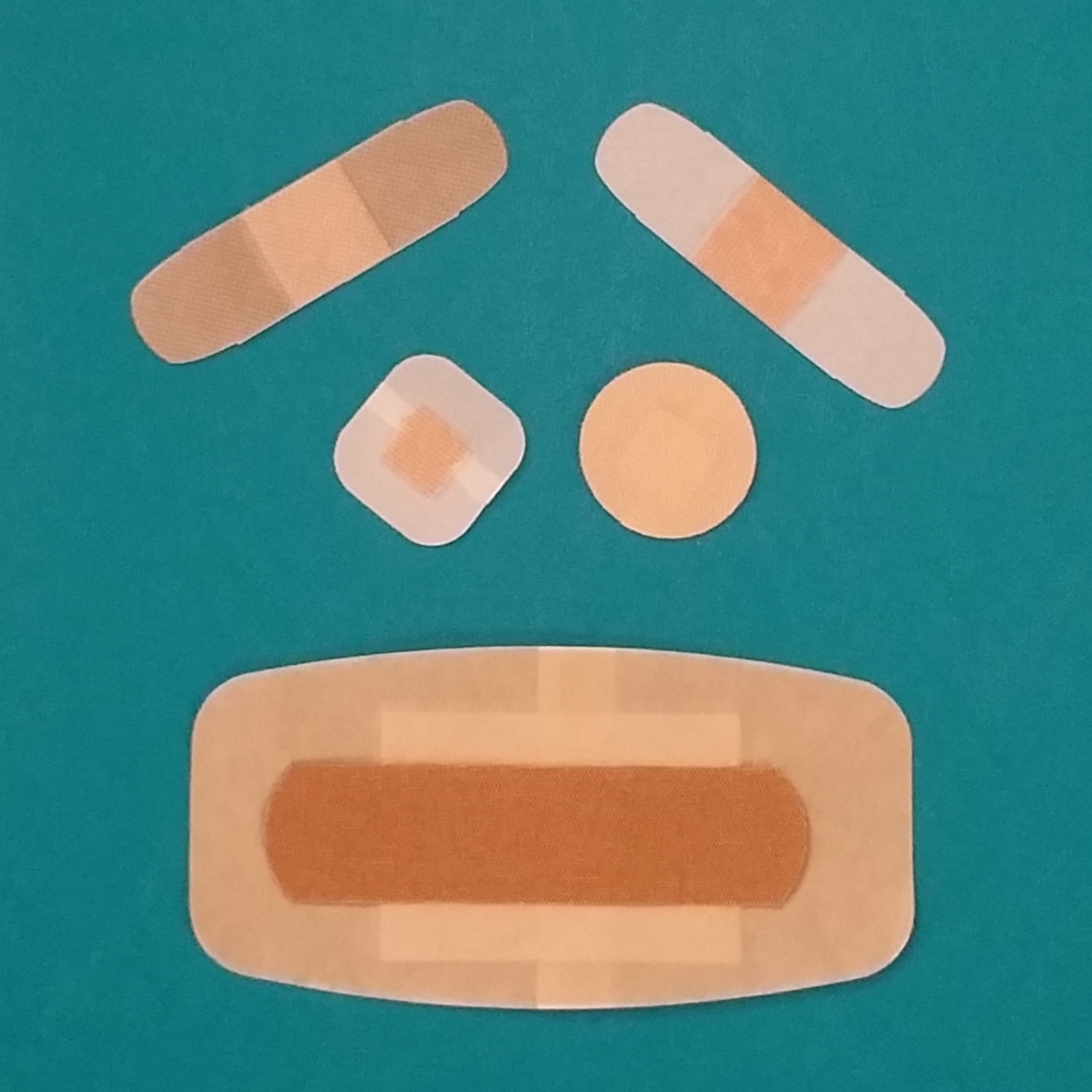
When my daughters were little, they often bruised or scraped themselves in the course of everyday play. A kiss from Mommy or Daddy (and perhaps a Sharpie-drawn smiley face on a Band-Aid — whether necessary or not) was all it took to make things okay again.

Sometimes other tots grabbed toys, knocked over blocks, or cut their Barbies’ hair — oh, wait … it was my child who did that (as practice before “trimming” her friend’s bangs). All it took to reset their emotional footing was distraction — manufactured by word or sleight-of-hand. Almost at once, they got back to the business of learning by play.

As they grew older their minds and hearts grew into increasingly complex, interdependent organs. It became harder to “fix” what upset them. The inevitable day came. A daughter spurned my offer to “kiss it better” as she clutched at the reddened skin on her forearm. “That won’t help,” she pouted, her eyes daring me to contradict her. My offer to read her a story elicited the same response.

She was right, of course. A hug or kiss didn’t take away the sting of the injury. A bandage could cover the wound (at least temporarily) and hopefully keep out germs that would otherwise impede healing, but beneath its plain (or decorated) facade, remained a wound that required time — and the right circumstances — to mend. A kiss of affection, a favorite toy to hold, or a new story to distract might momentarily provide another focal point, but every heartbeat fueled throbbing reminders that all was not well.

It’s the same for grief. Bandages don’t work.

You can't put a bandage on grief to "fix it" or "make it better." Like any wound, it takes time.

You can’t put a bandage on grief to “fix it” or “make it better.” Like any wound, it takes time.

When grief is new (and by “new” I mean the loss occurred within two years — yes, I said years), the bereaved often bruise and scrape their psyches against circumstances of living in the course of everyday survival. Such emotional abrasions include (but aren’t limited to):

  • Significant dates — birthdays, holidays, anniversaries (of both positive and negative events). For many within the first 18 months after a loved one’s death, that day of the week (every week) and that date of the month (every month) feels like ripping off a fresh scab, re-traumatizing survivors.
  • The “business” of death — deeds, accounts, titles, plots, medical bills, insurance … The list of accounts can seem endless for an adult or unfairly incomplete for a child. Making each phone call or office visit is excruciating. Every time I called another provider, I sobbed. Removing my husband’s name from each document felt like erasing him. It felt disloyal. It felt violent. Horrible.
  • Routine “first since” appointments — the dentist, the doctor, the pharmacist, the mechanic, the accountant … Anywhere a person has done business in an ongoing manner, that first visit since the death occurred forces yet another face-to-face bout of admitting a loved one is no longer living. As a new widow, I cried every time. Many forms had boxes to check that offered only the options of single, married, or divorced. I wrote in “widowed” on paper forms. Online forms frustrated me so badly I shrieked at the computer (and I’ve never been a “yeller”). If I checked “married,” they required ongoing contact information no longer applicable, but for a long, long time I refused to consider myself “single,” so that option didn’t work, either.
  • Getting groceries — ugh! Walking through the aisles was awful, awful, awful. “His” foods stood out on the shelves. I couldn’t find things I wanted right in front of me (on rare occasions when I actually knew what I wanted). I couldn’t even remember to consult the list in my hand. The first time I saw THE paramedics from the nearby fire station in the store, oh, how I lost it!

Recently, Megan Devine of Refuge in Grief wrote “grief & the grocery store.” If you want to understand what your grieving friend experiences in the ordeal of getting groceries, please read what she has to say:

http://www.refugeingrief.com/groceries/

You can’t cover your grieving friends’ loss with a bandage. You can’t “fix it” or “make it better.” But you can offer them momentary distraction from their pain by including them in your plans (whether they accept your invitations or not). You can aid them in their healing by acknowledging significant dates, offering to fill out paperwork (or make other business calls), accompanying (or taking) them for routine appointments, and going with them to the store to help them navigate the perils of produce.*

Be with them in their grief. Be patient as they heal.

___

*For an in-depth look at one element of grocery-intensified grief, see my essay Eggplant Elegy” in the online journal Segullah.