Grief Talk: Blurting Nonstop about a Loved One’s Death

I blurted “my husband died” to every stranger I encountered in the earliest weeks after it happened. No matter the setting — church, the frozen foods aisle, in the pharmacy checkout line … No matter where I was, I had to say it. I hated saying it. I hated hearing it. But I had to.

It wasn’t as if I walked into any business thinking, “I’m going to announce to the world I’m a widow.” Most of my grief blurted out in unbidden bursts prompted by the piercing pressure of dull-looking (yet deceptively sharp) questions like “How are you?”*

I am grieving, that’s how I am, thank you very much. Whether a person meant the question or said it as a greeting synonymous with hello, if I was asked, I would tell. And even if I wasn’t asked, my body had to express its inexpressible sadness in tears, shallow breathing, gut-wrenching anxiety at the sight of products my husband used — no, used to use — and sometimes in words, inadequate as they were.

Perhaps my pattern of blurting was set from the first moments after the hospital doctor delivered his pronouncement, when an orderly leaned inside the doorway of the tiny waiting room. “‘Scuse me,” he said to the doctor, “the medical examiner’s office is on the phone.” He crossed the room in three steps and while extending the cordless phone toward my hand said, “How ya doin’?”

I regret to say I raised my voice at the man. “My husband just died. How do you THINK I’m doing!?” (I can only hope my outburst did some good in the long run; I hope he never, ever addressed a grieving family in that way again.)
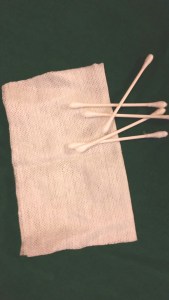
The gentle gauze of acknowledgement will better slow verbal grieving than the poky prodding of a cotton swab. (photo by Teresa TL Bruce, TealAshes.com)

The gentle gauze of acknowledgement will better slow verbal grieving than the poky prodding of a cotton-tipped swab. (photo by Teresa TL Bruce, TealAshes.com)

Sometimes the people I blurted to were sympathetic. “I’m sorry,” they’d say while looking me over carefully. (One asked, “Are you okay to drive? Do you need me to call someone for you?”) I appreciated the kindness of their sympathy and felt slightly better for the interaction. Their gentle acknowledgement acted like an embracing gauze to hold my wounded soul together.

Often people appeared embarrassed, averting their eyes as if I’d bared too much skin rather than too much of my soul. “Oh,” they’d say (if they said that much) before altogether turning away or, in the case of cashiers locked into position, turning their full attention back to the buttons at their fingertips. I left such encounters feeling the kind of social embarrassment I hadn’t experienced since my children were tiny and bled or threw up (or worse) in public places. In this case there were no surfaces to clean up and nothing to apologize for, but it felt much the same.

The harshest, most damaging interchanges happened when strangers (or much worse, people I knew) chastened me for speaking (or crying) about my husband’s death. “Stop crying,” they’d say, or “You already told me,” or “But that was last month, so why are you still crying about it?” or “Everyone has troubles, so you need to get over it and move on.” I walked away from such encounters feeling deep shame for my feelings and my inability to keep them to myself, as if I’d just offered a messy, inappropriate blood sacrifice in someone’s all-white living room.

In hindsight, with five-plus years behind me, I can forgive myself for committing such “offenses” against those whose own insecurities prompted their harsh or embarrassed responses. Looking back on the way I felt when newly bereaved, I can see how my wounded, lacerated soul and psyche bled orally. Applying pointed pressure to stanch the flow of grieving words was no more effective than holding a Q-tip to a deep cut.**

It was about a year before I managed not to blurt, “My husband died,” long after his death faded to “old news.”

For our family, though, every day we lived with the new, unwelcome reality of “firsts” without him. Time had to thicken and slow the verbal and emotional bleeding. Gentle acknowledgement of loss had to wrap around me and take hold. The raw edges of my wounded psyche had to begin their healing.

If your mourning friends seem never to stop talking about the death of their loved ones, don’t shove a poky cotton-tipped swab into their wounds. Wrap them with the consoling gauze of your acknowledgement and absorb the mess of their blurting with your acceptance and understanding.

___

Feel free to share ways you blurted — or listened.

___

*Please see these suggestions for Better Questions to Ask than “How Are You?”

**I don’t have any affiliation with (or aversion to) the Q-tip brand of cotton-tipped swabs.


Grief, Fear, and Reassurance after Death

When a friend asked whether I’d heard of people experiencing irrational fears after losing loved ones, I nearly laughed, not at her question, but at myself.

Irrational fears after a death? Oh, yeah. I’m afraid that yes, I have been scared (and somewhat scarred) by those …

(Sorry. Couldn’t resist the pun. Chalk it up to warped, widowed humor.)

In the first couple of years after my husband’s unexpected death:

If I needed to run an errand on the other end of town, I faced a frightening dilemma: 25 minutes on the highway with lunatic drivers speeding, or 45 minutes on back roads with crazed drivers running red lights and stop signs. Which would get me home quicker? More safely? At all?

If my doctor wanted me to try a new medication, did I dare? What if I was one of the few for whom death was listed (in infinitesimal print) as a possible side effect? I had a dependent child at home — could I take that risk?

If my daughter ran a fever, my mind forgot the existence of common culprits like a cold virus or other seasonal bug. I googled symptoms of meningitis and other serious ailments, afraid to have her doctor confirm my worst fears, but also afraid not to take her in for an exam.

One day my daughter’s severe lower abdominal pain and fever prompted the pediatrician to send us straight to the hospital. The same hospital where, less than a year earlier, a doctor prefaced the worst news of our lives with “Unfortunately …”

My daughter was beside herself, tense with pain and fearful of the unknown.

I was determined to “stay strong” for her — like so many people had admonished me to be over recent months. But my hands trembled, and I fought to keep my voice calm. Walking into that same doorway and down those same halls was like walking into a nightmare — while fully awake — terrified of history repeating itself. It felt like every step forward sent me ten steps back into the trauma of that night months before.

On that night I’d entered with confidence in the skills and abilities of the city-sized staff and the wonders of modern medicine. This time, I entered with spine-seizing fear.

But I knew I had to stay strong for my daughter because she needed me (and because that’s what people told me when they saw me cry). So I swallowed my fear whole and spoke past the lump burning in my throat. I murmured the same words in the same tone I’d uttered countless times during two decades of parenting our three children: “Don’t worry, sweetheart. It’ll be okay.”

“No. You can’t say that anymore, Mom.” 

Silence. 

She was right.

Wrecking-ball-to-the-gut silence.

Months earlier we’d been catapulted into the worst outcome — the one too awful to have considered that it might have been possible — and in crash-landing everything changed. Up meant fifty degrees sideways; left and right were mushed together somewhere beneath us; light illuminated nothing; the blinding brightness of dark stung our eyes.

“It’ll be okay” no longer sounded reassuring or hopeful. Guarantees were gone, replaced by uncertainty.

I later learned I wasn’t the only widowed parent who — alongside grieving the death of a spouse — mourned the loss of a child’s innocent trust that life goes on. Because sometimes (and eventually for everyone) it doesn’t. Not for the one who died. Not for the ones left mourning.

When their world has turned upside down, children (and adults) sometimes revert back to behaviors from a time they felt more secure. As a newly widowed mom, I sometimes caught myself saying quietly but aloud, “I want my mommy.”

Children who’ve lost a parent (or other caretaker) to death sometimes become clingy, once again exhibiting the separation anxiety they already outgrew. It’s not uncommon for them to whine or cry when the remaining parent leaves for work (or for anything). In an odd role reversal, kids may demand, “Where are you going? Who are you going to be with? What time will you come home? Let me know when you’re on your way back …

Grief often disrupts sleep. Children who haven’t used night lights in years (or ever) may refuse to sleep in the dark. Others may be unable to sleep alone. Nightmares (of the circumstances of the loved one’s death or fears about what follows) can be so intense that surviving family members may try avoiding sleep altogether. (My nightmares and night worries were so intense I cracked a molar clenching my teeth in my sleep during the first year after my husband died.)

Telling grieving kids (or adults) to “stop worrying” ignores their genuine (and logical) distress. After all, the fact that one parent already died irrefutably introduced them to the reality of mortality.

A healthier way to reassure them is to acknowledge their reasons for concern and to encourage them to express their fears. Older kids (and adults) might write in a private journal or in letters to their deceased loved one. Younger children might draw pictures or role-play with stuffed animals or dolls.

To help mourners (of all ages) as they face the many fears that accompany bereavement, give them the benefit of time with friends who let them talk — without judging them for how well they are (or aren’t) handling their grief.

___

(In case you were wondering, it really was okay that day in the hospital. But ever since, I fear I’ve been reluctant to say, “It’ll be okay.”)

Super Bowl, Super Grief

Super Bowl 50 may be a big deal to some folks out there, but for those who are grieving it may or may not matter. If you have friends who’ve lost loved ones within the last couple of years (or so), keep in mind:

  1. Invite grieving friends to watch the big game at your house with you.

    This is the most Super Bowl that gets watched at my house.

    This is the kind of Super Bowl that gets watched at my house.

  2. If you and yours don’t watch the Super Bowl, invite your grieving friends to join you in whatever you do — or don’t.
  3. If you’re having a tailgating party, invite them there.
  4. Mourning leaves people feeling bronco-bucked. They may need to immerse themselves in occasional fun to escape their pain for a while.
  5. Grieving makes your friends feel panther-mauled. They may need to curl up in their dens to recover in solitude.
  6. Living after losing a loved one is harder than you know, so cut them a bit of slack. Mourners may need a replay or do-over.
  7. Crowds storm the field after the game, but eventually the stadium empties. Well-wishers surround the bereaved up until the funeral, but eventually everyone else goes home, leaving the bereaved alone in their loss.
  8. When you’ve lost the highest-stakes championship — with death on the line — getting riled up over a football game can seem pointless.
  9. Mourners need fans to cheer them on with encouragement and support — whether they seem ahead of their game or whether they seem to be running behind.
  10. After the game, the losing team needs fan support and continued training. After the funeral, bereaved friends need ongoing support, too.
  11. If you’ve already asked mourning friends to join you but they said, “No thanks,” ask again (GENTLY). Invite them to change their minds at any time.
  12. Honoring traditions (such as pre-game parties with friends) can make the bereaved feel more connected to their departed loved ones and their living friends.
  13. Honoring those same traditions can make the bereaved feel more disconnected from their dead loved ones and their living friends.
  14. Mourners can feel happy and involved with their friends while also feeling sad and isolated from their friends at the same time in the middle of a party.
  15. Not being invited because they’ve lost loved ones makes mourners feel like they’re being unfairly punished.
  16. Just because your friends have lost loved ones doesn’t mean they can’t laugh at funny things. Sometimes mourners need to laugh.
  17. Laughing while mourning can feel so good it makes you cry.
  18. If players are sidelined due to injuries, they need medical treatment but still belong to the team; if mourners are sidelined by grief, they’re still your friends — so treat them that way.
  19. Sometimes players’ numbers are retired, never to be worn again; people sometimes see that as sad, but the team carries on with new players signed on. Mourning friends’ loved ones have gone beyond retirement, never to play or work or interact again; their family team will never, ever be the same.
  20. Super Bowl teams train and work out long before they set foot on the televised field in front of the world. Whether mourner’s have advance notice of bereavement’s demands  or they’re tackled by it without warning, grievers often feel vulnerable under spectators’ scrutiny.
  21. Mourners don’t need would-be coaches who’ve never mourned their loss telling them how to play through their grief.
  22. If you haven’t already asked your grieving friends to join you for the game, it’s not too late. (If you’re reading this after the game, it’s still not too late to get together doing something — anything — else!)
  23. Game day snacks might be the most wholesome meal your mourning friend has eaten since their loved one died. (Mourning appetites are weird.)
  24. Players sidelined with concussions are never told to get back out on the field to play again too soon. People concussed by the death of a life partner (or other loved one) should also never be told to get back out into relationship fields to play again too soon. (They’ll know when — and/or if — they’re ready again, so don’t give your input UNLESS they ask.)
  25. Tailgating means shopping ahead and prepping food before the big event; mourners may have trouble shopping or prepping food at all.
  26. Even if you don’t usually invite friends over for the Super Bowl, please invite your bereaved friends anyway. You don’t have to do anything fancy; just being there as a friend will help.
  27. Have a box of tissues nearby for commercials. Sometimes touching ads will touch off emotions of grief. Let your friends know you are okay with them expressing their feelings.
  28. Friends don’t let friends drive drunk (grieving or not). So don’t. Ever.
  29. Whether your friends lost their loved ones recently or long ago, keep in mind that annual events may strengthen and stir up traumatic losses.
  30. Last-minute invitations are better than no invitations at all. If you haven’t already done it, please, call, text, or message your grieving friends — NOW.

Whether you’re reading this hours or minutes before the big game, halfway through it, or long after, tell mourning friends you’re thinking of them. Acknowledge that even though they may feel alone, they aren’t forgotten and they don’t have to be alone all the time.

Let them know you care.

Crazy with Grief

If you want to comfort someone who is grieving, or if you’ve recently lost a loved one, here’s something you need to know:

Grief can make a person feel crazy.

Stark. Raving. Crazy.

Before I go on, please accept that I don’t use the word “crazy” lightly. I mean no offense to any individuals living with mental illnesses. On the contrary. I have a glimmer of understanding — just a little bit — about how difficult it can be to live with mental health challenges. I have relatives and friends whose diagnoses impact their day-to-day lives.

My late husband grappled with severe, life-impeding OCD. During his last two years, other mental and/or neurological symptoms (which were never adequately diagnosed) infected his thinking and behavior, bringing our home life to its own level of … no other way to put it … crazy.

After my husband’s unexpected death, I thought I was losing my mind; it didn’t work right.

  • My short-term memory stunk. I couldn’t hold simple to-do lists. I’d flit from the start of one to the middle of another. (Why am I standing in the laundry room holding my toothbrush wearing only one shoe?) For the first time in my life, I forgot to pay bills on time. When I remembered to attempt cooking, I left perishable food on the counter or in the stove or microwave until it turned on me and I had to throw it out. I had too many near-misses forgetting I’d turned on the stove or lit a candle. (NOTE: SET A NOISY, OBNOXIOUS TIMER IF YOU’RE GRIEVING AND TRYING TO COOK.)
  • I lost time. It took twice as long (or more) to do routine things like putting on clothes or brushing my teeth. Even pouring a bowl of cereal and slicing a banana took longer. More taxing tasks (like paying bills) took three to four times longer (and I didn’t do them very well).
  • Showering was a sob-fest. I fell apart every time. The solitary vulnerability allowed too much time for thinking, reflecting, and mourning. The waterworks were so bad, for a while I put off showering as long as I (and my family) could stand it.
  • Sleep was a nightmare. Literally — I had soul-waking, body-shaking nightmares. That is, when I could sleep.  For months I avoided sleeping, no matter how exhausted I became, in hopes of avoiding (or at least delaying) the nightmares.

    After my husband died, my brown eyes looked green to me. (Photo by Teresa TL Bruce/TealAshes.com

    After my husband died, my brown eyes looked green to me. (Photo by Teresa TL Bruce/TealAshes.com

  • I couldn’t look myself in the eye. My reflection looked wrong. Instead of seeing myself — the self I’d always seen before — I saw only the emptiness in my eyes. (Emptiness, that is, except for the bloodshot insomnia tinting the whites.) It was unsettling. I knew I’d lost my husband (my other half) and the mirror flaunted I’d also lost myself. I had to avert my gaze, careful not to look too closely into my soul’s windows.
  • I couldn’t stop looking at my eyes. (Yes, that sounds like a contradiction, which seems a little crazy. Which is my point …) All my life, I thought I had clear brown eyes. It may be scientifically impossible, but after my husband died, my eyes looked more green than brown. (Yes, I felt irrational green-eyed jealousy over couples who got to keep their spouses to ripe old ages, but I’m not talking about their metaphoric hue.) My irises still look more green than brown to me.
  • I couldn’t stand to be photographed, either. I remembered as a child reading in National Geographic of a tribe of people who feared that cameras somehow captured their souls. The thought of documenting the emptiness in my eyes brought panic. I still remember one person telling me to smile for the camera and when I told her no, I didn’t want my picture taken, she did it anyway. The violation chilled me, left me shaking.
  • Making business phone calls felt like mountain climbing. (No, I’ve never actually been mountain climbing, and if I could have avoided all reasons for using the phone during that period, I wouldn’t have made those necessary calls, either.) Every time I called another organization regarding the business side of my husband’s death, I felt like I’d been punched in the stomach. (And yes, thanks to a bigger-than-me-boy-bully from elementary school, I do know how that feels.)
  • Personal calls were harder. I can’t count how many well-meaning souls said, “Call me if you need anything.” I knew they were my friends. I knew they meant it, but their offer was too general, too much from a perspective of not understanding what that “anything” might have been. (I didn’t know what I needed, and besides, didn’t they know how HEAVY the phone felt?) Even as the words came out of their mouths, I knew I would not call them. Could not.* 
  • My body betrayed me. In the first weeks of widowhood, I didn’t remember I was supposed to eat. When I complied with reminders, my body wouldn’t keep food inside. (I’ll spare you the details, but it wasn’t pretty.) Eventually, it overcompensated, telling me I was hungry when I wasn’t. Of course, there was also the nightly insomnia (and the need for daytime naps to compensate). I forgot to breathe fully. And my skin went crazy, peeling and cracking as if it were dehydrated while also creating acne like I hadn’t seen since adolescence. Even my sense of smell went haywire as I perceived the presence of smells that weren’t there.
  • I followed a stranger. With my car. For a couple of blocks. I knew — KNEW — it couldn’t possibly be my husband walking down the street with his build and gait and hair color and wearing a striped shirt like his. It couldn’t be. But I had to follow until I could see the front of him. Because it looked just like him. And I knew we’d buried my husband, but what if we hadn’t? What if it was him?

In short, I felt crazy.

For all the examples above (except the eye color thing), I’ve heard other bereaved souls acknowledge similar irrational thoughts while mourning. Finding out I wasn’t alone in my mind-mush helped me cope.

But that wasn’t enough.

Before I talked myself into giving grief counseling a try, I pondered the advice of several widowed friends who’d found the process helpful.** Those who got the most out of grief counseling plunged themselves into the process without holding anything  back. They told their therapists everything. Everything.

That scared me.

There were elements of my husband’s mental illness I hadn’t shared with anyone. Some of his symptoms were obvious to those around him; others were more subtle, known only to those closest to our family; a few issues I learned only over the course of our 24 years together. I never wanted to undermine him or betray his confidence, so I spoke of them to no one. Most people had no idea of the depth of his struggles or how they impacted both of us in our shared life.

So during my first appointment with a grief counselor, I let it all out. Everything. All the grief-related craziness and all the new-widow insecurities and all the old-life abnormal-normalcy of living with my husband’s mental illness.

It helped. Telling one nonjudgmental, neutral person everything brought a balance to my grieving. More importantly, the therapist validated the life-altering impact of losing a loved one. She helped me reframe my perceptions of how to move forward in the newly-revised, work-in-progress, ongoing version of my life.

I wasn’t crazy, she assured me. I was grieving.

If you’ve thought your grieving friends were going crazy, or if you’ve thought it of yourself while mourning, I hope this has helped you feel less alone. Please feel free to share your experiences in the comments below.

___

*I believe I made only ONE middle of the night call during the first couple of years. It was to a dear friend I met through a widows network, Shelby Ketchen. Because she’d been a widow for about six months before me, I was able to trust the sincerity of her offer to call “day or night” more than I could trust myself to call upon people I’d known much longer. I knew that as a recent widow, she understood my post-midnight madness. She shared her experience, her faith, and her friendship at a time I most needed to quell the desperation I dared not show in daylight.

___

See the Mayo Clinic’s page on Complicated Grief for more information on warning signs that your friend may need professional help adjusting after a loss.

**For a related post, see Grief therapy and a friend’s counsel.

“Happy Birthday” after a Death?

At this time last year I wrote about MLK Jr., Kennedy, and me. It should be on my mind again this weekend, but this year I hardly remembered why the third Monday of January is recognized as a national holiday. It’s not the late Dr. King’s birthday I’m remembering.

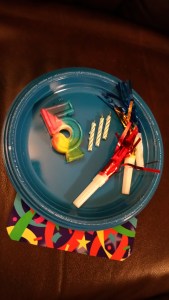
Birthday candles and party favors (photo by Teresa TL Bruce, TealAshes.com)

Birthday candles and party favors (photo by Teresa TL Bruce, TealAshes.com)

It’s my husband’s. My late husband’s.

And my mother’s. My late mother’s.

When Mom died a little over twenty years ago, I worried over whether anyone else would remember her birthday. I didn’t want her to be forgotten. And I knew I’d miss her even more on her birthday than I did every other day without her.

Celebrating my husband’s birthday without my mother’s was hard, but he helped me get through each of hers. He said things like:

“I know today is a hard one.”
“I’m sure you’re thinking of your mom today.”
“I miss her, too.”

When my husband died a little over five years ago, I couldn’t face the thought of Mom’s birthday without him.

And I couldn’t face the thought of his birthday at all. I was too broken.

A dear friend came to spend time with me. She listened when I cried and ranted. She reminded me to eat (and made me food when I still forgot). By her presence, she showed me how much she cared.

Even though these pieces are glued back together, this broken mug will never fully be whole again. (Photo by Teresa TL Bruce)

Even though these pieces are glued back together, this broken mug will never fully be whole again. (Photo by Teresa TL Bruce)

And that she remembered. By doing so, she helped me gather up pieces of my fragmented self.

Fast forward five years — to now.

My life is good again — different, but good. Most days are much easier to get through than they were in the first couple of years after he died.

But some days — like his birthday and like my mom’s, which fall so close together — are harder than others. On those occasions, grief leaks more easily through the patched-up holes where I put myself together in my new normal.

If you know someone who is grieving lost loved ones, share your memories of them.

And if you know their birthdays, let them know you’re thinking of them then, too.