Beware of “Happy Halloween” and Other Hazardous Good Wishes

I could scarcely hear the words “happy Halloween,” let alone say them a month after my husband’s death. It felt as if plastic front yard gravestones mocked my recent cemetery experiences. Fake coffin lids lifted by glow-in-the-dark skeletal hands called to mind the most heart-wrenching purchases I’d ever made. And with death on my mind as it uprooted my life, I couldn’t muster even an artistic appreciation for well-applied “rotting corpse” or zombie makeups.

These gruesome decorations weren’t to blame for my aversion to the cheery greeting (though they certainly didn’t help).
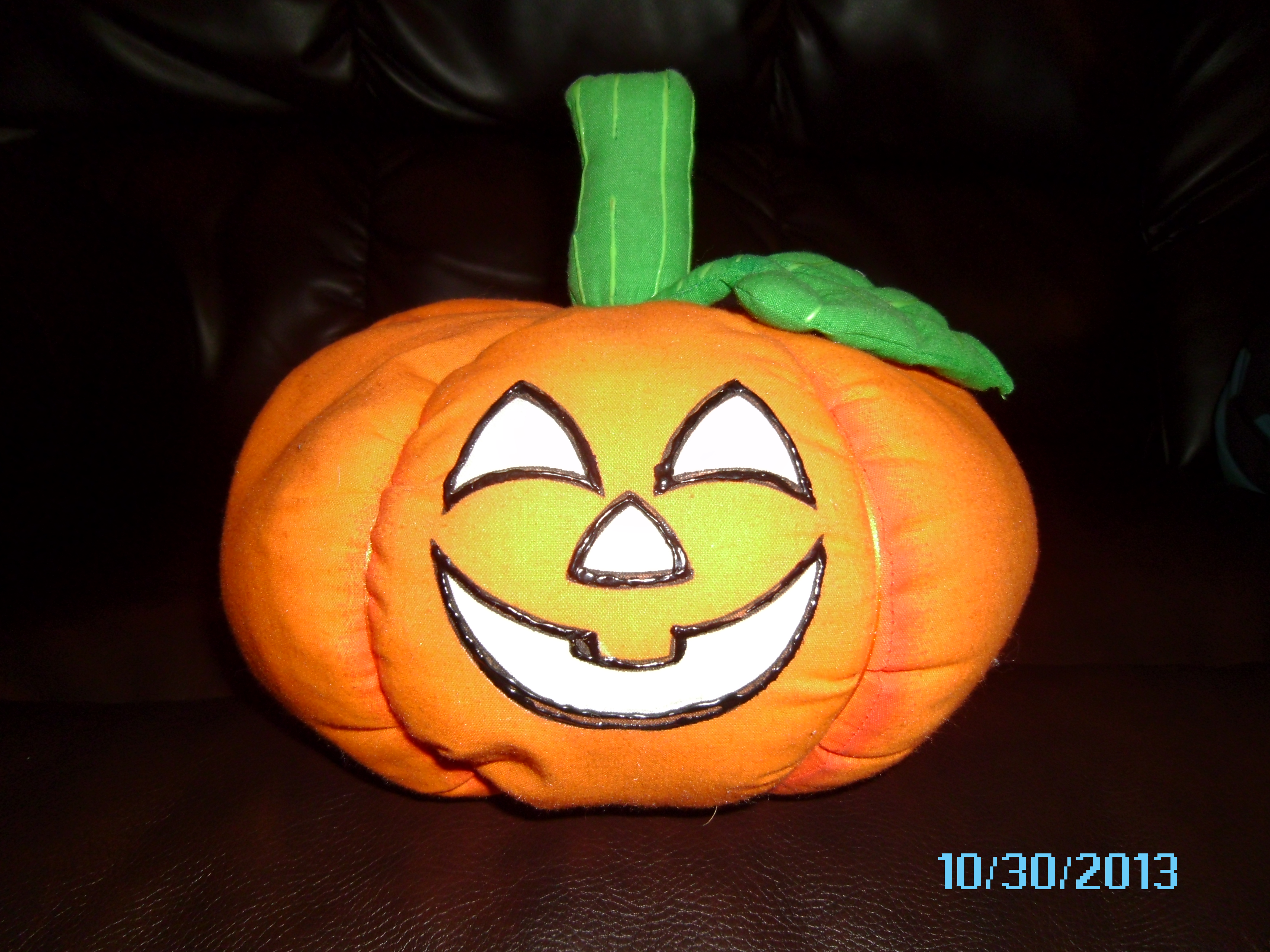
Take your grieving friends some favorite candy (or a healthier treat) to show you're thinking of them, but consider skipping the "Happy Halloween" greeting.

Take your grieving friends some favorite candy (or a healthier treat) to show you’re thinking of them, but consider skipping the “happy Halloween” greeting.

How could it be a “happy Halloween” without my husband? He’d doted on our kids’ annual costuming, and we’d worn more-or-less matching tacky jack-o-lantern shirts most of our 24 years together.

Facing that first quasi-holiday after he died forced me to realize our annual  family traditions would never be the same. In that first year, I wondered whether any such celebrations could ever be “happy” again.

I braced myself against each turn of the calendar. We muddled our way through that first year, altering some traditions, discarding others, and auditioning new activities for tradition-worthiness. Some were outright flops. Others became instant new favorites.

Month by month, my daughters and I found new joys to anticipate.

Along the way to finding those new joys, during that difficult year of “firsts” I appreciated the thoughtful good wishes which acknowledged awareness of our changed circumstances.

Some helpful salutations included:

  • “May you be blessed this Thanksgiving. We’re thinking of you.”
  • “We hope your Christmas will be filled with fond memories.”
  • “May the New Year bring you hope and healing.”
  • “I’m guessing this will be a tough Valentine’s Day. Hang in there.”
  • “Thinking of you with love this Easter season.”
  • “I know you’ll miss your husband this Father’s Day.”
  • “Treat yourself with kindness on your birthday.”
  • “I’ll be thinking of you on your 25th anniversary” (my first as a widow).

As I worked through the raw pain of that first year’s grief and headed into the next, I became better able to handle more trite salutations like “Merry Christmas” and “Happy New Year.”

(I’m still not fond of “happy Halloween,” though, no matter how cute the trick or treaters.)

Avoid Saying “At Least” When Consoling the Bereaved

If you begin forming the words “at least” — STOP!

Stop using "at least" to talk about grief. Console. Stop sign. TealAshes.com

Stop saying “at least” when consoling mourners. (photo by Teresa TL Bruce, TealAshes.com)

Do not, do not, do NOT let that phrase pass your lips (or fingertips)! If you think uttering (or writing) “at least” to console anyone who is grieving, I advise this:

Bite a hole in your tongue (or slam your fingers in a door) to  prevent yourself from saying “at least.”
(Can you tell I feel strongly about this?)

Here’s why:

“At least,” by definition, shrinks and plays down a thing, reducing it to its smallest component. It minimizes. It downplays and lessens importance. It diminishes and disparages, and when applied to grief it belittles the perceived importance of the loss.

Any intended consolation beginning with “At least you …” will not console. Instead, it isolates mourners, proclaiming their devastating loss to be less calamitous to others than if feels to them.

Examples of “at least” statements (and how they come across to the bereaved) and why they’re so hurtful:

  • “At least you didn’t have any children” (so you won’t have to “deal with” them or their grief and you can just pick up and go on).
    What if the couple privately, desperately wanted children? What if they planned to conceive or adopt within the next year or two? What if one was already pregnant at the time of (her own or her partner’s) death?
  • “At least you (can) have more children” (so you shouldn’t be upset over losing this one).
    One child’s presence cannot “replace” another. The loss of a child (at any age) is a grief unlike any other. Never diminish it. Never assume “replacement fertility” is possible, either — because it may not be, and even if it were, “replacing” one who is lost is not possible.
  • “At least the children are young enough they won’t miss their [parent, grandparent, sibling…]” (so it really won’t be that hard on them).
    Grieving families need to know loved ones won’t be forgotten. Children who’ve lost loved ones, even at very young ages, are impacted in ways only families in similar situations can comprehend.
  • “At least your kids are all grown up” (so you won’t have to raise them alone; also implies adult kids will be “okay” with the loss).
    The surviving parent is now left alone to weather the years-long, unrelenting upheavals of grief by him- or herself. The adult children are burdened with their own grief as well as their concerns for their surviving parent.
  • “At least you weren’t married very long” (so you can’t miss your spouse that much).
    The loss of future, anticipated experiences runs as deep as the loss of familiar comfort and companionship. Those widowed after fewer years together often feel deeply “cheated” by the timing.
  • “At least you had [however many] years together” (so you had more than your share and shouldn’t complain it came to an end).
    A lifetime shared is irrevocably altered by the shearing of one’s “better half.” In A Grief Observed C.S. Lewis compared the loss of a spouse to the loss of a limb which, even when healed, leaves the amputee forever changed.

If you’re cringing now because you remember saying “at least” in past attempts to console, remember that you meant well — at least you tried. (Now that you know, you’ll do better next time.)

Better Questions than “How Are you?” Part 1–Why

“How are you?” is almost impossible to answer if you’re newly bereaved (within 13 months of a loss).

When grief shakes your world, tips it end over end, and dumps it in the middle of life’s ten-lane freeway during rush hour, you find yourself smashed into  3.4 bazillion pieces (give or take a handful).

Even if you could yell “STOP!” and every commuter and freight driver pulled over to help gather the detritus that was your life Before… Even if magical glue could mend you more seamlessly than Humpty Dumpty… You’ve lost bits and pieces of yourself, blown away by the breezes of cleanup or embedded in the tires of already faraway cars.

So how would you reply to the question, “How are you?” while you’re still smeared and strewn and fragmented and incomplete?

Picture this:

I answer the doctor’s questions about my hubby’s medical history. Doctor utters impossible to comprehend, life-shattering words: “I’m sorry to inform you …”

Everything shifts.

Somehow my brain processes the meaning of the doctor’s ongoing words, though my ears hear only wuh-WUH-wuh-wuh vocalizations like adults in Charlie Brown TV specials. My vision zooms onto my daughter’s shocked face as I watch comprehension and disbelief drawing battle lines across her lovely, distorted features. In the same moment, as if I have more than one set of eyes, I notice the way light plays differently in the corners of the ceiling above and behind the doctor’s droning and I squint at the glare of his bald spot. Out of nowhere, a wrecking ball tugs from the base of my skull, its weighted chain confined within my spine, its globe of destruction swinging wildly through my abdomen. I am helpless to console my child, because this cannot be real and it cannot be undone–and how, oh how can I call her sisters 2,000 miles away to tell them–over the phone–they’ll never see their father again?  “So this is what it feels like,” the writer’s voice in my head intrudes, “when you lose your spouse.”

A bit of time passes. Seconds? Minutes? Hours? Impossible to say, but the doctor is still here, saying I don’t know what anymore.

In walks a hospital employee, portable phone in hand. (Soon I’ll learn he’s on the line with someone from the medical examiner’s office to question me.) As his eyes fix on mine, he says, “How’re you doin’?”

I admit my response was impolite.

(Part 2, Better Questions than “How Are You?” —  What to Ask When Grief Is New, will offer alternative questions that show you care.)

Tell the Bereaved, “I’m Thinking about You.”

First, say something. Anything. Acknowledge that you know the loss occurred.

Six months after my husband’s death, I finally came face to face with one neighbor I’d previously spoken with on a regular basis. I’d been hurt that neither spouse had spoken to me since that awful night. Deciding it was time to take the initiative for myself, the next time I saw one of them, I called out a friendly greeting.

“Hey, good morning!” You’d think I’d done something hideous, so flustered was my neighbor. Before the poor soul could recompose and skedaddle, I added, “I’m not sure if you heard about Bill …” (though I already knew that no one in the neighborhood had missed the ambulance coming and going that night).

My neighbor’s head bowed and nodded, as if in deep prayer, though the sheepish, muffled reply probably indicated shame rather than piety. In a few awkward sentences I learned that yes, they’d heard and yes, they were both very, very sorry. They’d wanted to come see me, but neither had known what to say so they’d actively avoided me (Ha! I was right!) so they wouldn’t face that discomfort. That was followed by a promise to come over “soon.”

Two and a half years later, they’ve yet to visit. Since that awkward talk, now they at least wave and return friendly “hellos” in passing, and I’m okay with that.

Second, tell the bereaved person HOW you’re thinking about him or her. Depending on your relationship to the one mourning the loss, here are some “starter ideas” you may wish to try:

  • I’m keeping you in my prayers. (good)
  • I’m keeping you in my prayers each time I pray. (better)
  • I’m sending positive thoughts your way. (good)
  • I’m sending positive thoughts your way each time I meditate [first thing every morning, every night before bedtime, etc.]. (better)
  • I know you miss your [partner, parent, sibling, pet, …]. (good)
  • I know you miss your [same as above]. If you’d like to talk about [same], I’d love to listen. (better)

The most important thing is to SAY SOMETHING to acknowledge the loss. If you haven’t done so yet, it’s not too late! A thoughtful expression of kindness is always welcome.

Do NOT Tell the Bereaved “Life Goes On.”

Never tell a newly grieving person that “life goes on.”  Don’t.

The first time I heard that after my husband’s death, my breath whooshed away like when a fifth-grade bully punched me in the stomach. If my lungs hadn’t been empty I’d have screamed, “That’s not true!”

It wasn’t — not for my husband. His life did NOT go on.

It wasn’t true for our family, either. Death ended the life we had together. His/Our/My life did NOT “go on” physically, emotionally, financially, legally, socially. It screeched down a slope, plunged over a cliff, and shattered into flying shards.

“Life goes on?” Straightforward, everyday chores nearly undid me! When I entered the grocery store as a new widow, Halloween decorations mocked from everywhere. My heart pounded faster than my thoughts raced. “How can there still be holidays? How can people put up decorations? How dare they depict death and decay and graveyards as fun?”

I took as much offense at the onslaught of every season throughout that year of “first” annual events. Each birthday, anniversary, and holiday that “went on” without my husband scratched nails across the now excruciating chalkboard of occasions by which we had once marked our shared passage through each calendar page.

That life could “go on” normally — for everyone else — seemed cruel.

During those first shocked, raw months, I felt bruised and fettered by day-to-day evidence that — for others — “life went on” around me.

Gradually, as I worked through the motions of “going on,” I felt a brief loosening of those fetters. Sometimes they tightened again, protesting my returns toward living my own life as I faced “new firsts” without him. When I opened my first “Congratulations! Your story has been selected …” notice, I squealed and waved my arms and shouted (just a bit excited, you understand!) and then — and then I wanted to tell my husband … and my mom.

Ouch, again.

But each time I stepped forward, those fetters stretched a little more, and with each new “first” I found their restrictions looser, briefer. Eventually they began resembling bracelets more than manacles, accessories to my life story more than markings of “The End.”

I’ve learned that life does, indeed, go on, that it can be beautiful again. I, however, like every other grieving soul, had to discover it for myself — when I was ready.