Putting the Widowed in a Box

I went for a checkup yesterday. I hadn’t been to that provider since the year my husband died, so I had to fill out a new medical history. How difficult filling out such forms used to be (and sometimes “still” is)! If you own or manage a business that requires personal information of its clients, make sure your paperwork and/or website includes “widowed” as a category.

At least this form offered me the option of "Other" where I could write in my own category: widowed.

At least this form offered me the option of “Other” where I could write in my own category: widowed.

I can’t count the number of times I sobbed through inadequate, limited options during the first year and a half after his death. (I do remember specific waiting rooms where people were leery enough of the crying woman to move to the other side of the room, sending not-so-furtive glances my way.)

When I was newly widowed,  EVERYTHING reminded me of my loss. It was hard enough coping with grief on a daily (sometimes hourly) basis. I hated having to acknowledge my husband’s death in clinical black and white on the many forms I had to fill out — and there were a LOT of forms. It was excruciating to complete paperwork that ignored the existence of my life-altered status.

  • I was not “single.” (I’d been married for 24 years and hadn’t done anything that changed or negated that. Neither had my husband — except for his dying.)
  • I was not “divorced.” (See above.)
  • I was not “married.” (Even though both of the above still applied, my spouse was no longer there — he was NEVER coming home.)
  • I was “widowed.” (Still am.)

Too often, company  (and government) forms offer no appropriate box for widows and widowers to check under “marital status.” On paper I write in my own category, even when there isn’t an option (or enough space) to do so. But online forms can incite scream-inducing, option-lacking frustration.

(And yes, during that first year or so, I sat at my computer and screamed at such websites — and at whatever offices or organizations had sent me to them — even though I had never been a person who screamed. But I’d never been widowed before, either.)

It has been nearly five years since my husband died. Socially, I’ve come to see myself as single again — most days, anyway.  But legally, “widowed” still feels like a better fit.

I still check the “Mrs.” box (rather than the ones for Ms. or Miss).* Online, that often opens a dialog box for my husband’s contact information. (Good luck trying to reach him, I think.) If I leave blank his current address and phone number, or type “deceased” (or, when I’m in a snarky mood, if I enter the word “cemetery”), such sites red-line my responses with please submit a valid phone number and street address. (Sometimes that makes me want to scream again.)

I don’t appreciate paperwork forcing me back to the start, forcing me to redefine myself according to its guidelines.

As a widow, I’ve had to do enough starting over — and redefining — for myself.

___

*If you don’t know what a widow prefers to be called (Mrs., Ms. or Miss), ask her. She won’t bite, and she’ll appreciate that you respect her enough to want to heed her preference.

Letterman’s Last, Rachael Ray’s Recipes, and Loss

David Letterman’s last broadcast. Rachael Ray’s five recipes. May 20, 2015, might be a tough TV day for mourners.

If you’ve watched any late-night American TV in the last 30 years, you’ve seen David Letterman on CBS’s Late Show (or in earlier years on NBC’s Late Night).  Whether you glimpsed him during rare bouts of sleeplessness or your rest depended on counting down his “Top Ten” instead of sheep, you’re probably familiar with his often irreverent and occasionally tender entertainment presence.

Like ocean waves, tax hikes, summer sun, and family genes, I took that presence for granted — until the announcement of his retirement.

Millions will tune in for Letterman’s final show.

I’m not sure whether I will or won’t.

Endings are harder now. My husband seldom watched late-night TV, but when I heard the news my thoughts ran straight to grief: “No! Dave was always on. He was on when my husband was alive. And now they’ll both be gone …”

The retirement of David Letterman and the death of my husband aren’t connected. I know that.

My moving-on-yet-still-grieving brain says otherwise.

___

On a different TV note, I’m definitely avoiding Rachael Ray’s “5 More Recipes to Make Before You Die segment scheduled to air this same day. I usually enjoy her show, so I’ll give you the link to the promo clip that alerted me:

When you’re missing someone who died, you don’t want to hear that food is “to die for” or be told your life will be incomplete if you don’t make a particular meal “before you die.” Such phrases highlight the absence of the deceased, who will never have the chance to taste these decadent dishes because their too-short lifetimes were incomplete.

___

While I’m harping about food and grief, I’ve bitten my tongue (for over a year) about a snack I saw at the Winter Park Art Festival in 2014. The deep-fried potato crisps were covered in bacon, cheese, and — who knows what else? It looked delicious, but they called it something they probably meant to be cutesy: “Heart Attack on a Plate.”

I was with another widow at the time, a woman whose husband died of a heart attack.

Not cool, marketing department. Not cool at all.

Mourning on Mother’s Day

Mother’s Day hurts. I don’t like dwelling on the downside of death (although that may seem like a strange thing from someone who writes about grief), but the best way for me to get through every second Sunday in May is to close the blinds and hunker down in solitude.

Sometimes the light of love (and its loss) shines brighter against the darkness of grief.

Sometimes the light of love (and its loss) shines brighter against the darkness of grief.

It wasn’t always like that. As a kid I picked flowers, drew cards, and poured adulation on Mom. As a young adult, then a new bride, and eventually a mother myself I appreciated her (and my grandmas and aunts) more deeply than before. My cards and gestures of appreciation (which once seemed so grand) paled next to Mom’s lifetime of service — though my daughters’ creative endeavors for me melted my heart.

After Mom died, Mother’s Day went dark. I still went to church that day, but mostly for my children’s sakes. (I wanted them to see me attending weekly even if I didn’t feel like it, and I knew they and their peers had practiced a song for all the moms.) I enjoyed their lovely hugs (and songs) and cards and “interesting” breakfasts in bed that one day of the year.

But the moment memories of Mom meandered into the day, renewed mourning overtook me.

Over the years I’ve learned to live with my mother’s loss, but there were always certain days per year — like Mother’s Day — wherein the pain of being a daughter without a mother hit me again. Hard.

Those hits became all-out assaults after my husband died. The pain of being a wife without a husband knocked the breath out of me.

This is my fifth widowed Mother’s Day. It’s easier … and yet it’s not. (My plastic smile will be a little more convincing as I smile at the children singing at church this year, but I know better than to bother wearing eye makeup.)

If you know someone grieving this Mother’s Day, let them know you’re mindful of their loss. Let them know you’re thinking about them. Let them know you know this year is different than it was.

Don’t say you know how they feel, because you don’t — especially if you’ve never suffered a similar loss. Only bereaved mothers, for instance, can nearly understand the raw feelings of other mothers who have buried a child. Acknowledge the unique, personal, presence of their grief.

Some people need interaction with others to distract them from tender days like this. Reach out and invite them!

But if they ignore or decline your invitation or phone calls, don’t take it personally. They might be like I am, needing to hunker down this year, but also appreciating messages of support. (I’m keeping the “Please do NOT disturb” sign on my door all day.)

Whether they take you up on your offers or don’t bother responding, let them know you’re aware and you care.

Pets, People, Death, and Grief

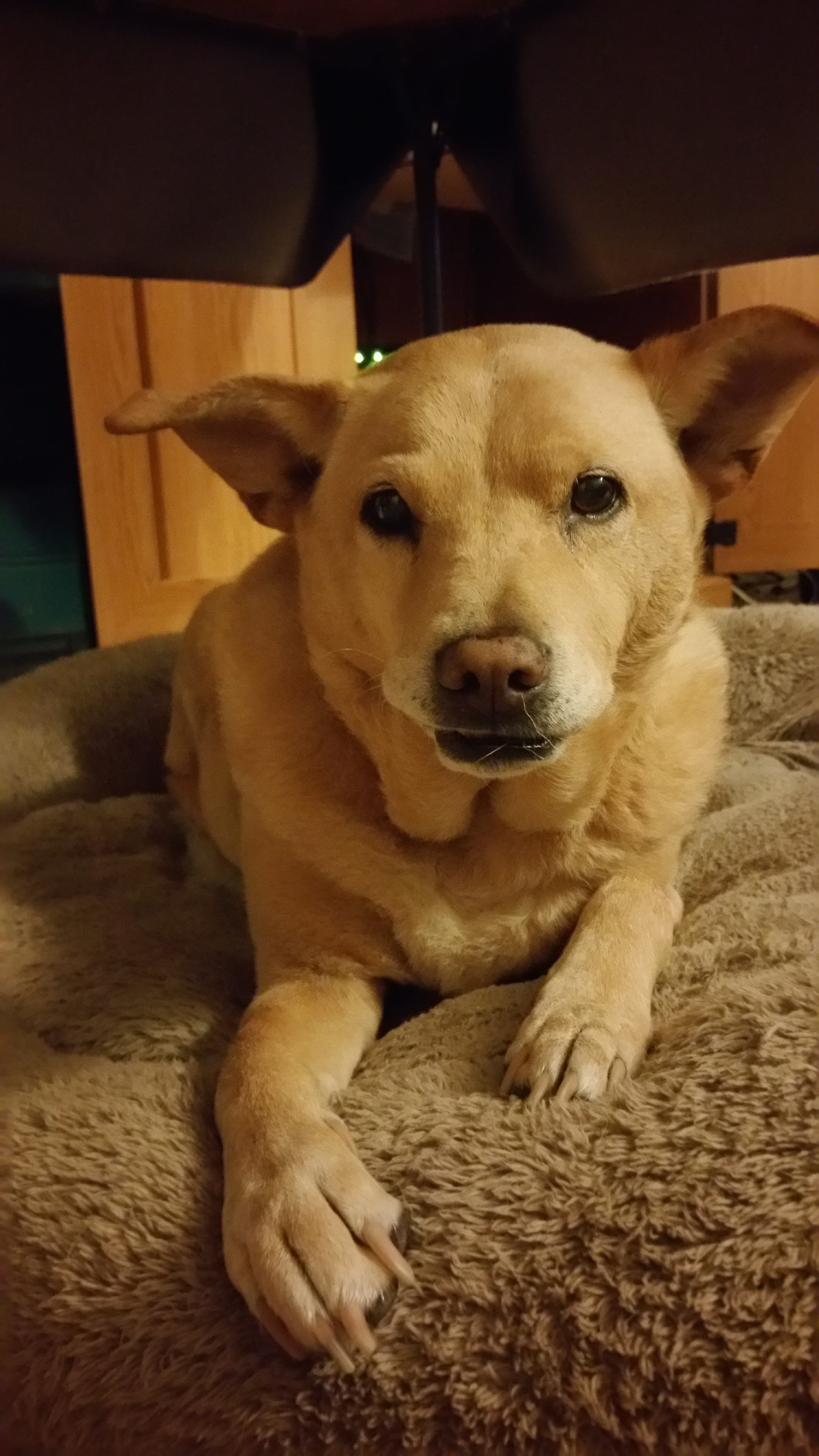
(I’ve composed this post — in my mind — dozens of times since February, but couldn’t bring myself to word it while my 13-year-old dog’s kidneys were failing. She rallied for a miraculous while, but this week her energy and appetite declined. For her sake, I had to let her go. Now that she’s gone, I can’t not put it into words.)  

Two weeks after her diagnosis, my dog rallied for several weeks. Each extra day was a gift!

Two weeks after her diagnosis, my dog rallied for several weeks. Each extra day was a gift!

If your friend lost a beloved pet (or person), remember that grief is the body’s natural (though awful!) response to losing someone with an emotional connection.

  1. Pets are not people,
    but
  2. Pets are people, too.

Huh? Didn’t I just contradict myself? Yes.

And no.

Pets are not people. Their bodies have different biological rhythms, their life spans (for most species) will run out long before their humans’ lives do, and they are 100 percent physically dependent upon the people who care for them.

Kind of like children. Their bodies have developing biological rhythms that differ from those of their parents (think of newborn sleeping, eating, and um, diapering needs), their life spans (with tragic exceptions) will outlast their parents’ lives,  and for years they are 100 percent physically dependent upon the people who care for them.

As we care for our pets, our children, our elderly relatives, our spouses, and our family-by-choice friends (whose bonds of kinship in some cases exceed those crafted in blood or in law), we join our hearts, minds, and extremities (hands, paws, wingtips, scales, fins …) with theirs.

We and they become family. We serve them, they serve us. We love them.

And when they leave us, they take that joined part of our hearts, our minds, and even the feelings of our extremities with them.

We mourn them.

As with other losses we’ve experienced, we can draw upon our own pain to help us better understand those who are mourning. But we must never, ever compare our losses or one-up “my grief is harder than your grief.” Ever.

I’m mourning my dog. Every part of my house and every part of my day reminds me of her absence. It HURTS. But as much as I love and miss her, this grief is not the same grief I felt after my husband’s death or my mother’s. It’s a different, less intense grief.

And yes, each “new” grief brings back a degree of the shock and the pain of each “old” source of bereavement.

Several people who dearly, deeply love their pets made comments they intended to help (but that did the opposite). When I needed to express my grief over the man who fathered my children, I didn’t appreciate hearing anyone say they “knew” how I felt because they’d had to put down a sick dog once several years earlier or they were dreading “going through” what I was experiencing when the inevitable happened to their pets.

My daughters didn’t appreciate similar comments comparing their dad’s death to the passing of friends’ cats, either. I don’t mean to imply that the loss of a pet is insignificant, because it does matter. When you learn a friend’s beloved fur baby has passed, by all means, speak up and share your condolences! (“I’m sorry about Flipper. She was a good goldfish.”)

But don’t rush in to judge or suggest courses of “replacement” — and this applies to the loss of  a person as well. (Do NOT ask whether — or when — they’re going to get another dog, cat, spouse, or child. Do NOT ask how soon they will start visiting animal shelters, dating, or “trying again” for another baby!)

Comparing losses or rushing to “replace” those we’ve loved doesn’t work. Think of it like this: Would it be better to lose your dominant hand or one of your legs? Which of your senses would you choose to lose? Who would you prefer to mourn when death steps into your circle of loved ones?

All loss hurts. All grief has to be worked through.

Let your friends know that you know they are hurting. (“I’m sorry about Donatello. I know you’re going to miss that sweet, stubborn donkey.”)

Be there with them. Bring tissues or chocolate or music or whatever your friends will find soothing.

Share your memories of their beloved. (“Remember the time Bunny chased that obnoxious salesman away? Good ole rabbit…”

Send word. Drop a line of text, a Facebook comment, an email, or (gasp!) an actual note or letter. They’ll be appreciated.

Many of my kind human friends have already done that for me. I thank you. You are amazing, and your compassion has brought sweetness into my saddened heart as I mourn my beloved, ever-faithful fur friend.

___
Helping Your Child When the Family Pet Dies” by the ASPCA includes some validating suggestions and further links at the bottom of its page.


People Aren’t Interchangeable (and Neither Are Their Pets)

Loved ones can’t be replaced. So please don’t suggest otherwise.

Loved ones can't be replaced, so don't suggest otherwise.

An empty blanket, an empty collar, and an empty ring: Loved ones can’t be replaced, so don’t suggest otherwise.

When people (or pets) expire, mourners can’t scoop up “bargain-priced offspring” from the children’s department; they won’t rush to the store and click a collar around a “brand new best friend” package in the pet aisle; they shouldn’t be driven to the mall for sniffing and squeezing current models in order to select a “ripe new spouse” from the potential mates display window. (At least, for most people it doesn’t work that way…)

Forgive me, please, if it sounds as if I’m making light of the seriousness of death. My intent is to point out the ridiculous assumptions made by well-meaning people who treat the bereaved in this foolish way.

For example, the first variation I heard on “You’re young. You can marry again” was less than 48 hours after my husband’s death. It was an (arguably misguided) attempt to assure me I need not feel lifelong devastation and solitude. But deep as I was in that personal place of raw, recent loss,  life as I knew it had already immersed me in devastation and loneliness.

I could no more have “replaced” my late husband while thus submerged (nor contemplated the idea of it) than I could have inhaled deeply from the bottom of a full swimming pool.

For those who mourn the death of a child, there’s nothing assuring in the agony-increasing comments of those who try to “comfort” them by promises of possible future children. Doing so ignores the life-altering, soul-searing loss of THAT precious, beloved child.

Pet owners face their own grief at the passing of beloved companions. Well-meaning friends might suggest it’s “only a pet” or “you can always get another one,” but the bonds between pet owners and their furry (or feathered or scaly) friends are as unique — and can run as deep as — friendships (and deeper than some kinships) between members of the same species.

More helpful than such “reassurances” of suggested “replacements” are acknowledgements of the loss. Offer comments like:

  • He was such a ____ [kind, thoughtful, funny, interesting…] soul. I’ll miss him, too.
  • I’m so sorry about the death of your ____ [child, parent, friend, sibling…]. I know you’re hurting.
  • Fluffy was a good ____ [cat, dog, hamster, sugar glider…]. She’ll be missed.

In time, grieving parents might have another child; bereaved animal lovers might adopt other pets; mourning widows (or widowers) might date and perhaps even marry again. But they might not. There may be reasons they cannot, reasons that are no one’s business but their own.

In the distant future, even if the mourning parent welcomes another child, even if the grieving owner takes in another pet, even if the bereaved widow(er) finds a second soul mate, each newly loved one finds his or her OWN place within the healing heart once broken by the death of the deceased.

Remember: Beloved souls aren’t interchangeable — even within species. You can’t remove one from a person’s life and simply plop another into the deceased one’s place.