Super Bowl, Super Grief

Super Bowl 50 may be a big deal to some folks out there, but for those who are grieving it may or may not matter. If you have friends who’ve lost loved ones within the last couple of years (or so), keep in mind:

  1. Invite grieving friends to watch the big game at your house with you.

    This is the most Super Bowl that gets watched at my house.

    This is the kind of Super Bowl that gets watched at my house.

  2. If you and yours don’t watch the Super Bowl, invite your grieving friends to join you in whatever you do — or don’t.
  3. If you’re having a tailgating party, invite them there.
  4. Mourning leaves people feeling bronco-bucked. They may need to immerse themselves in occasional fun to escape their pain for a while.
  5. Grieving makes your friends feel panther-mauled. They may need to curl up in their dens to recover in solitude.
  6. Living after losing a loved one is harder than you know, so cut them a bit of slack. Mourners may need a replay or do-over.
  7. Crowds storm the field after the game, but eventually the stadium empties. Well-wishers surround the bereaved up until the funeral, but eventually everyone else goes home, leaving the bereaved alone in their loss.
  8. When you’ve lost the highest-stakes championship — with death on the line — getting riled up over a football game can seem pointless.
  9. Mourners need fans to cheer them on with encouragement and support — whether they seem ahead of their game or whether they seem to be running behind.
  10. After the game, the losing team needs fan support and continued training. After the funeral, bereaved friends need ongoing support, too.
  11. If you’ve already asked mourning friends to join you but they said, “No thanks,” ask again (GENTLY). Invite them to change their minds at any time.
  12. Honoring traditions (such as pre-game parties with friends) can make the bereaved feel more connected to their departed loved ones and their living friends.
  13. Honoring those same traditions can make the bereaved feel more disconnected from their dead loved ones and their living friends.
  14. Mourners can feel happy and involved with their friends while also feeling sad and isolated from their friends at the same time in the middle of a party.
  15. Not being invited because they’ve lost loved ones makes mourners feel like they’re being unfairly punished.
  16. Just because your friends have lost loved ones doesn’t mean they can’t laugh at funny things. Sometimes mourners need to laugh.
  17. Laughing while mourning can feel so good it makes you cry.
  18. If players are sidelined due to injuries, they need medical treatment but still belong to the team; if mourners are sidelined by grief, they’re still your friends — so treat them that way.
  19. Sometimes players’ numbers are retired, never to be worn again; people sometimes see that as sad, but the team carries on with new players signed on. Mourning friends’ loved ones have gone beyond retirement, never to play or work or interact again; their family team will never, ever be the same.
  20. Super Bowl teams train and work out long before they set foot on the televised field in front of the world. Whether mourner’s have advance notice of bereavement’s demands  or they’re tackled by it without warning, grievers often feel vulnerable under spectators’ scrutiny.
  21. Mourners don’t need would-be coaches who’ve never mourned their loss telling them how to play through their grief.
  22. If you haven’t already asked your grieving friends to join you for the game, it’s not too late. (If you’re reading this after the game, it’s still not too late to get together doing something — anything — else!)
  23. Game day snacks might be the most wholesome meal your mourning friend has eaten since their loved one died. (Mourning appetites are weird.)
  24. Players sidelined with concussions are never told to get back out on the field to play again too soon. People concussed by the death of a life partner (or other loved one) should also never be told to get back out into relationship fields to play again too soon. (They’ll know when — and/or if — they’re ready again, so don’t give your input UNLESS they ask.)
  25. Tailgating means shopping ahead and prepping food before the big event; mourners may have trouble shopping or prepping food at all.
  26. Even if you don’t usually invite friends over for the Super Bowl, please invite your bereaved friends anyway. You don’t have to do anything fancy; just being there as a friend will help.
  27. Have a box of tissues nearby for commercials. Sometimes touching ads will touch off emotions of grief. Let your friends know you are okay with them expressing their feelings.
  28. Friends don’t let friends drive drunk (grieving or not). So don’t. Ever.
  29. Whether your friends lost their loved ones recently or long ago, keep in mind that annual events may strengthen and stir up traumatic losses.
  30. Last-minute invitations are better than no invitations at all. If you haven’t already done it, please, call, text, or message your grieving friends — NOW.

Whether you’re reading this hours or minutes before the big game, halfway through it, or long after, tell mourning friends you’re thinking of them. Acknowledge that even though they may feel alone, they aren’t forgotten and they don’t have to be alone all the time.

Let them know you care.

“Happy Birthday” after a Death?

At this time last year I wrote about MLK Jr., Kennedy, and me. It should be on my mind again this weekend, but this year I hardly remembered why the third Monday of January is recognized as a national holiday. It’s not the late Dr. King’s birthday I’m remembering.

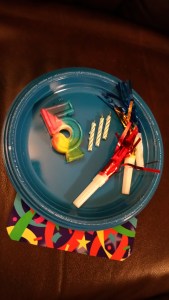
Birthday candles and party favors (photo by Teresa TL Bruce, TealAshes.com)

Birthday candles and party favors (photo by Teresa TL Bruce, TealAshes.com)

It’s my husband’s. My late husband’s.

And my mother’s. My late mother’s.

When Mom died a little over twenty years ago, I worried over whether anyone else would remember her birthday. I didn’t want her to be forgotten. And I knew I’d miss her even more on her birthday than I did every other day without her.

Celebrating my husband’s birthday without my mother’s was hard, but he helped me get through each of hers. He said things like:

“I know today is a hard one.”
“I’m sure you’re thinking of your mom today.”
“I miss her, too.”

When my husband died a little over five years ago, I couldn’t face the thought of Mom’s birthday without him.

And I couldn’t face the thought of his birthday at all. I was too broken.

A dear friend came to spend time with me. She listened when I cried and ranted. She reminded me to eat (and made me food when I still forgot). By her presence, she showed me how much she cared.

Even though these pieces are glued back together, this broken mug will never fully be whole again. (Photo by Teresa TL Bruce)

Even though these pieces are glued back together, this broken mug will never fully be whole again. (Photo by Teresa TL Bruce)

And that she remembered. By doing so, she helped me gather up pieces of my fragmented self.

Fast forward five years — to now.

My life is good again — different, but good. Most days are much easier to get through than they were in the first couple of years after he died.

But some days — like his birthday and like my mom’s, which fall so close together — are harder than others. On those occasions, grief leaks more easily through the patched-up holes where I put myself together in my new normal.

If you know someone who is grieving lost loved ones, share your memories of them.

And if you know their birthdays, let them know you’re thinking of them then, too.

Grief Therapy and a Friend’s Counsel

A  few weeks after my husband’s death, a woman I hadn’t seen in years suggested I meet with a grief therapist. “My mom went to counseling after her husband died,” my friend told me, “and it made a world of difference for her. Counseling helped her cope.”

My friend’s sincere concern (and attempted consolation) touched me. I felt the kindness of her intention, but her words scraped at already raw emotions. I balked.

I may have nodded as she spoke, but I stepped back, putting a wider space between us while my inner voice screamed over her advice:

I don’t need a therapist, thank you very much, and this sadness isn’t something I need to fix. I don’t want counseling — I want my husband back. I want my kids’ father back! How dare you — who still have your husband — tell me someone can fix my mental health? He’s only been dead a month — am I supposed to be okay with that?

My husband was dead. Talking it out with a stranger wouldn’t return him to life. It wouldn’t return me from my new, unwelcome status as a single parent to my familiar role as a married, stay-at-home mom.

But before I could put words to that inner indignation, another old acquaintance approached who’d not yet heard THE news. “Hi, Teresa. How’s your husband doing? Where is he today?”

I opened my mouth to answer, not knowing what I’d say.

Sometimes, back then, when grief was new and raw and all-consuming, I couldn’t allow myself to utter the horrible words, “He’s dead.”

Other times, I couldn’t stop myself from blurting, “My husband died.” (Looking back, I pity the poor store clerks, fellow shoppers, and service professionals I encountered.)

So how did I answer the second woman’s innocent, caring question that day — on the heels of hearing another’s advice?

A wordless sob.  I spun and — sobbing louder — ran as fast as I could.*

I ran from the idea of counseling as much as I ran from the need to escape before really making a scene.

For more than a year after that day, my friend’s suggestion rattled around in the back of my mind, usually associated with feelings of flight. Meanwhile, I met and networked with many, many fellow widows and widowers and began networking with others who’d lost loved ones as well. From time to time, these peers mentioned grief counseling, and how glad they were they’d participated.  I always thought, “Good for them … but not for me.”

Counseling reframes grief, but it doesn't remove it.

Counseling reframes grief, but it doesn’t remove it. (Photo by Teresa TL Bruce, TealAshes.com)

Yet my friend’s words echoed: Counseling helped her cope … Counseling helped her … Counseling helped …

When I was ready, I realized it might do me some good. Even then, it took a couple of months more (and several dialed hang ups) to schedule myself an appointment.

It did help. It didn’t take away or diminish my loss, but it empowered me with tools to reframe my life’s “new normal.”

(Thank you again, my friend, for the gentle suggestion you gave me that day more than five years ago. I remain grateful for it!)

Before you gently suggest grief counseling or therapy for bereaved friends, keep in mind:

  • Grieving is harder than it looks, so avoid criticism or commentary that implies your friends are mourning and/or coping the “wrong” way. (Of course, if they are doing or about to do something harmful to themselves or others, stepping in is essential — just as it would be for any of your friends who aren’t grieving!)
  • Grieving takes much, much longer than you think. (Hint: Year two is often more difficult than the first 365 days after a death.) Please, remember they are still in mourning long after the funeral — and reach out to them.
  • Sometimes it helps to enlist a professional, but until mourners are ready, counseling won’t help.**  If you think it would benefit your friends, gently mention the idea once. Wait a couple of months before you bring it up again. Then wait another couple of months.
  • Remember: Grief is an emotional state born of love and triggered by loss, but it has real, physical components, too. Grief can’t be cured or fixed or treated any more than you can cure or fix the love at its roots. But coping tools can (eventually) assist in adjusting to it.
  • Like anything new, it takes time to become proficient. Never, ever, ever imply to a griever they should be (or get) “over it by now.” Don’t say that. Ever. No, never. (Can you tell how strongly I feel about this?)

In the meantime, let your friends know that whether or not they seek a professional’s help in learning to manage their grief, you’ll stand by them — no matter what.

___

*I ran as fast as a woman with nerve damage in her ankle could “run” away while clomping along with a cane. (But that’s a whole different story of life back then…)

**See the Mayo Clinic’s page on Complicated Grief for information on warning signs that your friend may need professional help adjusting after a loss. The symptoms listed are normal for grievers (and even to be expected) during the first six months, according to that website, but may also last much longer. However, if they do not diminish of if they intensify over time, enlisting professional help may be necessary.

Trauma after Death

I’m usually calm in crises, but I couldn’t remember how to dial 9-1-1.

lock screen, incorrect pin, dog, emergency call

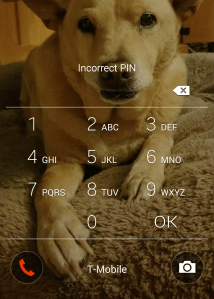
The red phone icon would have let me dial for help without keying the pin number on my locked screen … if I’d remembered. (Screenshot of photo by Teresa TL Bruce)

I’d seen items in the road and eased the car around them.

Passing the parallel-parked cars — and the things strewn on the road — I realized they weren’t things. I threw the motor into park, blocking the road. My hands shook. I jumped from the car.

On the ground, a backpack hid someone’s back; a baseball cap covered his head. His upper body jutted into the street from between two cars.

“Sir, are you okay?” He was breathing but didn’t respond. I fumbled the numbers to unlock my phone. (I forgot about the red emergency call icon.)

The man lay facedown on the road. His legs and hips hung above the ground, tangled in an upside-down bicycle between the sidewalk and the street.

Another man snaked his motorcycle around my car to see what happened. He quieted his motor and stepped close to the red pavement under the baseball cap.

I entered my unlock code, then tried keying 9-1-1. “Don’t move him!” I yelled as Mr. Motorcycle approached the unconscious man. I knew never to move anyone with possible back injuries — but this passerby didn’t.

An employee from the nearby school hurried over. Calling “9-1-1” felt more complicated than it should have been. Again I hit the wrong combination of digits.

You'd think hitting 9 once and then hitting 1 twice would be easy...

You’d think hitting 9 once and then hitting 1 twice would be easy…

Mr. Motorcycle laughed, pointing at the spilled beer can nearby. “He’s not hurt — he’s just drunk.”

I finally got through to 9-1-1.

“Sir!” I yelled again. “DON’T MOVE HIM!”

Mr. Motorcycle ignored me. He tugged and pulled the bike from between the unconscious man’s legs, lowering half his body with a thud.

The dispatcher barraged me with questions I couldn’t answer. “I don’t know. I found him like this.” How old was the person, how long had he been there, did anyone else see what happened, did the fall make him unconscious, or was it the other way around … ?

She kept asking, as if I hadn’t already answered.

Meanwhile, my car blocked the narrow street; I needed to make room for the ambulance. I told Mr. Motorcycle and the school employee to stay by the injured man (to protect him from approaching vehicles).

The dispatcher reprimanded me, telling me not to leave the scene — which I wasn’t doing! — and interrupted my disclaimers.

My hands shook as I fastened my seat belt. “I’m putting you on speaker,” I told her. She demanded I not relocate my car but rather return to make sure no one moved the man. (She’d already heard me tell Mr. Motorcycle — and that he ignored me.)

With one hand on the gearshift and one on the wheel, I jumped. Mr. Motorcycle pressed both hands against my window, talking at me through the glass.

The dispatcher fussed at me — loudly — as I lowered the window.

Mr. Motorcycle had to leave before the bank closed (it was barely three o’clock) and would be “right back.” (At least, I think that was what he said — it was hard to hear over the dispatcher’s voice.)

That was the last I saw of him.

The school employee (thank heaven for her!) “stood guard” while I drove (seven whole car-lengths away) to an empty space alongside the curb. (If you’ve never parallel parked while a 9-1-1 dispatcher berates you for making room so an emergency vehicle can reach the emergency, you can’t imagine how long that short drive was.) “I’ve parked and I’m walking back to the injured man now,” I told the dispatcher.

“Don’t give him anything to eat or drink,” she warned.

“He’s unconscious!” (I’d already told her.)

“Paramedics are on the way,” the dispatcher said, “but if he wakes before they arrive, don’t let anyone feed him or give him anything to drink.”

Between the dispatcher’s assurance of help on the way and the siren’s affirmation that it was, a gut-punching thought took my breath: These first responders were coming from that station — the station whose paramedics entered our home that night.

Please, oh, please, oh, please, oh, please, let it not be them…

I’d seen them out before — the same team — at the grocery store. I’d fallen apart, emotionally thrown back to the ground of that traumatic night.

Please oh please oh please let it not be them.

But the side of the truck bore that station number.

Please-ohplease-ohplease-not-them!

I turned and faced the prostrate man. I wouldn’t look at the paramedics’ faces.

Too many PTSD triggers of that night…

Behind me a man said, “I remember you…”

Oh, please, no!

My stomach heaved.

“Weren’t you in my radio class?”

I breathed again — How long was I holding my breath? — and turned toward the firefighter who’d taught my CERT group about the science and protocols of amateur radio back when I got my ham operator license. Way back, before the night my husband died.

It’s okay, I told myself. Not them. 

But. What if the others were on duty that night?

I blurted a summary of all I’d told the dispatcher, then asked whether I needed to stay.

“No, we’ve got him now. Thanks for helping out. Good seeing you.”

As I turned away, I heard the injured man respond to the rescue crew. I felt tremendous relief; he was conscious, but I didn’t linger. (I scurried to my car to avoid seeing other rescuers’ faces.)

Then I drove away.

Life went on, for me, anyway. I hope and assume it did for that man…

pavement, stain

“Stained pavement only seems compelling if you understand the story that soiled it. … Learning the story of another’s grief will help you understand the marks of mourning on the soul.” — Teresa TL Bruce (TealAshes.com)

It’s been a couple of weeks since that afternoon. I’ve wondered about the man whose name I don’t know. (Did he have a head injury? Did Mr. Motorcycle harm his back?) And I’ve worried. (Is that his bicycle locked against the fence near where he fell? If so, why hasn’t he come back for it?).

After two weeks in the Florida sun and rain, as of yesterday the pavement still showed stains from that day. I can’t pass the street without remembering.

It’s made me consider other marks on the roadways, discolorations I never thought twice about before. Stained pavement only seems compelling if you understand the story that soiled it.

How many of us see the behavioral or emotional “stains” in those around us and walk by — or turn our backs — without practicing emotional triage? For those who are grieving, it’s not enough (and often not a good idea) to simply ask, “Are you okay?” or “How are you?”*

Make sure your grieving friends breathe deeply. Stand guard against those who would take advantage of their vulnerability. Offer support, even if it comes in a drink of water or a bite to eat. Help them back onto their feet — physically and emotionally. Don’t ride away just because you have other things to do. Listen to their words and their tears and their assertions.

Learning the story of another’s grief will help you understand the marks of mourning on the soul.

___

*Better Questions than “How Are You?” Part 2–What to Ask When Grief Is New


Breast cancer awareness and grief–when seeing pink means seeing red, part 1

This is the first post of several breast cancer awareness experiences to keep in mind during October’s breast cancer awareness month … and beyond.

Last month marked twenty years* since Mom died of breast cancer. More than thirty years ago her mother passed of the same; so did hers.

I’m therefore acutely aware of the importance of women getting regular mammograms and being vigilant about self-exams. That’s how Mom won more than three extra years with our family.

That’s why I got a mammogram — on the twentieth anniversary of Mom’s death, the week after the fifth anniversary of my husband’s.

The fun of getting a mammogram starts with stuffing top wear into a locked cubby. Photo by Teresa TL Bruce

The fun of getting a mammogram starts with stuffing top wear into a locked cubby. Photo by Teresa TL Bruce

It’s not something I look forward to every year. (Does anyone?) This year I put it off for months, until one day I finally called and made an appointment for the first available opening.

The irony of the timing didn’t hit me until that morning.

By the time I’d sat in the backed-up waiting room an hour after my scheduled appointment, my emotions were all ajumble.

By the second time the technician told me the equipment had a “technical problem” — and the procedure had to be repeated — my pertinent body parts felt all ajumble, too.

I cried — as much from emotional pain as from physical. When the technician assured me (bless her heart) that it would “only hurt for a few more seconds” (for the record, not true), she had no way to know the far deeper, longer-lasting pain came not from the contortions she inflicted on my body but from the losses the date itself smashed against my chest.

For a few moments, I plunged back into the mode of blurting my bereavement the same way I did during the early weeks (months, really) after my husband’s death.

To her credit, the woman tried to comfort me. She put an arm around me to give me a hug — but clad as I was only in the radiology center’s flimsy wraparound top, it felt awkward and uncomfortable. (In an oddly different way, the feeling reminded me how it felt when I was newly widowed and well-meaning men friends offered hugs — which at that raw time I didn’t want from any man I wasn’t related to.)

After the second round of images was taken (this time without technical difficulties), as my hand touched the doorknob, she offered a few well-intended words:  “You’ll be okay. You just have to get past it. Everybody has to die sometime.”

WHAT!?

I’d just bared my soul (among other things) in front of this woman. I was crying because I missed my mom on the anniversary of her death to breast cancer, and missing my late husband, too. And she tried to make me feel better by reducing the validity of my grief? (Not to mention that she ignored my apprehension over the reason for the mammogram she’d just subjected me to.)

Yes, I saw red.

Please don’t say such things to those who are grieving! It’s true that everyone dies, but it’s not helpful or encouraging (or even nice) to make such losses seem everyday or expected or unimportant. 

___

*In an earlier post I rounded up the amount of time (see https://tealashes.com/2014/06/27/comfort-after-moms-funeral/).