“Happy Birthday” after a Death?

At this time last year I wrote about MLK Jr., Kennedy, and me. It should be on my mind again this weekend, but this year I hardly remembered why the third Monday of January is recognized as a national holiday. It’s not the late Dr. King’s birthday I’m remembering.

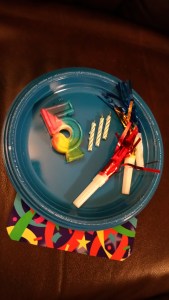
Birthday candles and party favors (photo by Teresa TL Bruce, TealAshes.com)

Birthday candles and party favors (photo by Teresa TL Bruce, TealAshes.com)

It’s my husband’s. My late husband’s.

And my mother’s. My late mother’s.

When Mom died a little over twenty years ago, I worried over whether anyone else would remember her birthday. I didn’t want her to be forgotten. And I knew I’d miss her even more on her birthday than I did every other day without her.

Celebrating my husband’s birthday without my mother’s was hard, but he helped me get through each of hers. He said things like:

“I know today is a hard one.”
“I’m sure you’re thinking of your mom today.”
“I miss her, too.”

When my husband died a little over five years ago, I couldn’t face the thought of Mom’s birthday without him.

And I couldn’t face the thought of his birthday at all. I was too broken.

A dear friend came to spend time with me. She listened when I cried and ranted. She reminded me to eat (and made me food when I still forgot). By her presence, she showed me how much she cared.

Even though these pieces are glued back together, this broken mug will never fully be whole again. (Photo by Teresa TL Bruce)

Even though these pieces are glued back together, this broken mug will never fully be whole again. (Photo by Teresa TL Bruce)

And that she remembered. By doing so, she helped me gather up pieces of my fragmented self.

Fast forward five years — to now.

My life is good again — different, but good. Most days are much easier to get through than they were in the first couple of years after he died.

But some days — like his birthday and like my mom’s, which fall so close together — are harder than others. On those occasions, grief leaks more easily through the patched-up holes where I put myself together in my new normal.

If you know someone who is grieving lost loved ones, share your memories of them.

And if you know their birthdays, let them know you’re thinking of them then, too.

Grief Therapy and a Friend’s Counsel

A  few weeks after my husband’s death, a woman I hadn’t seen in years suggested I meet with a grief therapist. “My mom went to counseling after her husband died,” my friend told me, “and it made a world of difference for her. Counseling helped her cope.”

My friend’s sincere concern (and attempted consolation) touched me. I felt the kindness of her intention, but her words scraped at already raw emotions. I balked.

I may have nodded as she spoke, but I stepped back, putting a wider space between us while my inner voice screamed over her advice:

I don’t need a therapist, thank you very much, and this sadness isn’t something I need to fix. I don’t want counseling — I want my husband back. I want my kids’ father back! How dare you — who still have your husband — tell me someone can fix my mental health? He’s only been dead a month — am I supposed to be okay with that?

My husband was dead. Talking it out with a stranger wouldn’t return him to life. It wouldn’t return me from my new, unwelcome status as a single parent to my familiar role as a married, stay-at-home mom.

But before I could put words to that inner indignation, another old acquaintance approached who’d not yet heard THE news. “Hi, Teresa. How’s your husband doing? Where is he today?”

I opened my mouth to answer, not knowing what I’d say.

Sometimes, back then, when grief was new and raw and all-consuming, I couldn’t allow myself to utter the horrible words, “He’s dead.”

Other times, I couldn’t stop myself from blurting, “My husband died.” (Looking back, I pity the poor store clerks, fellow shoppers, and service professionals I encountered.)

So how did I answer the second woman’s innocent, caring question that day — on the heels of hearing another’s advice?

A wordless sob.  I spun and — sobbing louder — ran as fast as I could.*

I ran from the idea of counseling as much as I ran from the need to escape before really making a scene.

For more than a year after that day, my friend’s suggestion rattled around in the back of my mind, usually associated with feelings of flight. Meanwhile, I met and networked with many, many fellow widows and widowers and began networking with others who’d lost loved ones as well. From time to time, these peers mentioned grief counseling, and how glad they were they’d participated.  I always thought, “Good for them … but not for me.”

Counseling reframes grief, but it doesn't remove it.

Counseling reframes grief, but it doesn’t remove it. (Photo by Teresa TL Bruce, TealAshes.com)

Yet my friend’s words echoed: Counseling helped her cope … Counseling helped her … Counseling helped …

When I was ready, I realized it might do me some good. Even then, it took a couple of months more (and several dialed hang ups) to schedule myself an appointment.

It did help. It didn’t take away or diminish my loss, but it empowered me with tools to reframe my life’s “new normal.”

(Thank you again, my friend, for the gentle suggestion you gave me that day more than five years ago. I remain grateful for it!)

Before you gently suggest grief counseling or therapy for bereaved friends, keep in mind:

  • Grieving is harder than it looks, so avoid criticism or commentary that implies your friends are mourning and/or coping the “wrong” way. (Of course, if they are doing or about to do something harmful to themselves or others, stepping in is essential — just as it would be for any of your friends who aren’t grieving!)
  • Grieving takes much, much longer than you think. (Hint: Year two is often more difficult than the first 365 days after a death.) Please, remember they are still in mourning long after the funeral — and reach out to them.
  • Sometimes it helps to enlist a professional, but until mourners are ready, counseling won’t help.**  If you think it would benefit your friends, gently mention the idea once. Wait a couple of months before you bring it up again. Then wait another couple of months.
  • Remember: Grief is an emotional state born of love and triggered by loss, but it has real, physical components, too. Grief can’t be cured or fixed or treated any more than you can cure or fix the love at its roots. But coping tools can (eventually) assist in adjusting to it.
  • Like anything new, it takes time to become proficient. Never, ever, ever imply to a griever they should be (or get) “over it by now.” Don’t say that. Ever. No, never. (Can you tell how strongly I feel about this?)

In the meantime, let your friends know that whether or not they seek a professional’s help in learning to manage their grief, you’ll stand by them — no matter what.

___

*I ran as fast as a woman with nerve damage in her ankle could “run” away while clomping along with a cane. (But that’s a whole different story of life back then…)

**See the Mayo Clinic’s page on Complicated Grief for information on warning signs that your friend may need professional help adjusting after a loss. The symptoms listed are normal for grievers (and even to be expected) during the first six months, according to that website, but may also last much longer. However, if they do not diminish of if they intensify over time, enlisting professional help may be necessary.

Thanksgiving and Thanks-Grieving — Serving Mashed Gratitude with a Side of Grief

In previous years I wrote about grief and gratitude intermingling during Thanksgiving.* Whether someone died recently or long ago, the holiday season is forever altered for surviving family and friends.

For families who have lost loved ones within a few days, weeks, or even months, the shock of new grief might mask the sharpest pain of the first holiday season — or not.

The pain can be overwhelming. Getting through my first widowed Thanksgiving (only a couple of months after my husband’s unexpected death) was like waking up in a surgical recovery room. I was groggy with grief, unable to focus on anything but the faces of my family, too aware of the open wound where half my heart had been removed without my consent.

Our post-death holiday menu abstained from all things traditional. Instead of cooking favorite dishes, we went out to eat. Instead of verbalizing what we were grateful for as a family, I privately listed my many blessings in a notebook. Instead of putting up our Christmas tree the day after Thanksgiving for the 25th year in a row, I forgot. (I even forgot we’d bought an artificial tree two years before he died.)  I forgot Christmas was coming.

Seasoning my every acknowledgement of personal gratitude was the GAPING HOLE of his absence. My husband — my children’s father — WAS NOT THERE … and would NEVER return.

Sometimes the pain of loss can be motivating; not every loss means all tradition must be avoided. Mom died two months before Thanksgiving a decade and a half earlier. (Yes, my husband’s death was the same time of year as my mother’s.) Our family did everything we could that first Thanksgiving and Christmas to serve up “sameness” — as much as was possible without her presence. (Though we did have her presents, sort of. She left behind — or more accurately purchased ahead — ornaments for her grandchildren.) Thanksgiving and Christmas were bittersweet commemorations (not exactly celebrations) that year; her sweet reminders and attitude of gratitude surrounded us, tempered by our distress and longing for her, softened and lightened by everyone’s anticipation of her third grandchild’s birth between the two holidays.

These examples from my household illustrate one of the most important things to remember if you want to support a bereaved friend or if you are yourself grieving: There is no “right” way to grieve, and (short of recklessly dangerous behaviors) there’s no “wrong” way to grieve, either.

Every loss is unique. Everyone’s journey of adjustment after a death takes its own time. Like people attending an all-day Thanksgiving buffet, no two plates of grief will hold identical quantities, and few will eat all their items in the same order or at the same time.

Let your friends know you’re aware of their losses. If you haven’t said it lately, say it again. (Grief is ongoing; your concern should be, too.) Invite them to share your table. Reassure them they’re going about it the best they can.

___

*Here are links to my other posts on this topic:

Thanksgiving and Thanksgrieving

Happy Thanks-Grieving: Grief-Enhanced Gratitude

Breast cancer awareness and grief–when seeing pink means seeing red, part 1

This is the first post of several breast cancer awareness experiences to keep in mind during October’s breast cancer awareness month … and beyond.

Last month marked twenty years* since Mom died of breast cancer. More than thirty years ago her mother passed of the same; so did hers.

I’m therefore acutely aware of the importance of women getting regular mammograms and being vigilant about self-exams. That’s how Mom won more than three extra years with our family.

That’s why I got a mammogram — on the twentieth anniversary of Mom’s death, the week after the fifth anniversary of my husband’s.

The fun of getting a mammogram starts with stuffing top wear into a locked cubby. Photo by Teresa TL Bruce

The fun of getting a mammogram starts with stuffing top wear into a locked cubby. Photo by Teresa TL Bruce

It’s not something I look forward to every year. (Does anyone?) This year I put it off for months, until one day I finally called and made an appointment for the first available opening.

The irony of the timing didn’t hit me until that morning.

By the time I’d sat in the backed-up waiting room an hour after my scheduled appointment, my emotions were all ajumble.

By the second time the technician told me the equipment had a “technical problem” — and the procedure had to be repeated — my pertinent body parts felt all ajumble, too.

I cried — as much from emotional pain as from physical. When the technician assured me (bless her heart) that it would “only hurt for a few more seconds” (for the record, not true), she had no way to know the far deeper, longer-lasting pain came not from the contortions she inflicted on my body but from the losses the date itself smashed against my chest.

For a few moments, I plunged back into the mode of blurting my bereavement the same way I did during the early weeks (months, really) after my husband’s death.

To her credit, the woman tried to comfort me. She put an arm around me to give me a hug — but clad as I was only in the radiology center’s flimsy wraparound top, it felt awkward and uncomfortable. (In an oddly different way, the feeling reminded me how it felt when I was newly widowed and well-meaning men friends offered hugs — which at that raw time I didn’t want from any man I wasn’t related to.)

After the second round of images was taken (this time without technical difficulties), as my hand touched the doorknob, she offered a few well-intended words:  “You’ll be okay. You just have to get past it. Everybody has to die sometime.”

WHAT!?

I’d just bared my soul (among other things) in front of this woman. I was crying because I missed my mom on the anniversary of her death to breast cancer, and missing my late husband, too. And she tried to make me feel better by reducing the validity of my grief? (Not to mention that she ignored my apprehension over the reason for the mammogram she’d just subjected me to.)

Yes, I saw red.

Please don’t say such things to those who are grieving! It’s true that everyone dies, but it’s not helpful or encouraging (or even nice) to make such losses seem everyday or expected or unimportant. 

___

*In an earlier post I rounded up the amount of time (see https://tealashes.com/2014/06/27/comfort-after-moms-funeral/).

Putting the Widowed in a Box

I went for a checkup yesterday. I hadn’t been to that provider since the year my husband died, so I had to fill out a new medical history. How difficult filling out such forms used to be (and sometimes “still” is)! If you own or manage a business that requires personal information of its clients, make sure your paperwork and/or website includes “widowed” as a category.

At least this form offered me the option of "Other" where I could write in my own category: widowed.

At least this form offered me the option of “Other” where I could write in my own category: widowed.

I can’t count the number of times I sobbed through inadequate, limited options during the first year and a half after his death. (I do remember specific waiting rooms where people were leery enough of the crying woman to move to the other side of the room, sending not-so-furtive glances my way.)

When I was newly widowed,  EVERYTHING reminded me of my loss. It was hard enough coping with grief on a daily (sometimes hourly) basis. I hated having to acknowledge my husband’s death in clinical black and white on the many forms I had to fill out — and there were a LOT of forms. It was excruciating to complete paperwork that ignored the existence of my life-altered status.

  • I was not “single.” (I’d been married for 24 years and hadn’t done anything that changed or negated that. Neither had my husband — except for his dying.)
  • I was not “divorced.” (See above.)
  • I was not “married.” (Even though both of the above still applied, my spouse was no longer there — he was NEVER coming home.)
  • I was “widowed.” (Still am.)

Too often, company  (and government) forms offer no appropriate box for widows and widowers to check under “marital status.” On paper I write in my own category, even when there isn’t an option (or enough space) to do so. But online forms can incite scream-inducing, option-lacking frustration.

(And yes, during that first year or so, I sat at my computer and screamed at such websites — and at whatever offices or organizations had sent me to them — even though I had never been a person who screamed. But I’d never been widowed before, either.)

It has been nearly five years since my husband died. Socially, I’ve come to see myself as single again — most days, anyway.  But legally, “widowed” still feels like a better fit.

I still check the “Mrs.” box (rather than the ones for Ms. or Miss).* Online, that often opens a dialog box for my husband’s contact information. (Good luck trying to reach him, I think.) If I leave blank his current address and phone number, or type “deceased” (or, when I’m in a snarky mood, if I enter the word “cemetery”), such sites red-line my responses with please submit a valid phone number and street address. (Sometimes that makes me want to scream again.)

I don’t appreciate paperwork forcing me back to the start, forcing me to redefine myself according to its guidelines.

As a widow, I’ve had to do enough starting over — and redefining — for myself.

___

*If you don’t know what a widow prefers to be called (Mrs., Ms. or Miss), ask her. She won’t bite, and she’ll appreciate that you respect her enough to want to heed her preference.