“Happy Birthday” after a Death?

At this time last year I wrote about MLK Jr., Kennedy, and me. It should be on my mind again this weekend, but this year I hardly remembered why the third Monday of January is recognized as a national holiday. It’s not the late Dr. King’s birthday I’m remembering.

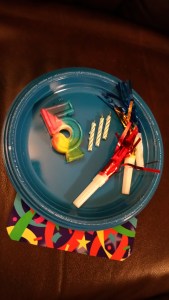
Birthday candles and party favors (photo by Teresa TL Bruce, TealAshes.com)

Birthday candles and party favors (photo by Teresa TL Bruce, TealAshes.com)

It’s my husband’s. My late husband’s.

And my mother’s. My late mother’s.

When Mom died a little over twenty years ago, I worried over whether anyone else would remember her birthday. I didn’t want her to be forgotten. And I knew I’d miss her even more on her birthday than I did every other day without her.

Celebrating my husband’s birthday without my mother’s was hard, but he helped me get through each of hers. He said things like:

“I know today is a hard one.”
“I’m sure you’re thinking of your mom today.”
“I miss her, too.”

When my husband died a little over five years ago, I couldn’t face the thought of Mom’s birthday without him.

And I couldn’t face the thought of his birthday at all. I was too broken.

A dear friend came to spend time with me. She listened when I cried and ranted. She reminded me to eat (and made me food when I still forgot). By her presence, she showed me how much she cared.

Even though these pieces are glued back together, this broken mug will never fully be whole again. (Photo by Teresa TL Bruce)

Even though these pieces are glued back together, this broken mug will never fully be whole again. (Photo by Teresa TL Bruce)

And that she remembered. By doing so, she helped me gather up pieces of my fragmented self.

Fast forward five years — to now.

My life is good again — different, but good. Most days are much easier to get through than they were in the first couple of years after he died.

But some days — like his birthday and like my mom’s, which fall so close together — are harder than others. On those occasions, grief leaks more easily through the patched-up holes where I put myself together in my new normal.

If you know someone who is grieving lost loved ones, share your memories of them.

And if you know their birthdays, let them know you’re thinking of them then, too.

New Year after Death

Illustration of running the gauntlet from "Spiessgasse" (Pike-alley) from the Frundsberger Kriegsbuch (war-book) of Jost Ammann, 1525. (This image is in the public domain.) Source: https://commons.wikimedia.org/wiki/File:Spiessgasse_Frundsberger_Kriegsbuch_Jost_Ammann_1525.JPG

Illustration of running the gauntlet from “Spiessgasse” (Pike-alley) from the Frundsberger Kriegsbuch (war-book) of Jost Ammann, 1525.
(This image is in the public domain.)
Source: https://commons.wikimedia.org/wiki/File:Spiessgasse_Frundsberger_Kriegsbuch_Jost_Ammann_1525.JPG

‘Twas the week after Christmas and ‘fore the New Year,
When partyers gathered to prolong good cheer.
But for mourners it marked yet another milestone
(without absent loved ones) of being alone.
— Teresa  TL Bruce

The holidays are hard for the newly bereaved. (They’re not so easy for the not-so-newly bereaved, either.) Since early fall (in the U.S.), we’ve run the grieving gauntlet of celebrations — Halloween, Veterans Day, Thanksgiving, Hanukkah, Christmas — and now we’re facing New Year’s Eve and New Year’s Day. [Please see New Year, New Grief for specifics on grief, the end of one year, and the beginning of the next.]

Sometimes, the cumulative effects of getting through event after event without deceased loved ones can seem like too much to bear. Sometimes mourners become overwhelmed with breathing — with being — in a world whose traditions and commemorations keep going while their lost loves do not.

For weeks now I’ve been reflecting on something I saw on the news the week before Thanksgiving. Former NFL New England Patriot quarterback Doug Flutie’s parents died of natural causes within hours of one another. His father had a fatal heart attack, and then his mother did, too.

It’s been said she died of a broken heart. I believe it.

My sympathies and condolences go to the Fluties’ children, grandchildren, and other extended family this holiday season and as they begin the new year without them. Losing a parent is agonizing. (I know how I felt when my mother died.) Losing a grandparent is painful and life-changing, too. (I miss all of my grandparents.)

I cannot imagine the sorrow and ache of losing both parents (or two grandparents) in a single day.

For their immediate and extended family’s sake, I am sorry. Their pain and mourning will last beyond the initial swells of sympathy and kindness they no doubt received from their friends (and from the public).

But for the sake of the couple themselves, who died within hours of each other …

Losing a spouse is heart-breaking. Literally. It wasn’t until my husband’s death that I understood how physically broken a heart could feel. But it wasn’t just my heart. I had grafted my life to my husband’s — joined in mind, heart, body, and soul. His death ripped, tore at, axed, smashed, and severed our joined mind, heart, body, and soul — my mind, my heart, my body, my soul.

We were one. And when one is halved, the fraction remaining is not whole. The surviving spouse is an off-kilter, walking wound, more a jagged hole than a functioning human.

I remember how awful the first days felt. (First weeks, months, years …) I resented rare couples, like the Fluties, who passed from this life into the next together by peaceful, natural causes.

For the sakes of that late husband and his briefly widowed wife (whose family now doubly grieves their dual absence), I reluctantly admit I held a sliver of envy. (Amid the widowed community, I know I’m not alone in this.)

I’m not the only widowed one who, on hearing of one spouse shortly following the other into death, feels … (I don’t like admitting this) … jealous.

Now, lest any of my friends, family, or readers misunderstand me, let me be very, very clear before we go on from here:  I did not ever, I do not now, and I will not ever contemplate taking any action to hasten “joining” my late husband. No. NOT gonna happen.*

But there were times I would have welcomed a passive exit of my own. There were times when grief was so ever-present, so debilitating, so excruciating, so overwhelming, so lonely … I went to bed hoping not to wake up. 

It wasn’t that I didn’t want to live, because I had three amazing daughters who needed me. I had other family and friends I needed and loved, too. But I didn’t know how to keep going One. More. Hour. — let alone another DAY — in that much pain.

Waking up to a new day was as awful as going to bed alone. (Sometimes.)

Among the newly widowed, dying together can seem preferable to surviving a spouse. (At least for a while.) Over and over I heard others say, “Why did I have to stay behind? Why do I have to keep going? How can I endure hurting this badly?”

There’s nothing you can do to remove their pain, but you can make sure they don’t endure it alone. Include them. Be with them. Validate their loss by acknowledging and accepting their sorrow.

Let them know you’ll be by their side — and not just on New Year’s Eve, but in the unbearably long 365 days that follow.

___

*If you (or anyone you know) feel so overburdened by grief or loss (or any other reason) that “not living” seems like an option, please, please seek professional help. Do it now. If not for your own sake, then for the sakes of those around you, get help now.
Visit http://www.suicidepreventionlifeline.org/ or call 1-800-273-TALK (8255) in the U.S.; outside the U.S. you may find resources listed at http://www.suicide.org/international-suicide-hotlines.html.


Thanksgiving and Thanks-Grieving — Serving Mashed Gratitude with a Side of Grief

In previous years I wrote about grief and gratitude intermingling during Thanksgiving.* Whether someone died recently or long ago, the holiday season is forever altered for surviving family and friends.

For families who have lost loved ones within a few days, weeks, or even months, the shock of new grief might mask the sharpest pain of the first holiday season — or not.

The pain can be overwhelming. Getting through my first widowed Thanksgiving (only a couple of months after my husband’s unexpected death) was like waking up in a surgical recovery room. I was groggy with grief, unable to focus on anything but the faces of my family, too aware of the open wound where half my heart had been removed without my consent.

Our post-death holiday menu abstained from all things traditional. Instead of cooking favorite dishes, we went out to eat. Instead of verbalizing what we were grateful for as a family, I privately listed my many blessings in a notebook. Instead of putting up our Christmas tree the day after Thanksgiving for the 25th year in a row, I forgot. (I even forgot we’d bought an artificial tree two years before he died.)  I forgot Christmas was coming.

Seasoning my every acknowledgement of personal gratitude was the GAPING HOLE of his absence. My husband — my children’s father — WAS NOT THERE … and would NEVER return.

Sometimes the pain of loss can be motivating; not every loss means all tradition must be avoided. Mom died two months before Thanksgiving a decade and a half earlier. (Yes, my husband’s death was the same time of year as my mother’s.) Our family did everything we could that first Thanksgiving and Christmas to serve up “sameness” — as much as was possible without her presence. (Though we did have her presents, sort of. She left behind — or more accurately purchased ahead — ornaments for her grandchildren.) Thanksgiving and Christmas were bittersweet commemorations (not exactly celebrations) that year; her sweet reminders and attitude of gratitude surrounded us, tempered by our distress and longing for her, softened and lightened by everyone’s anticipation of her third grandchild’s birth between the two holidays.

These examples from my household illustrate one of the most important things to remember if you want to support a bereaved friend or if you are yourself grieving: There is no “right” way to grieve, and (short of recklessly dangerous behaviors) there’s no “wrong” way to grieve, either.

Every loss is unique. Everyone’s journey of adjustment after a death takes its own time. Like people attending an all-day Thanksgiving buffet, no two plates of grief will hold identical quantities, and few will eat all their items in the same order or at the same time.

Let your friends know you’re aware of their losses. If you haven’t said it lately, say it again. (Grief is ongoing; your concern should be, too.) Invite them to share your table. Reassure them they’re going about it the best they can.

___

*Here are links to my other posts on this topic:

Thanksgiving and Thanksgrieving

Happy Thanks-Grieving: Grief-Enhanced Gratitude

Halloween Grief

My husband died about a month before Halloween. Fake tombstones and skeletons lined store aisles. I was a new widow, the unwilling owner of his cemetery plot. Holiday prop inscriptions labeled Rest in Peace were anything but peaceful.

Mock cemetery displays (complete with fake tombstones and skeletons) contradict the "peaceful" invocation to "rest in peace" (RIP). Many mourners despise them. (Photo by Teresa TL Bruce)

Mock cemetery displays (complete with fake tombstones and skeletons) contradict the “peaceful” invocation to “rest in peace” (RIP). Many mourners despise them. (Photo by Teresa TL Bruce)

He loved Halloween. He delighted in seeing our daughters’ excitement as they dressed up in costumes. I think trick-or-treating was as much fun for him as it was for them. Even when he had to work nights, his favorite annual activity at church was taking our girls “trunk-or-treating” right up until the moment he had to leave for his job.

That first year, just weeks after his passing, I sat in the decorated gym more out of habit (for our youngest daughter’s sake) than because I wanted to be there. I wasn’t quite numb anymore — the shock was beginning to erode — but I wasn’t myself yet, either (and wouldn’t be for a long, long time).

Sights and sounds buzzed and blurred around me. Kids played, adults conversed. I tried eating the food in front of me, but taste and appetite were as irrelevant as they’d been since the night my husband died.

I was an auto-pilot version of myself. I had no desire (or ability) to socialize, and the sight of couples enjoying the event together evoked irrational but undeniable guilt-inducing envy and resentment.

One woman, a person of refinement and decorum, sat beside me. She looked at me without staring yet she saw the pain I was too raw to conceal. “I won’t ask you how you’re doing,” she said.

I nodded my thanks, trying not to let the gathering moisture in my eyes spill onto my face.

“It just sucks,” she said.

Her words, so unlike the lexicon of culture and propriety I’d come to expect from her, were exactly what I needed to hear. Those three little words acknowledged my life had taken a turn, that the “fun” event was anything but, that my soul ached.

And in her acknowledgment of my hurt, a tiny bit of healing began.

Fast forward four, then five years.

Last year I manned games at the children’s trunk-or-treat. It was great fun, and I looked forward to doing the same again this year.

But grief doesn’t always behave in an orderly way. The closer I got to this year’s event, the stronger my aversion grew. Finally, I backed out of my plan to help. (And felt much, much better as soon as I did.)

I don’t mind the cutesy witches and ghouls and goblins decorating houses and buildings. I have nothing against the rows of tiny costumes and candy totes lining store aisles. I still think it will be fun to see little ones dressed up and going door to door again, yelling, “Trick or treat!”

But I still dislike neighborhood “cemeteries” like the one I photographed while out walking the dog early one morning. There’s nothing restful or peaceful about mock burial sites when you’ve had to buy a real one.


Breast cancer awareness and grief–when seeing pink means seeing red, part 1

This is the first post of several breast cancer awareness experiences to keep in mind during October’s breast cancer awareness month … and beyond.

Last month marked twenty years* since Mom died of breast cancer. More than thirty years ago her mother passed of the same; so did hers.

I’m therefore acutely aware of the importance of women getting regular mammograms and being vigilant about self-exams. That’s how Mom won more than three extra years with our family.

That’s why I got a mammogram — on the twentieth anniversary of Mom’s death, the week after the fifth anniversary of my husband’s.

The fun of getting a mammogram starts with stuffing top wear into a locked cubby. Photo by Teresa TL Bruce

The fun of getting a mammogram starts with stuffing top wear into a locked cubby. Photo by Teresa TL Bruce

It’s not something I look forward to every year. (Does anyone?) This year I put it off for months, until one day I finally called and made an appointment for the first available opening.

The irony of the timing didn’t hit me until that morning.

By the time I’d sat in the backed-up waiting room an hour after my scheduled appointment, my emotions were all ajumble.

By the second time the technician told me the equipment had a “technical problem” — and the procedure had to be repeated — my pertinent body parts felt all ajumble, too.

I cried — as much from emotional pain as from physical. When the technician assured me (bless her heart) that it would “only hurt for a few more seconds” (for the record, not true), she had no way to know the far deeper, longer-lasting pain came not from the contortions she inflicted on my body but from the losses the date itself smashed against my chest.

For a few moments, I plunged back into the mode of blurting my bereavement the same way I did during the early weeks (months, really) after my husband’s death.

To her credit, the woman tried to comfort me. She put an arm around me to give me a hug — but clad as I was only in the radiology center’s flimsy wraparound top, it felt awkward and uncomfortable. (In an oddly different way, the feeling reminded me how it felt when I was newly widowed and well-meaning men friends offered hugs — which at that raw time I didn’t want from any man I wasn’t related to.)

After the second round of images was taken (this time without technical difficulties), as my hand touched the doorknob, she offered a few well-intended words:  “You’ll be okay. You just have to get past it. Everybody has to die sometime.”

WHAT!?

I’d just bared my soul (among other things) in front of this woman. I was crying because I missed my mom on the anniversary of her death to breast cancer, and missing my late husband, too. And she tried to make me feel better by reducing the validity of my grief? (Not to mention that she ignored my apprehension over the reason for the mammogram she’d just subjected me to.)

Yes, I saw red.

Please don’t say such things to those who are grieving! It’s true that everyone dies, but it’s not helpful or encouraging (or even nice) to make such losses seem everyday or expected or unimportant. 

___

*In an earlier post I rounded up the amount of time (see https://tealashes.com/2014/06/27/comfort-after-moms-funeral/).