Beware of “Happy Halloween” and Other Hazardous Good Wishes

I could scarcely hear the words “happy Halloween,” let alone say them a month after my husband’s death. It felt as if plastic front yard gravestones mocked my recent cemetery experiences. Fake coffin lids lifted by glow-in-the-dark skeletal hands called to mind the most heart-wrenching purchases I’d ever made. And with death on my mind as it uprooted my life, I couldn’t muster even an artistic appreciation for well-applied “rotting corpse” or zombie makeups.

These gruesome decorations weren’t to blame for my aversion to the cheery greeting (though they certainly didn’t help).
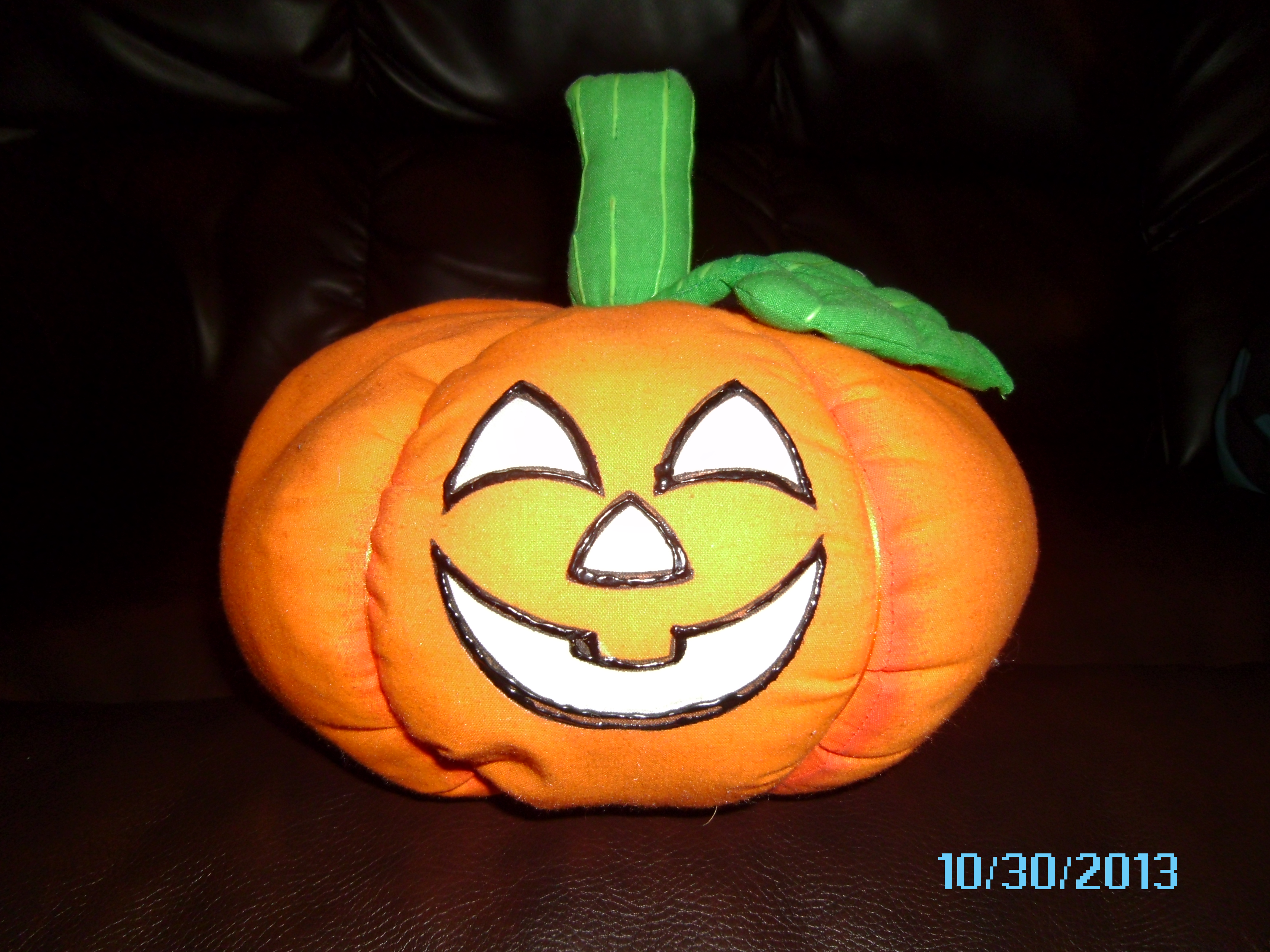
Take your grieving friends some favorite candy (or a healthier treat) to show you're thinking of them, but consider skipping the "Happy Halloween" greeting.

Take your grieving friends some favorite candy (or a healthier treat) to show you’re thinking of them, but consider skipping the “happy Halloween” greeting.

How could it be a “happy Halloween” without my husband? He’d doted on our kids’ annual costuming, and we’d worn more-or-less matching tacky jack-o-lantern shirts most of our 24 years together.

Facing that first quasi-holiday after he died forced me to realize our annual  family traditions would never be the same. In that first year, I wondered whether any such celebrations could ever be “happy” again.

I braced myself against each turn of the calendar. We muddled our way through that first year, altering some traditions, discarding others, and auditioning new activities for tradition-worthiness. Some were outright flops. Others became instant new favorites.

Month by month, my daughters and I found new joys to anticipate.

Along the way to finding those new joys, during that difficult year of “firsts” I appreciated the thoughtful good wishes which acknowledged awareness of our changed circumstances.

Some helpful salutations included:

  • “May you be blessed this Thanksgiving. We’re thinking of you.”
  • “We hope your Christmas will be filled with fond memories.”
  • “May the New Year bring you hope and healing.”
  • “I’m guessing this will be a tough Valentine’s Day. Hang in there.”
  • “Thinking of you with love this Easter season.”
  • “I know you’ll miss your husband this Father’s Day.”
  • “Treat yourself with kindness on your birthday.”
  • “I’ll be thinking of you on your 25th anniversary” (my first as a widow).

As I worked through the raw pain of that first year’s grief and headed into the next, I became better able to handle more trite salutations like “Merry Christmas” and “Happy New Year.”

(I’m still not fond of “happy Halloween,” though, no matter how cute the trick or treaters.)

Avoid Saying “At Least” When Consoling the Bereaved

If you begin forming the words “at least” — STOP!

Stop using "at least" to talk about grief. Console. Stop sign. TealAshes.com

Stop saying “at least” when consoling mourners. (photo by Teresa TL Bruce, TealAshes.com)

Do not, do not, do NOT let that phrase pass your lips (or fingertips)! If you think uttering (or writing) “at least” to console anyone who is grieving, I advise this:

Bite a hole in your tongue (or slam your fingers in a door) to  prevent yourself from saying “at least.”
(Can you tell I feel strongly about this?)

Here’s why:

“At least,” by definition, shrinks and plays down a thing, reducing it to its smallest component. It minimizes. It downplays and lessens importance. It diminishes and disparages, and when applied to grief it belittles the perceived importance of the loss.

Any intended consolation beginning with “At least you …” will not console. Instead, it isolates mourners, proclaiming their devastating loss to be less calamitous to others than if feels to them.

Examples of “at least” statements (and how they come across to the bereaved) and why they’re so hurtful:

  • “At least you didn’t have any children” (so you won’t have to “deal with” them or their grief and you can just pick up and go on).
    What if the couple privately, desperately wanted children? What if they planned to conceive or adopt within the next year or two? What if one was already pregnant at the time of (her own or her partner’s) death?
  • “At least you (can) have more children” (so you shouldn’t be upset over losing this one).
    One child’s presence cannot “replace” another. The loss of a child (at any age) is a grief unlike any other. Never diminish it. Never assume “replacement fertility” is possible, either — because it may not be, and even if it were, “replacing” one who is lost is not possible.
  • “At least the children are young enough they won’t miss their [parent, grandparent, sibling…]” (so it really won’t be that hard on them).
    Grieving families need to know loved ones won’t be forgotten. Children who’ve lost loved ones, even at very young ages, are impacted in ways only families in similar situations can comprehend.
  • “At least your kids are all grown up” (so you won’t have to raise them alone; also implies adult kids will be “okay” with the loss).
    The surviving parent is now left alone to weather the years-long, unrelenting upheavals of grief by him- or herself. The adult children are burdened with their own grief as well as their concerns for their surviving parent.
  • “At least you weren’t married very long” (so you can’t miss your spouse that much).
    The loss of future, anticipated experiences runs as deep as the loss of familiar comfort and companionship. Those widowed after fewer years together often feel deeply “cheated” by the timing.
  • “At least you had [however many] years together” (so you had more than your share and shouldn’t complain it came to an end).
    A lifetime shared is irrevocably altered by the shearing of one’s “better half.” In A Grief Observed C.S. Lewis compared the loss of a spouse to the loss of a limb which, even when healed, leaves the amputee forever changed.

If you’re cringing now because you remember saying “at least” in past attempts to console, remember that you meant well — at least you tried. (Now that you know, you’ll do better next time.)

Better Questions than “How Are You?” Part 2–What to Ask When Grief Is “New”

For at least the first year after a death, avoid casually asking “How are you?” It’s too broad, and because it’s routinely used in place of “hello,” it can seem insincere.

Instead, ask one or two specific questions that acknowledge life has changed:

  • Are you remembering to breathe?
    If you’ve never been blindsided by grief, this may seem odd. (After all, who forgets to breathe?!) More than a month after my husband’s death, another widow first asked about my breathing. I thought the question strange–until I inhaled. All at once I realized I couldn’t remember the last time I’d fully filled my lungs. The difference felt amazing, even luxurious! Still, over the next year, I found myself failing to do so again and again.
  • Do you need a drink of water? Are you drinking enough water?
    Your friend has shed incalculable streams of tears. You may (or may not) have witnessed them, but I guarantee more are shed unseen. Those tears, along with the other myriad physical and emotional stressors and distractions of grief, can lead to dehydration.
  • Can I make calls for you?
    Notifying others of my husband’s death was excruciating. It had to be done, but I  dreaded every personal and business call.
  • Would you like to talk?
    This helps, but be sure to listen! Your job is to L-I-S-T-E-N–not to evaluate, judge, or redirect. Let the conversation wander wherever your bereaved friend needs it to go.
  • Would you like to talk about [name the loss]?
    Grieving loved ones need to share feelings and memories about the deceased.
  • Can I bring you [name a specific food, whether homemade or take-out] at [#] o’clock on ___-day?
    Menu planning? Hah! I felt like a five-star chef if I managed to serve cold cereal or popcorn. Sometimes I forgot to eat or to stop eating. Grief disrupts digestion as ruthlessly as it sabotages sleep.
  • May I help you with [name a chore (*see below)]?
    Name one or two, because often the bereaved struggles to recall even simple tasks. I knew I wasn’t handling everything that needed doing, but I couldn’t figure out what was undone until someone offered to help with it. (I appreciated those thoughtful folks!)

    [*Consider offering to take on: errands, paperwork, transporting kids, yard work, washing the car, sweeping, laundry, polishing shoes, buying milk or fruit, house cleaning, etc.]

Questions like these show you care in practical ways. Even if the answer to all is “no,” your interest will be appreciated. (If your offers are rebuffed, please, please try again in a week or so. Consistency counts.)

If you’ve suffered such a loss, please add a comment sharing what helpful things others asked–and did–for you.

Tell the Bereaved, “I’m Thinking about You.”

First, say something. Anything. Acknowledge that you know the loss occurred.

Six months after my husband’s death, I finally came face to face with one neighbor I’d previously spoken with on a regular basis. I’d been hurt that neither spouse had spoken to me since that awful night. Deciding it was time to take the initiative for myself, the next time I saw one of them, I called out a friendly greeting.

“Hey, good morning!” You’d think I’d done something hideous, so flustered was my neighbor. Before the poor soul could recompose and skedaddle, I added, “I’m not sure if you heard about Bill …” (though I already knew that no one in the neighborhood had missed the ambulance coming and going that night).

My neighbor’s head bowed and nodded, as if in deep prayer, though the sheepish, muffled reply probably indicated shame rather than piety. In a few awkward sentences I learned that yes, they’d heard and yes, they were both very, very sorry. They’d wanted to come see me, but neither had known what to say so they’d actively avoided me (Ha! I was right!) so they wouldn’t face that discomfort. That was followed by a promise to come over “soon.”

Two and a half years later, they’ve yet to visit. Since that awkward talk, now they at least wave and return friendly “hellos” in passing, and I’m okay with that.

Second, tell the bereaved person HOW you’re thinking about him or her. Depending on your relationship to the one mourning the loss, here are some “starter ideas” you may wish to try:

  • I’m keeping you in my prayers. (good)
  • I’m keeping you in my prayers each time I pray. (better)
  • I’m sending positive thoughts your way. (good)
  • I’m sending positive thoughts your way each time I meditate [first thing every morning, every night before bedtime, etc.]. (better)
  • I know you miss your [partner, parent, sibling, pet, …]. (good)
  • I know you miss your [same as above]. If you’d like to talk about [same], I’d love to listen. (better)

The most important thing is to SAY SOMETHING to acknowledge the loss. If you haven’t done so yet, it’s not too late! A thoughtful expression of kindness is always welcome.

How I Learned What to Say When Someone Dies

People die every day, but learning the right thing to say when death happens to someone you know is not an everyday skill.

Death isn’t the only devastating loss we humans experience, but it’s among the hardest to handle. Don’t get me wrong — I’ve been greatly blessed by the people in my life, and I know many who’ve experienced far more losses than I. But I’ve lost my own share to the Reaper: my grandparents, my mother, a cousin, a nephew, a brother-in-law, my father-in-law. My husband.

When I became a widow, I began noting the broad range of “right” ways others offered condolences. Some were perfect, as if Shakespeare and Freud stood on the comforters’ shoulders, whispering expertise in their ears. Their consoling compassion flowed as naturally as their breath.

A Grief Observed, CS Lewis, Pollyanna, Grieving and Recovery, Chicken Soup for the Soul, Complete Works of William Shakespeare, TeresaTLBruce

Other friends’ imperfect offerings were just as welcome, even delivered with stammering hesitation or stumbled wording. I saw (and heard) that they were anxious enough for my well-being to overcome their own discomfort, and I loved them for their awkward attempts. [See posts filed under “What to Say.”]

I even appreciated the efforts of those whose comfortless condolences fell flat. I assumed they meant well, no matter how poorly they delivered. They tried, and their ineffective cracks at compassion showed they cared, no matter how clueless they were to how their words sounded.

I also encountered undeniably wrong things to say to someone grieving a devastating loss. A few of them belonged to the “meant well” group, but others were so selfishly stated that not even Pollyanna could find anything glad about them. [See posts filed under “Don’t Say This.”]

As I’ve met with other widows and widowers and with bereaved families whose losses varied from my own, I found my experiences weren’t unique. Wonderful, caring friends, relatives, and coworkers want to uplift their friends and colleagues in their losses. Neighbors act to show kindnesses that reach beyond tangible, outward gestures, touching the troubled souls of those nearby, easing the burdens of the bereaved.

And a few well-meaning folks, perhaps like you, could use concrete advice as to what to say and do — and what NOT to say and do — for a person you know who has lost a loved one.