Acknowledge Birthdays and Anniversaries

After Mom died I hesitated over whether to acknowledge her birthday — or their anniversary — to Dad. I say “hesitated,” but that’s too mild a word.

I was afraid.

What if … he didn’t remember their anniversary ?
What if … he didn’t remember it was her birthday?
What if … he’d forgotten his sadness … and I reminded him?

What if I made him feel worse?

I didn’t know then, even though I missed her terribly, too, that my widower Dad missed her so much more. He was already sad — of course he was — already grieving her absence.

The week of her birthday felt awful, though my husband did his best to help me through it. Then one of Mom’s friends brought me a loaf of homemade bread. She knew it was Mom’s birthday, and she told me about a time when my mother took some to her.

Knowing someone else remembered my mother meant everything!

Even so, I still hesitated to bring up special Mom-related occasions around Dad because, again I thought, What if I make him feel sad by mentioning her?

After my husband died, I realized how ridiculous my thinking had been. Even though I’d wanted and needed acknowledgment of others’ ongoing thoughts of Mom, I’d assumed Dad could “forget” the timing of significant dates. I’d assumed that by mentioning those special occasions I’d “make” him feel more sorrow and longing for her than he already did.

As a widow it felt even more important and helpful to have people remember — and acknowledge — my husband’s birthday than my mom’s, though I still wanted that, too. Before hubby’s death, he was the one who helped me get through Mom’s birthday, the day after his.

Their birthdays fell in the fourth month after his death. Shock had begun to lift, but I was still, frankly, a mess. In that first year, one of my best friends flew 2,000 miles to spend that difficult week with me. She returned again for the week of the anniversary of his death. Her presence made a world of difference!

Another thoughtful woman gave me a card a few days before that same first “angelversary,” as some call it. (Some also call it the “sadiversary.” When my grief was still raw I called it the latter; now tempered by a few years, I think of it as the former.) In her sweet note she acknowledged awareness that it was a difficult time of year for me. Until then I’d known her only as a friendly acquaintance, but we’d not been particularly close. Her thoughtfulness marked the beginning of a now solid friendship.

Don’t be afraid to “say something” to your coworkers, friends, classmates, or relatives who’ve suffered a loss. Even if your kind acknowledgment elicits a tear or two (or an entire stream), you won’t “cause” the bereaved to feel sad — their losses did that! — but you will have demonstrated you care by showing you remember their lost loved ones.

Remember Your Own Pain

These flowers may not look like much, but they meant the world to me when a neighbor who'd just heard "the news" brought them from her house. Her kind gesture was incredibly helpful.

These flowers may not look like much, but they meant the world to me when a neighbor who’d just heard “the news” brought them from her house. Her kind gesture was incredibly helpful.

Grief isn’t limited to the death of a loved one, nor is its impact felt the same at each stage of our lives. If you’re old enough to read this, you’re old enough to have experienced your own loss(es) by now. Remember how you felt as you reach out to console your friends who have lost loved ones. Even if you can’t understand the depth of their pain, you can empathize by silently recalling your own — while never verbally comparing your grief to theirs).

Here are a few levels or degrees of personal grief that continue to temper my understanding as I interact with those I know:

As a kindergartner, my grief over the moving-day mishap of losing my toy kitchen felt devastating — for a while.

As an older child and teenager, my grief over the loss of each beloved pet (whether goldfish or guinea pig or dog) was devastating — for quite a while.

As a young woman in high school and college, my grief over each broken heart felt like the end of my world — for the foreseeable future.

As a young mother (not yet in my thirties), my grief over the loss of Mom was life-altering — forever. I was motherless while anticipating the renewal of my own motherhood, with our third child due in three more months. This baby would not know my wonderful mom! I leaned heavily on my husband’s strength and support at the time.

One crying-on-his-shoulder conversation stands out. He didn’t urge me to stop crying, nor did he tell me everything would be okay. He cried with me, sharing his love and grief, too. Even after Mom’s initial breast cancer diagnosis three years earlier, and even after it metastasized to her brain and spinal column, he’d assumed his much older parents would “go” before either of mine. As I thanked him for holding and hearing me, he hugged me tighter and asked that I do the same for him when the time came.

His death at 47 left me unable to reciprocate.

As a young widow (not yet midway through my forties), my grief over my husband’s death was life-shattering. It was unlike any previous experiences.

As you draw upon your own painful experiences, let them remind you of what helped — and what did not help — in similar circumstances. You may find the best help of all is to quietly “be there” beside your friend.

___

Note: For more on widowhood’s devastation, see If You Really Want to Know What Widowhood Means where I share the anonymous “Letter to a Friend” mentioned on my Helpful Grief Resources page.

I’ve Added a Resource Page

I’ve created a page of “Helpful Grief Resources” with examples of what to say when someone dies (and what not to say).  I’ll add new sources as I encounter them, so check back from time to time.

  • Have you found useful sites, books, articles–even songs–that helped you interact with the bereaved?
  • If you’ve suffered a significant loss in your life, what comments or gestures from friends were most (or least) helpful to you?

Please share your experiences in the comments below or you can contact me via

email: writeTealAshes@gmail.com

Twitter: @TealAshesTBruce

Facebook: https://www.facebook.com/TealAshesbyTeresaBruce/

Together we can ease the anxieties of those who wish to help their grieving friends — and thereby help the mourners, too.

To reach (or share) the “Helpful Grief Resources” page, click on the menu above or go directly to:

Helpful Grief Resources

Better Questions than “How Are You?” Part 3 — What to Keep Asking

After the initial shock of my loss lessened, I began adjusting to life as a widow. Far from being “over” my grief, I faced ongoing challenges.

These are questions I found particularly helpful as time went by.

  • How are you sleeping?
    Grief wreaks havoc with sleep cycles, causing some to sleep much longer than “normal” and others — like me — much, much, much less. (Would another “much” be too repetitive?) Asking won’t restore the mourner’s pre-grief sleep, but it will show you’re aware of the struggle. In grieving families with young children, ask if you can take the kids for a few hours so the parent(s) can rest.
  • Do you need help with [be specific in naming possible errands] that you’ve been afraid or reluctant to ask for?
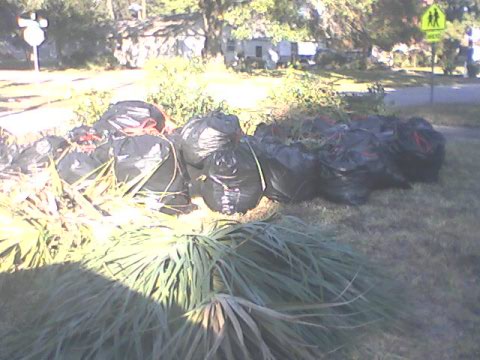
    This is only a portion of the debris cleared away by the men from church that day. The "bushes" behind the trash bags are piled limbs hauled out to the street. (Sorry for the poor lighting!)

    This is a portion of debris cleared by the men from church that day. “Bushes” behind the yard bags are actually piles of limbs they hauled to the street. The poor photo quality reflects my scattered state of mind at the time! (photo — such as it is — by Teresa TL Bruce, TealAshes.com)

    I had trouble figuring out what I’d left undone until friends offered help with specific tasks. I needed (but too seldom sought) help transporting my daughter, remembering car maintenance, washing doggie (an ordeal requiring a minimum of five human hands), cleaning …

    One Saturday, men and boys from church gathered in my yard and hauled more than 15 Hefty bags of debris — and a huge pile of limbs — out to to the curb. I was flabbergasted. Until I saw the tremendous difference their efforts made, I hadn’t noticed the overgrown undergrowth!  (I still get teary-eyed over their labors — and the thoughtfulness behind them.)

  • What sounds appetizing? Which day can I bring you [the “appetizing” dish or another item of your suggestion], or would you rather to come to my place?
    Grief scrambles appetite as ferociously as sleep. On “bad” days, pouring cereal and milk into the same bowl felt like an accomplishment. On “good days,” removing plastic wrap from frozen pizza before heating (or not burning boxed macaroni and cheese) felt like I’d done “real” cooking again.
  • Will you come [for a walk, to the store, to the mall, to a movie, to lunch, etc.] with me [name a specific day and time]?
    Again, invitations to specific activities and times are less threatening to the bereaved than general ones.  When well-meaning friends and acquaintances invited me to “do something” in the earliest weeks after the funeral, I wasn’t ready. Overwhelmed, I asked them to check back later. (Two actually did.) I needed time and space to grieve and to focus on my daughters before I worked up courage to return to “social” activities.

Questions (and actions!) such as these acknowledge you haven’t forgotten that your friend is still grieving — “even” after months have passed.

Beware of “Happy Halloween” and Other Hazardous Good Wishes

I could scarcely hear the words “happy Halloween,” let alone say them a month after my husband’s death. It felt as if plastic front yard gravestones mocked my recent cemetery experiences. Fake coffin lids lifted by glow-in-the-dark skeletal hands called to mind the most heart-wrenching purchases I’d ever made. And with death on my mind as it uprooted my life, I couldn’t muster even an artistic appreciation for well-applied “rotting corpse” or zombie makeups.

These gruesome decorations weren’t to blame for my aversion to the cheery greeting (though they certainly didn’t help).

Take your grieving friends some favorite candy (or a healthier treat) to show you're thinking of them, but consider skipping the "Happy Halloween" greeting.

Take your grieving friends some favorite candy (or a healthier treat) to show you’re thinking of them, but consider skipping the “happy Halloween” greeting.

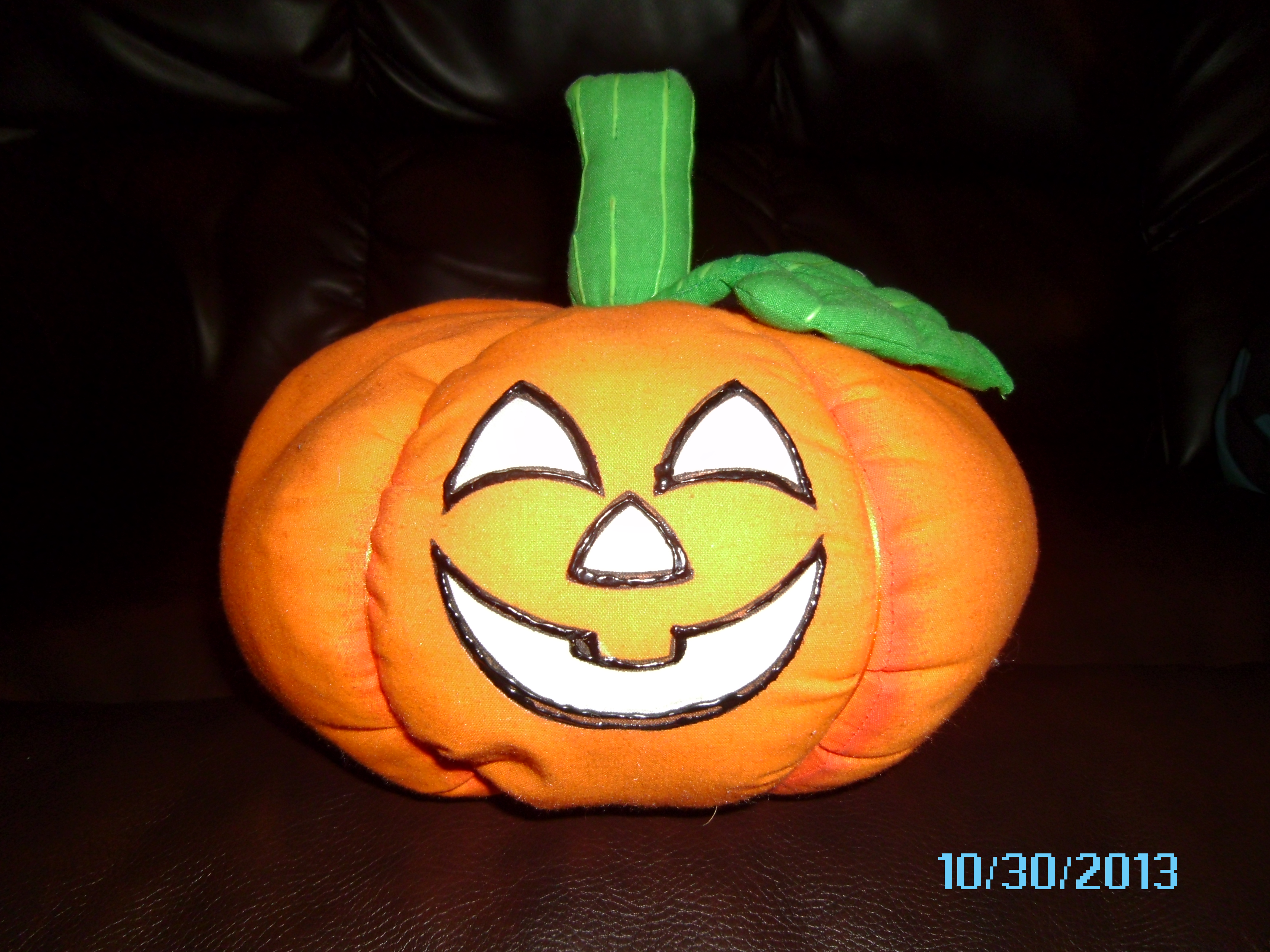
How could it be a “happy Halloween” without my husband? He’d doted on our kids’ annual costuming, and we’d worn more-or-less matching tacky jack-o-lantern shirts most of our 24 years together.

Facing that first quasi-holiday after he died forced me to realize our annual  family traditions would never be the same. In that first year, I wondered whether any such celebrations could ever be “happy” again.

I braced myself against each turn of the calendar. We muddled our way through that first year, altering some traditions, discarding others, and auditioning new activities for tradition-worthiness. Some were outright flops. Others became instant new favorites.

Month by month, my daughters and I found new joys to anticipate.

Along the way to finding those new joys, during that difficult year of “firsts” I appreciated the thoughtful good wishes which acknowledged awareness of our changed circumstances.

Some helpful salutations included:

  • “May you be blessed this Thanksgiving. We’re thinking of you.”
  • “We hope your Christmas will be filled with fond memories.”
  • “May the New Year bring you hope and healing.”
  • “I’m guessing this will be a tough Valentine’s Day. Hang in there.”
  • “Thinking of you with love this Easter season.”
  • “I know you’ll miss your husband this Father’s Day.”
  • “Treat yourself with kindness on your birthday.”
  • “I’ll be thinking of you on your 25th anniversary” (my first as a widow).

As I worked through the raw pain of that first year’s grief and headed into the next, I became better able to handle more trite salutations like “Merry Christmas” and “Happy New Year.”

(I’m still not fond of “happy Halloween,” though, no matter how cute the trick or treaters.)