Halloween Grief

My husband died about a month before Halloween. Fake tombstones and skeletons lined store aisles. I was a new widow, the unwilling owner of his cemetery plot. Holiday prop inscriptions labeled Rest in Peace were anything but peaceful.

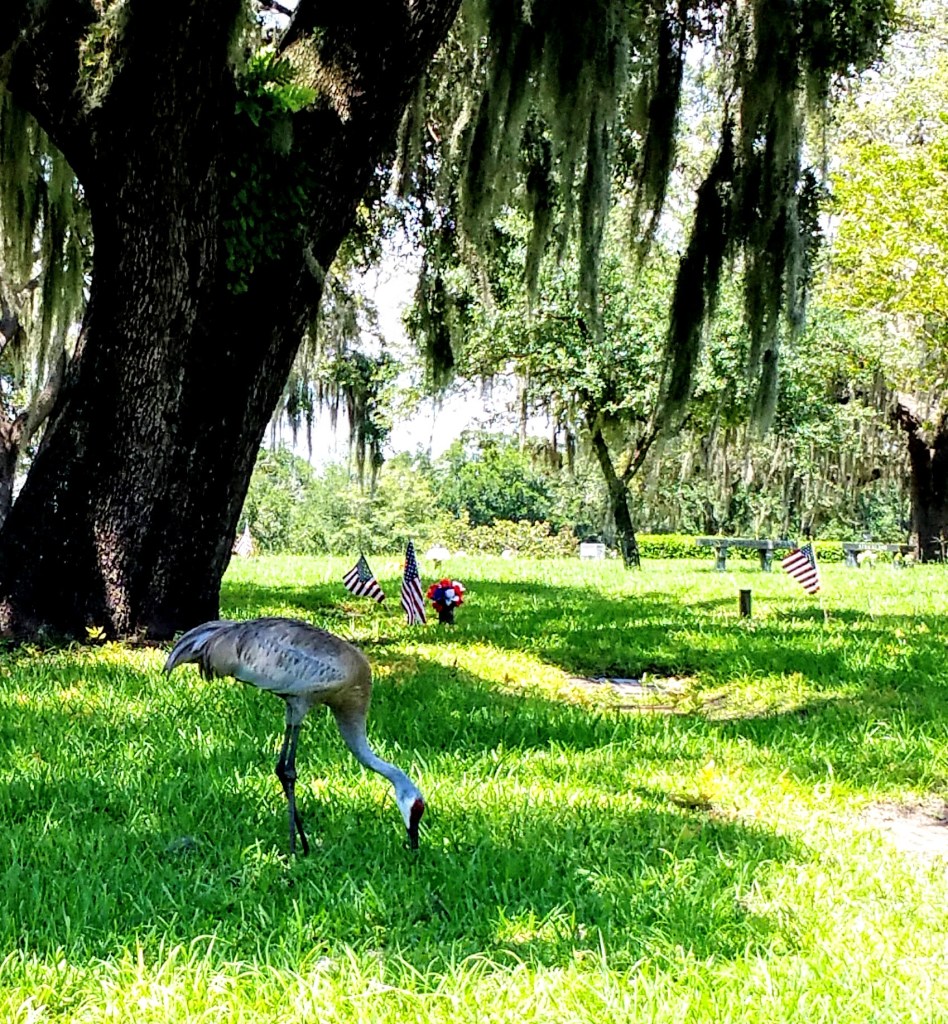
Mock cemetery displays (complete with fake tombstones and skeletons) contradict the "peaceful" invocation to "rest in peace" (RIP). Many mourners despise them. (Photo by Teresa TL Bruce)

Mock cemetery displays (complete with fake tombstones and skeletons) contradict the “peaceful” invocation to “rest in peace” (RIP). Many mourners despise them. (Photo by Teresa TL Bruce)

He loved Halloween. He delighted in seeing our daughters’ excitement as they dressed up in costumes. I think trick-or-treating was as much fun for him as it was for them. Even when he had to work nights, his favorite annual activity at church was taking our girls “trunk-or-treating” right up until the moment he had to leave for his job.

That first year, just weeks after his passing, I sat in the decorated gym more out of habit (for our youngest daughter’s sake) than because I wanted to be there. I wasn’t quite numb anymore — the shock was beginning to erode — but I wasn’t myself yet, either (and wouldn’t be for a long, long time).

Sights and sounds buzzed and blurred around me. Kids played, adults conversed. I tried eating the food in front of me, but taste and appetite were as irrelevant as they’d been since the night my husband died.

I was an auto-pilot version of myself. I had no desire (or ability) to socialize, and the sight of couples enjoying the event together evoked irrational but undeniable guilt-inducing envy and resentment.

One woman, a person of refinement and decorum, sat beside me. She looked at me without staring yet she saw the pain I was too raw to conceal. “I won’t ask you how you’re doing,” she said.

I nodded my thanks, trying not to let the gathering moisture in my eyes spill onto my face.

“It just sucks,” she said.

Her words, so unlike the lexicon of culture and propriety I’d come to expect from her, were exactly what I needed to hear. Those three little words acknowledged my life had taken a turn, that the “fun” event was anything but, that my soul ached.

And in her acknowledgment of my hurt, a tiny bit of healing began.

Fast forward four, then five years.

Last year I manned games at the children’s trunk-or-treat. It was great fun, and I looked forward to doing the same again this year.

But grief doesn’t always behave in an orderly way. The closer I got to this year’s event, the stronger my aversion grew. Finally, I backed out of my plan to help. (And felt much, much better as soon as I did.)

I don’t mind the cutesy witches and ghouls and goblins decorating houses and buildings. I have nothing against the rows of tiny costumes and candy totes lining store aisles. I still think it will be fun to see little ones dressed up and going door to door again, yelling, “Trick or treat!”

But I still dislike neighborhood “cemeteries” like the one I photographed while out walking the dog early one morning. There’s nothing restful or peaceful about mock burial sites when you’ve had to buy a real one.


Grief — It’s All in the Family

Everyone’s grief is unique. With no two people grieving in the same ways, misunderstandings can fester among family members mourning the same lost loved one.

grief, frame, family, teal, TealAshes.com, Teresa TL Bruce

Counseling reframes grief, but it doesn’t remove it, and not everyone grieves the same way. (Photo by Teresa TL Bruce, TealAshes.com)

Consider the case of adult siblings mourning the passing of their parent (or cousins mourning a grandparent). One may need time and space for quiet contemplation while another tries to talk over feelings of loss. A third sibling may seek to reminisce over memories of shared experiences with their deceased parent, or a fourth may grapple with feelings of denial by wielding humor and laughter or derision and sarcasm as a shield against more raw discussion. When such conflicting methods of coping collide, bereaved brothers and sorrowing sisters may feel their siblings’ aren’t grieving the “right” way.

Further complicating the misunderstandings between grieving family members are the unique differences in every relationship, even the “same” relationship. Each sibling’s relationship with a deceased parent was unique, as was the parent-child bond between each of a pair of grieving parents and their lost child. A mother’s loss of her adult son and her daughter-in-law’s loss of her husband are two different losses of the same person.)

One-upmanship over whose loss hurts worse never helps, and it can be difficult to repair families torn by hasty reactions of grief. Nobody wins when in-laws cut off ties or when siblings stop speaking. I’ve been grateful for in-laws who consider me and my children as much a part of the family as when my husband was alive, but I know many, many widows and widowers for whom that isn’t the case. Their children lost not only a parent but also grandparents, aunts, uncles, and cousins, compounding the tragedy in their lives.

In an ideal world, everyone who ever loved (or was loved by) someone who died should be able to reach out to give and get support from everyone else who ever loved (or was loved by) that person.

Breast cancer awareness and grief–when seeing pink means seeing red, part 1

This is the first post of several breast cancer awareness experiences to keep in mind during October’s breast cancer awareness month … and beyond.

Last month marked twenty years* since Mom died of breast cancer. More than thirty years ago her mother passed of the same; so did hers.

I’m therefore acutely aware of the importance of women getting regular mammograms and being vigilant about self-exams. That’s how Mom won more than three extra years with our family.

That’s why I got a mammogram — on the twentieth anniversary of Mom’s death, the week after the fifth anniversary of my husband’s.

The fun of getting a mammogram starts with stuffing top wear into a locked cubby. Photo by Teresa TL Bruce

The fun of getting a mammogram starts with stuffing top wear into a locked cubby. Photo by Teresa TL Bruce

It’s not something I look forward to every year. (Does anyone?) This year I put it off for months, until one day I finally called and made an appointment for the first available opening.

The irony of the timing didn’t hit me until that morning.

By the time I’d sat in the backed-up waiting room an hour after my scheduled appointment, my emotions were all ajumble.

By the second time the technician told me the equipment had a “technical problem” — and the procedure had to be repeated — my pertinent body parts felt all ajumble, too.

I cried — as much from emotional pain as from physical. When the technician assured me (bless her heart) that it would “only hurt for a few more seconds” (for the record, not true), she had no way to know the far deeper, longer-lasting pain came not from the contortions she inflicted on my body but from the losses the date itself smashed against my chest.

For a few moments, I plunged back into the mode of blurting my bereavement the same way I did during the early weeks (months, really) after my husband’s death.

To her credit, the woman tried to comfort me. She put an arm around me to give me a hug — but clad as I was only in the radiology center’s flimsy wraparound top, it felt awkward and uncomfortable. (In an oddly different way, the feeling reminded me how it felt when I was newly widowed and well-meaning men friends offered hugs — which at that raw time I didn’t want from any man I wasn’t related to.)

After the second round of images was taken (this time without technical difficulties), as my hand touched the doorknob, she offered a few well-intended words:  “You’ll be okay. You just have to get past it. Everybody has to die sometime.”

WHAT!?

I’d just bared my soul (among other things) in front of this woman. I was crying because I missed my mom on the anniversary of her death to breast cancer, and missing my late husband, too. And she tried to make me feel better by reducing the validity of my grief? (Not to mention that she ignored my apprehension over the reason for the mammogram she’d just subjected me to.)

Yes, I saw red.

Please don’t say such things to those who are grieving! It’s true that everyone dies, but it’s not helpful or encouraging (or even nice) to make such losses seem everyday or expected or unimportant. 

___

*In an earlier post I rounded up the amount of time (see https://tealashes.com/2014/06/27/comfort-after-moms-funeral/).

Remembering 9/11 can help you understand the bereaved

On September 11, 2001, life in the United States skidded to a stop when nearly 3,000 people perished because of terrorist attacks. If you were the age of a young school child or older, you remember the moment you heard the news.

Dismay.

Shock.

Denial.

Distress.

Panic.

Fury.

It was a few minutes after 9:00 a.m. when the phone rang. My friend’s voice was clipped. “Are you watching TV?”

My husband was sound asleep after his night shift. I’d taken our younger children to elementary school. Back at home I folded laundry while our oldest daughter painted on canvas. Soon we’d delve into the academic part of her seventh grade curriculum. My friend knew I homeschooled during the day, so it was odd she’d call, let alone assume the TV might be on during school hours. “No. Why?”

“Turn it on.”

“To what?”

“Anything. Any channel.”

Dismay. Shock. Denial. Distress. Panic. Fury.

I cried for those whose lives were lost. I cried harder for the loved ones who lost them.

It was a huge thing. A devastation.

A travesty. An assault.

A violation.

In the days that followed, the attacks were all anyone talked about — even when mentioning the heroics of the many, many selfless souls who stepped into the fray to help others.

None of us knew then the long-term impact of that day’s events. First responders from New York City’s police and fire departments, and others, continued losing life and health in the aftermath of the initial casualties.

(Casualties. What a calloused, indifferent word — as if any of those killed or maimed or bereaved came to that definition by casual, effortless chance.)

Families were shattered by death, disability, and despair. Businesses and livelihoods were lost along with the lives they’d once supported.

For those of us living far away, not personally knowing victims or their families, and not having our everyday routines disrupted beyond that first day’s screeching halt, we felt for them and we cried with them and we sacrificed and contributed for them. But our everyday life, for the most part, went on.

The impact of 9/11 changed us all, some more than others. Global news coverage and the scale of the tragedy made it difficult to ignore, and visible memorials and annual commemorations ensure we will never forget.

For those whose loved ones were lost, the personal impact of 9/11 is impossible to forget. Visual reminders of their absent loved ones are everywhere they look. Annual commemorations extend beyond Patriot Day on September 11 to include every holiday, birthday, anniversary, and seasonal tradition.

A decade and a half later, mourning survivors I’ve met since have “moved forward” with their lives. I won’t diminish their losses by claiming they “resumed” life in the same manner as those of us who were not personally impacted. Life, as it was Before, ended that day. Life, as they eventually learned how to live again, evolved slowly in the After.

Of course, other people died that day, too. People all around the world. One was Karl, a sweet, elderly man in my congregation at church. His death received no national fanfare. No acclaim. His kindly widow’s loss was overshadowed by the quantity of publicized loss, but Ruth’s private grief was just as real.

At the time I felt badly for her. I admired her courage and strength as she tearfully expressed her beautiful belief that her husband was needed in heaven to help soothe and greet the many souls who’d been taken from mortality that day. I prayed for her, and I told her I was praying for her, and I sent notes once in a while.

But I was clueless. I had no idea of what her loss meant to her. How could I? That was a decade before I shared the designation of widow. A decade before new bereavement taught me the private manifestations of receiving the news that another loved one was dead.

Dismay. Shock. Denial. Distress. Panic. Fury.

In the months that followed my husband’s death, coping with that was all I could think about, even though there were many selfless souls who reached out to me in compassionate gestures. But their everyday lives went on.

Now, whenever our nation pauses for a moment of silence to honor the victims and heroes of 9/11, my understanding of what they experienced remains fractional, but I am more aware than I was. I will never be able to fully understand what any of them endured. But I do know how I felt in my own dismay-shock-denial-distress-panic-fury grieving. And my empathy for them has grown.

(Ruth, I don’t know where you live now, but please know I think of you and Karl today, as I think of the thousands of others for whom September 11 has such significance.)

I remember.

Getting Lost in Grief

Navigating life while dealing with death can be like finding your way to an urgent appointment — in a new country …

Where you don’t understand the culture — or the language …

While operating a vehicle you’ve never driven, flown, or sailed before — and while responsible for a dozen kids, their gear, and their pets …

All yelling, “Are we there yet? How much longer?”*

And you were supposed to be there yesterday.

You could pull over to ask for directions — if you could find a passerby with whom you can communicate.

You could call someone who has been there before — if you hadn’t just unknowingly crossed a border not included in your phone plan. If you had any service bars available. If you had your charger with you.

Getting lost in grief

Getting lost in grief, photo by Teresa TL Bruce, TealAshes.com

“The grief journey” is one description for the process of learning to live again after a loss. It’s not like vacationing to experience new scenery or to reconnect with family origins. It’s more like traveling through J.R.R. Tolkein’s Mordor, but without a noble quest. There’s no loyal Samwise Gamgee for unwavering companionship — those on the journey are there because a beloved one has been forever left behind.

Travelers on the grief journey constantly ask themselves, “Where am I? What am I doing here?”

Have you ever forgotten where you were going (while halfway there)? Ever been so lost you had to approach a stranger for directions,  or call a friend to talk you through your route, or pull out a map — even while using GPS?

There was no map to show me the way from life with my husband to life without him.

I’ve always been prone to “creative” navigation from Point A to Point B via unintended alternative routes. My husband and kids found it amusing, though sometimes annoying, that I could find my way through any area — once I’d already been lost there.

After he died, when the shock of grief was new and raw, I couldn’t locate familiar, close-by places; less familiar, more distant destinations were all but impossible.

The interstate was easy to reach, just two turns from my street. But I can’t begin to count how many times I found my widowed self turning too many blocks before I got there. Or half a mile past it. Or not remembering where I’d meant to go. (In hindsight, that was a good thing. I had no business driving at highway speeds when I couldn’t even figure out how to reach it.)

Physically, I was lost all the time. Emotionally, I was just as lost.

In the early months, I was so lost I even blurted my grief whenever I approached strangers. (Most of my widowed friends have said they did the same.) It was as if telling the grocery store clerk, the librarian, and the receptionist “My husband died” was a compulsory password to activate my grief processing symptoms — my distressing, personal GPS.

In time I learned to call on others who’d been there; they’d also lost their spouses. They talked me through how they survived the upending of all they’d known.

Slowly, oh, so slowly, I began drafting my own mourning map.

It took more time than I would have expected to be able to find my way again. It took more time than many of my friends expected, too.**

Be patient with your grieving friends as they relearn how to navigate their altered lives … and offer them rides whenever possible.

___

*See my earlier post called Are We There Yet? (How Long Does Grieving Take?)

___

**Speaking of my friends … I’d like to thank Bettie Wailes, Doug Grossman, Nylda Dieppa, and Liz Collard for their feedback — and patience.