“Happy Birthday” after a Death?

At this time last year I wrote about MLK Jr., Kennedy, and me. It should be on my mind again this weekend, but this year I hardly remembered why the third Monday of January is recognized as a national holiday. It’s not the late Dr. King’s birthday I’m remembering.

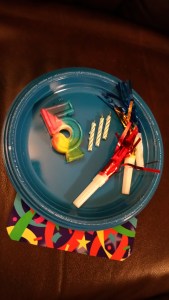
Birthday candles and party favors (photo by Teresa TL Bruce, TealAshes.com)

Birthday candles and party favors (photo by Teresa TL Bruce, TealAshes.com)

It’s my husband’s. My late husband’s.

And my mother’s. My late mother’s.

When Mom died a little over twenty years ago, I worried over whether anyone else would remember her birthday. I didn’t want her to be forgotten. And I knew I’d miss her even more on her birthday than I did every other day without her.

Celebrating my husband’s birthday without my mother’s was hard, but he helped me get through each of hers. He said things like:

“I know today is a hard one.”
“I’m sure you’re thinking of your mom today.”
“I miss her, too.”

When my husband died a little over five years ago, I couldn’t face the thought of Mom’s birthday without him.

And I couldn’t face the thought of his birthday at all. I was too broken.

A dear friend came to spend time with me. She listened when I cried and ranted. She reminded me to eat (and made me food when I still forgot). By her presence, she showed me how much she cared.

Even though these pieces are glued back together, this broken mug will never fully be whole again. (Photo by Teresa TL Bruce)

Even though these pieces are glued back together, this broken mug will never fully be whole again. (Photo by Teresa TL Bruce)

And that she remembered. By doing so, she helped me gather up pieces of my fragmented self.

Fast forward five years — to now.

My life is good again — different, but good. Most days are much easier to get through than they were in the first couple of years after he died.

But some days — like his birthday and like my mom’s, which fall so close together — are harder than others. On those occasions, grief leaks more easily through the patched-up holes where I put myself together in my new normal.

If you know someone who is grieving lost loved ones, share your memories of them.

And if you know their birthdays, let them know you’re thinking of them then, too.

Grief Therapy and a Friend’s Counsel

A  few weeks after my husband’s death, a woman I hadn’t seen in years suggested I meet with a grief therapist. “My mom went to counseling after her husband died,” my friend told me, “and it made a world of difference for her. Counseling helped her cope.”

My friend’s sincere concern (and attempted consolation) touched me. I felt the kindness of her intention, but her words scraped at already raw emotions. I balked.

I may have nodded as she spoke, but I stepped back, putting a wider space between us while my inner voice screamed over her advice:

I don’t need a therapist, thank you very much, and this sadness isn’t something I need to fix. I don’t want counseling — I want my husband back. I want my kids’ father back! How dare you — who still have your husband — tell me someone can fix my mental health? He’s only been dead a month — am I supposed to be okay with that?

My husband was dead. Talking it out with a stranger wouldn’t return him to life. It wouldn’t return me from my new, unwelcome status as a single parent to my familiar role as a married, stay-at-home mom.

But before I could put words to that inner indignation, another old acquaintance approached who’d not yet heard THE news. “Hi, Teresa. How’s your husband doing? Where is he today?”

I opened my mouth to answer, not knowing what I’d say.

Sometimes, back then, when grief was new and raw and all-consuming, I couldn’t allow myself to utter the horrible words, “He’s dead.”

Other times, I couldn’t stop myself from blurting, “My husband died.” (Looking back, I pity the poor store clerks, fellow shoppers, and service professionals I encountered.)

So how did I answer the second woman’s innocent, caring question that day — on the heels of hearing another’s advice?

A wordless sob.  I spun and — sobbing louder — ran as fast as I could.*

I ran from the idea of counseling as much as I ran from the need to escape before really making a scene.

For more than a year after that day, my friend’s suggestion rattled around in the back of my mind, usually associated with feelings of flight. Meanwhile, I met and networked with many, many fellow widows and widowers and began networking with others who’d lost loved ones as well. From time to time, these peers mentioned grief counseling, and how glad they were they’d participated.  I always thought, “Good for them … but not for me.”

Counseling reframes grief, but it doesn't remove it.

Counseling reframes grief, but it doesn’t remove it. (Photo by Teresa TL Bruce, TealAshes.com)

Yet my friend’s words echoed: Counseling helped her cope … Counseling helped her … Counseling helped …

When I was ready, I realized it might do me some good. Even then, it took a couple of months more (and several dialed hang ups) to schedule myself an appointment.

It did help. It didn’t take away or diminish my loss, but it empowered me with tools to reframe my life’s “new normal.”

(Thank you again, my friend, for the gentle suggestion you gave me that day more than five years ago. I remain grateful for it!)

Before you gently suggest grief counseling or therapy for bereaved friends, keep in mind:

  • Grieving is harder than it looks, so avoid criticism or commentary that implies your friends are mourning and/or coping the “wrong” way. (Of course, if they are doing or about to do something harmful to themselves or others, stepping in is essential — just as it would be for any of your friends who aren’t grieving!)
  • Grieving takes much, much longer than you think. (Hint: Year two is often more difficult than the first 365 days after a death.) Please, remember they are still in mourning long after the funeral — and reach out to them.
  • Sometimes it helps to enlist a professional, but until mourners are ready, counseling won’t help.**  If you think it would benefit your friends, gently mention the idea once. Wait a couple of months before you bring it up again. Then wait another couple of months.
  • Remember: Grief is an emotional state born of love and triggered by loss, but it has real, physical components, too. Grief can’t be cured or fixed or treated any more than you can cure or fix the love at its roots. But coping tools can (eventually) assist in adjusting to it.
  • Like anything new, it takes time to become proficient. Never, ever, ever imply to a griever they should be (or get) “over it by now.” Don’t say that. Ever. No, never. (Can you tell how strongly I feel about this?)

In the meantime, let your friends know that whether or not they seek a professional’s help in learning to manage their grief, you’ll stand by them — no matter what.

___

*I ran as fast as a woman with nerve damage in her ankle could “run” away while clomping along with a cane. (But that’s a whole different story of life back then…)

**See the Mayo Clinic’s page on Complicated Grief for information on warning signs that your friend may need professional help adjusting after a loss. The symptoms listed are normal for grievers (and even to be expected) during the first six months, according to that website, but may also last much longer. However, if they do not diminish of if they intensify over time, enlisting professional help may be necessary.

Forget about the “Stages of Grief,” but Remember the “Symptoms”

As a writer and editor of both fiction and nonfiction (and as a widow who has networked with thousands of other bereaved individuals) I cheered — and jeered — over one trade article’s treatment of grief.

I applaud Danny Manus for writing “Notes from the Margin: Five Stages of Grief for Your Character,” in which he urges fellow writers to infuse their characters with “fully fleshed out” emotional reactions by having “them go through the Five Stages of Grief.” Too many writers (and friends of the bereaved) appear unaware of the the life-altering impact of loss (whether that loss relates to health, relationships, employment, or other serious changes — including, of course, death).

Manus’s article and attached illustration might provide an initial working framework, but as one among many grief-related writers, I must disagree with the shape of the ribbon as well as the opening lines of the article!

The true

Although the loops acknowledge there are turns along the way to “recovering” from grief’s impediment, I disagree with the shape and “stages” of this image linked with Manus’s article at http://www.scriptmag.com/features/five-stages-of-grief-character.

“When something traumatic happens, it’s said that we all experience the five stages of grief. So as your character goes on their journey – which should be full of trauma, drama, action and emotion – it stands to reason that they should go through the same steps.” – See more at: http://www.scriptmag.com/features/five-stages-of-grief-character#sthash.jNiDqsod.dpuf%5D

I groaned — aloud — as I saw the lovely, neatly looped ribbon illustration and read the words “the five stages” and “the same steps.” 

Not again!

REAL people experience REAL grief in messier, less linear, and far less predictable ways. Every loss is different, because every relationship is unique. Realistic fictional (and nonfictional) characters should be presented accordingly — and living, (barely) breathing, grieving friends should never, ever, ever be pigeonholed into expectations of predictable, orderly patterns of grieving through “stages.”

Elizabeth Kubler-Ross herself explained that her “Five Stages” of grief applied specifically to people’s confrontations with their own impending mortality — and that they did not always line up in this neat little order. As another Elizabeth put it (though regarding the admittedly different topic of pirate laws), “They’re more like guidelines.”

A more accurate “ribbon” would show these “stages” appearing at uneven intervals and with skipped and irregular repetitions. Instead of a loosely looped U shape, the ribbon would be knotted in places, torn and shredded, and positioned in a wobbly spiral like a warped, stretched, squished Slinky.

For me (and for most of those I know who have lost loved ones, the so-called stages look more like the figure on the right:

Grief is messy. The “stages” look more like the figure on the right. (Image found at http://www.ywam-fmi.org/tl_files/ywam-fmi/images/articles/2015/Stages_of_Grief.jpg)

Consider realistically portrayed grieving television characters. Let’s look at the early guest appearances by the divorced Lorna/Lana Gardner (played by Jean Smart) on Frasier and the eight seasons of widowed Adrian Monk (played by Tony Shalhoub) on Monk.

When former high school classmate Lorna/Lana is reintroduced to Frasier, she thought she was already “over” her divorce. She’d “moved on” and was happy with her life — until her ex remarried on her birthday. The writers successfully (and comically) revealed her ups and downs along spirals of “stages” as new life circumstances forced her character to revisit past emotional reactions in her present life. In subsequent episodes, Lorna (by then called Lana) continued to carry her “anger” and “bargaining” stages with her (as parts of her personality that crept in) even as she moved along in her “meaningful life.”

In the series “Monk,” the title character was beautifully, tragically flawed. His lifetime of coping with OCD was thrown into non-coping chaos after his wife’s murder. Even though Adrian Monk managed (with heavy support from understanding though sometimes impatient and exasperated friends) to “return to meaningful life,” that life was always in flux with the “earlier stages.”

When also-widowed Natalie Teeger (played by Traylor Howard) becomes Mr. Monk’s assistant in the third season, her character has “already” returned more fully “to meaningful life” than her employer, yet throughout the remaining seasons there are moments the writers reveal the ongoing impact of grief in its recurring stages. For Adrian, the Slinky of stages remains tightly compressed as he moves forward; for Natalie the Slinky is stretched nearly — but not quite — into a straighter line.

Grieving is messy and complicated and non-linear. If you’re writing about characters whose losses have impacted their “normal” lives, be aware that realistic portrayals reflect the chaos of returning, churning emotions they thought they’d already put in the past.

If you’re supporting friends who’re mourning, please, please, please don’t tell them, “You may be depressed now, but as soon as you go through bargaining you’ll be ready for acceptance and then everything will be okay.” (Trust me on this — I’ve heard it. It doesn’t help, and unless you can bring back the dead, to the recently bereaved that will never be okay.) For many, grieving a loved one is the hardest thing they’ve ever done, and sanitizing it into simple stages implies it should be easier. They will not appreciate you minimizing their emotions.

If you’re grieving a loss of your own, I’m sorry. It hurts. Sometimes all you’ll see are the suffocating scribbles in the “My experience” illustration above. It won’t always be this hard, and in time the dark lines will fade as you work your way forward, but for now, be patient with yourself. Please.

New Year after Death

Illustration of running the gauntlet from "Spiessgasse" (Pike-alley) from the Frundsberger Kriegsbuch (war-book) of Jost Ammann, 1525. (This image is in the public domain.) Source: https://commons.wikimedia.org/wiki/File:Spiessgasse_Frundsberger_Kriegsbuch_Jost_Ammann_1525.JPG

Illustration of running the gauntlet from “Spiessgasse” (Pike-alley) from the Frundsberger Kriegsbuch (war-book) of Jost Ammann, 1525.
(This image is in the public domain.)
Source: https://commons.wikimedia.org/wiki/File:Spiessgasse_Frundsberger_Kriegsbuch_Jost_Ammann_1525.JPG

‘Twas the week after Christmas and ‘fore the New Year,
When partyers gathered to prolong good cheer.
But for mourners it marked yet another milestone
(without absent loved ones) of being alone.
— Teresa  TL Bruce

The holidays are hard for the newly bereaved. (They’re not so easy for the not-so-newly bereaved, either.) Since early fall (in the U.S.), we’ve run the grieving gauntlet of celebrations — Halloween, Veterans Day, Thanksgiving, Hanukkah, Christmas — and now we’re facing New Year’s Eve and New Year’s Day. [Please see New Year, New Grief for specifics on grief, the end of one year, and the beginning of the next.]

Sometimes, the cumulative effects of getting through event after event without deceased loved ones can seem like too much to bear. Sometimes mourners become overwhelmed with breathing — with being — in a world whose traditions and commemorations keep going while their lost loves do not.

For weeks now I’ve been reflecting on something I saw on the news the week before Thanksgiving. Former NFL New England Patriot quarterback Doug Flutie’s parents died of natural causes within hours of one another. His father had a fatal heart attack, and then his mother did, too.

It’s been said she died of a broken heart. I believe it.

My sympathies and condolences go to the Fluties’ children, grandchildren, and other extended family this holiday season and as they begin the new year without them. Losing a parent is agonizing. (I know how I felt when my mother died.) Losing a grandparent is painful and life-changing, too. (I miss all of my grandparents.)

I cannot imagine the sorrow and ache of losing both parents (or two grandparents) in a single day.

For their immediate and extended family’s sake, I am sorry. Their pain and mourning will last beyond the initial swells of sympathy and kindness they no doubt received from their friends (and from the public).

But for the sake of the couple themselves, who died within hours of each other …

Losing a spouse is heart-breaking. Literally. It wasn’t until my husband’s death that I understood how physically broken a heart could feel. But it wasn’t just my heart. I had grafted my life to my husband’s — joined in mind, heart, body, and soul. His death ripped, tore at, axed, smashed, and severed our joined mind, heart, body, and soul — my mind, my heart, my body, my soul.

We were one. And when one is halved, the fraction remaining is not whole. The surviving spouse is an off-kilter, walking wound, more a jagged hole than a functioning human.

I remember how awful the first days felt. (First weeks, months, years …) I resented rare couples, like the Fluties, who passed from this life into the next together by peaceful, natural causes.

For the sakes of that late husband and his briefly widowed wife (whose family now doubly grieves their dual absence), I reluctantly admit I held a sliver of envy. (Amid the widowed community, I know I’m not alone in this.)

I’m not the only widowed one who, on hearing of one spouse shortly following the other into death, feels … (I don’t like admitting this) … jealous.

Now, lest any of my friends, family, or readers misunderstand me, let me be very, very clear before we go on from here:  I did not ever, I do not now, and I will not ever contemplate taking any action to hasten “joining” my late husband. No. NOT gonna happen.*

But there were times I would have welcomed a passive exit of my own. There were times when grief was so ever-present, so debilitating, so excruciating, so overwhelming, so lonely … I went to bed hoping not to wake up. 

It wasn’t that I didn’t want to live, because I had three amazing daughters who needed me. I had other family and friends I needed and loved, too. But I didn’t know how to keep going One. More. Hour. — let alone another DAY — in that much pain.

Waking up to a new day was as awful as going to bed alone. (Sometimes.)

Among the newly widowed, dying together can seem preferable to surviving a spouse. (At least for a while.) Over and over I heard others say, “Why did I have to stay behind? Why do I have to keep going? How can I endure hurting this badly?”

There’s nothing you can do to remove their pain, but you can make sure they don’t endure it alone. Include them. Be with them. Validate their loss by acknowledging and accepting their sorrow.

Let them know you’ll be by their side — and not just on New Year’s Eve, but in the unbearably long 365 days that follow.

___

*If you (or anyone you know) feel so overburdened by grief or loss (or any other reason) that “not living” seems like an option, please, please seek professional help. Do it now. If not for your own sake, then for the sakes of those around you, get help now.
Visit http://www.suicidepreventionlifeline.org/ or call 1-800-273-TALK (8255) in the U.S.; outside the U.S. you may find resources listed at http://www.suicide.org/international-suicide-hotlines.html.


Merry Christmas Mourning (Death Changes Holidays)

I had a wonderful Christmas this year, the first filled with more joy than sorrow since my husband died in 2010. (Yes, I already had my Christmas celebration, and yes, I know it isn’t yet December 25.)

But last year to a small degree, and the year before more so, and the year before, and the year before, and the awful year before that … (I’m  shuddering now at the painful recollections …) What most stands out is memories not of Christmas mornings but of Christmas mourning.

THIS year I sang Christmas hymns and carols at church without crying. (Okay, I did cry when the choir sang “Let There Be Peace on Earth,” but it was because the music and the message were beautiful, not because I was too emotional with grief to tolerate the familiarity of it.)

THIS year I fell into sleep on our family’s pre-Christmas Eve without tossing and turning. (Most nights I still — five years later — have difficulty getting to sleep without my husband beside me, but this year my kids and I were so on-the-go I was tired enough to leave consciousness behind the moment my head hit the pillow — but I won’t admit to them how late even that was.)

THIS year I read every line of friends’ Christmas letters without grudging envy over their continued co-parenting. (In other years since my husband died, I couldn’t get all the way through. I’ve never considered myself jealous by nature, but reading the happy announcements of what they’d done together hurt too much as I struggled to balance grief and single parenting.)

This was our barely dressed Christmas tree (photo by Teresa TL Bruce).

This was our barely dressed Christmas tree (photo by Teresa TL Bruce).

They say time heals all wounds. In grieving, it certainly helps. But healing takes much longer than most non-grievers think, and “healing” in grief is never fully complete. In A Grief Observed, C.S. Lewis likened his wife’s death to an amputation. The surrounding tissues would stop bleeding and would close up and mend, but there would always be a scar, and “normal” life would never, ever be the same.

Part of what made this year easier for me was the way we deliberately shook up (and also broke up) our Christmas traditions: Instead of putting up a six-foot tree the day after Thanksgiving* (and decorating it with nearly 30 years of memory-rich accumulated, sentimental ornaments), we pulled a factory-lit four-footer from its box (still wearing last year’s also-boxed-up string of red beads, a star, and an angel). We usually enjoy Christmas dinner in the afternoon a few hours after opening presents in the morning; this year we ate our traditional menu one night, but we opened Christmas stockings and presents three mornings later; we sipped night-before-Christmas cocoa at the end of our Christmas day, before my out of state daughters left.

This year Old Doggie Dear's stocking stayed in the Christmas decorations box -- alongside my late husband's stocking. New Doggie Dear got her own. (Photo by Teresa TL Bruce)

This year Old Doggie Dear’s stocking stayed in the Christmas decorations box — alongside my late husband’s stocking. New Doggie Dear got her own. (Photo by Teresa TL Bruce)

Part of what made Christmas more poignant this year was buying an inexpensive stocking for our new doggie. It didn’t feel right to use Old Doggie Dear’s. My out of state daughters fell head-over-heels in love-at-first-sight with New Doggie Dear — just as much as my other daughter and I did from day one — but we all cried (at least once or twice) over Old Doggie Dear’s absence — even while loving and playing with New Doggie Dear.

And it was heartwarming but heartbreaking to again gather at Aunt Ginny’s for our Christmas meal. (Family members still own her house, so we felt blessed to be there where we invoked her memory and her zest for family get-togethers.) Like we’ve done for most of the last 20 years, my girls and I made the meal together, and everyone present held hands in a circle of prayer the way Aunt Ginny always insisted on before we ate. (But the circle felt incomplete without Aunt Ginny herself squeezing my hand with her bony but incredibly strong fingers.)

Both Aunt Ginny (a few days short of 95) and Doggie Dear (13) died in the first half of this year. So this was our first Christmas without them. It was our sixth without my husband,  our 21st without Mom.

At the holidays, even those of us whose grief isn’t “new” often agonize through moments when our losses feel as raw and as inescapable as when they were.

For those grieving recent deaths, the missing loved one’s absence often tarnishes tradition, defiles decoration, taints taste, and mars music.

This well-intended message comes across as diminishing the reality and importance of grieving a loss. (Photo by Teresa TL Bruce)

This well-intended message comes across as diminishing the reality and importance of grieving a loss. (Photo by Teresa TL Bruce)

In the first few years after my husband died, I disliked being told to have a “merry Christmas” or “happy holidays.” How could I be merry or happy at all? (Don’t think I never smiled or laughed, because there must have been good moments … but they were the exceptions.)

I knew the people who wished me such seasons greetings were at the least being polite and at the best hoping to offer cheer to my gloomy, wounded soul. Being told I was supposed to feel “merry” while grieving felt like my loss wasn’t important — didn’t matter — to them.

This year, it wasn’t until a couple of weeks before our family’s Christmas celebrations that I realized it took me six Christmases before I could accept people’s “merry Christmas” greetings at face value (and not as thoughtless reprimands).

If your friends grieve a recent loss (and by recent I mean within a couple of years, not just a couple of months!), invite them to join you in your celebrations. Let them know you are thinking of them this holiday season. Acknowledge their loss to show them it’s okay for them to be sad in the midst of holiday cheer.

If they should feel like laughing or playing reindeer games with you, so much the better, but if they need to cry or decline and be reclusive, support them in that as well. Let them know you’re okay with whatever works for them.

___

*Our first Christmas without my husband, just three months after he died, I forgot about Christmas trees, decorations, everything — until a group of church brothers knocked on my door and asked whether I already had a Christmas tree. When I said no, they stepped to the back of a pickup truck in my driveway, pulled down a fragrant pine, brought it into the house, and set it up for me.

They didn’t call to ask if they could bring it (still in shock, I’d have said no) and they didn’t say “Let us know if there’s anything we can do for you.” (I wasn’t capable of knowing what I needed, much less asking for it if I figured it out.) They thought of something they thought might help me, showed up with it, and then asked while on my doorstep.

I’ll never forget their kindness and thoughtfulness!