Letterman’s Last, Rachael Ray’s Recipes, and Loss

David Letterman’s last broadcast. Rachael Ray’s five recipes. May 20, 2015, might be a tough TV day for mourners.

If you’ve watched any late-night American TV in the last 30 years, you’ve seen David Letterman on CBS’s Late Show (or in earlier years on NBC’s Late Night).  Whether you glimpsed him during rare bouts of sleeplessness or your rest depended on counting down his “Top Ten” instead of sheep, you’re probably familiar with his often irreverent and occasionally tender entertainment presence.

Like ocean waves, tax hikes, summer sun, and family genes, I took that presence for granted — until the announcement of his retirement.

Millions will tune in for Letterman’s final show.

I’m not sure whether I will or won’t.

Endings are harder now. My husband seldom watched late-night TV, but when I heard the news my thoughts ran straight to grief: “No! Dave was always on. He was on when my husband was alive. And now they’ll both be gone …”

The retirement of David Letterman and the death of my husband aren’t connected. I know that.

My moving-on-yet-still-grieving brain says otherwise.

___

On a different TV note, I’m definitely avoiding Rachael Ray’s “5 More Recipes to Make Before You Die segment scheduled to air this same day. I usually enjoy her show, so I’ll give you the link to the promo clip that alerted me:

When you’re missing someone who died, you don’t want to hear that food is “to die for” or be told your life will be incomplete if you don’t make a particular meal “before you die.” Such phrases highlight the absence of the deceased, who will never have the chance to taste these decadent dishes because their too-short lifetimes were incomplete.

___

While I’m harping about food and grief, I’ve bitten my tongue (for over a year) about a snack I saw at the Winter Park Art Festival in 2014. The deep-fried potato crisps were covered in bacon, cheese, and — who knows what else? It looked delicious, but they called it something they probably meant to be cutesy: “Heart Attack on a Plate.”

I was with another widow at the time, a woman whose husband died of a heart attack.

Not cool, marketing department. Not cool at all.

Mourning on Mother’s Day

Mother’s Day hurts. I don’t like dwelling on the downside of death (although that may seem like a strange thing from someone who writes about grief), but the best way for me to get through every second Sunday in May is to close the blinds and hunker down in solitude.

Sometimes the light of love (and its loss) shines brighter against the darkness of grief.

Sometimes the light of love (and its loss) shines brighter against the darkness of grief.

It wasn’t always like that. As a kid I picked flowers, drew cards, and poured adulation on Mom. As a young adult, then a new bride, and eventually a mother myself I appreciated her (and my grandmas and aunts) more deeply than before. My cards and gestures of appreciation (which once seemed so grand) paled next to Mom’s lifetime of service — though my daughters’ creative endeavors for me melted my heart.

After Mom died, Mother’s Day went dark. I still went to church that day, but mostly for my children’s sakes. (I wanted them to see me attending weekly even if I didn’t feel like it, and I knew they and their peers had practiced a song for all the moms.) I enjoyed their lovely hugs (and songs) and cards and “interesting” breakfasts in bed that one day of the year.

But the moment memories of Mom meandered into the day, renewed mourning overtook me.

Over the years I’ve learned to live with my mother’s loss, but there were always certain days per year — like Mother’s Day — wherein the pain of being a daughter without a mother hit me again. Hard.

Those hits became all-out assaults after my husband died. The pain of being a wife without a husband knocked the breath out of me.

This is my fifth widowed Mother’s Day. It’s easier … and yet it’s not. (My plastic smile will be a little more convincing as I smile at the children singing at church this year, but I know better than to bother wearing eye makeup.)

If you know someone grieving this Mother’s Day, let them know you’re mindful of their loss. Let them know you’re thinking about them. Let them know you know this year is different than it was.

Don’t say you know how they feel, because you don’t — especially if you’ve never suffered a similar loss. Only bereaved mothers, for instance, can nearly understand the raw feelings of other mothers who have buried a child. Acknowledge the unique, personal, presence of their grief.

Some people need interaction with others to distract them from tender days like this. Reach out and invite them!

But if they ignore or decline your invitation or phone calls, don’t take it personally. They might be like I am, needing to hunker down this year, but also appreciating messages of support. (I’m keeping the “Please do NOT disturb” sign on my door all day.)

Whether they take you up on your offers or don’t bother responding, let them know you’re aware and you care.

Pets, People, Death, and Grief

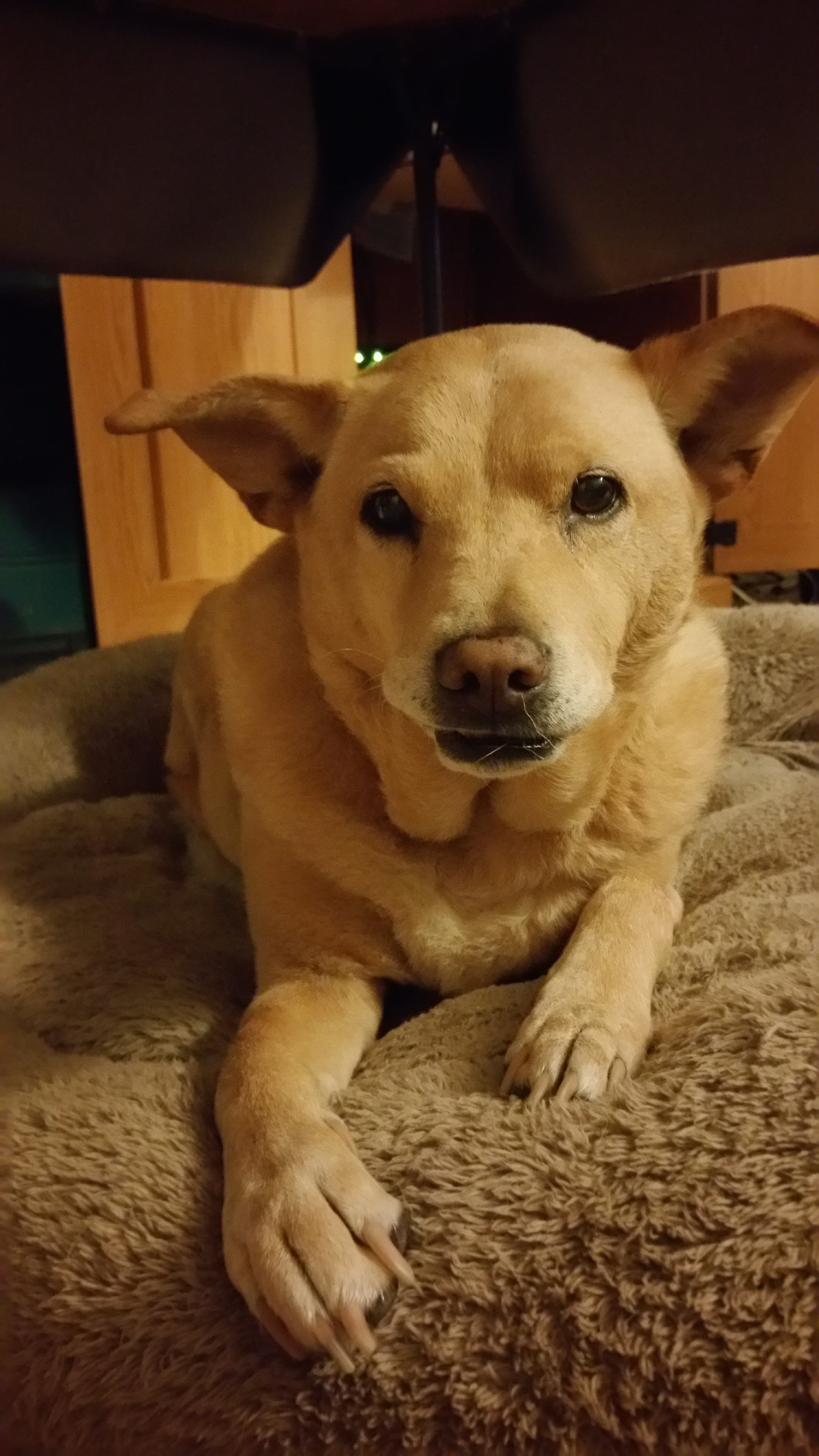
(I’ve composed this post — in my mind — dozens of times since February, but couldn’t bring myself to word it while my 13-year-old dog’s kidneys were failing. She rallied for a miraculous while, but this week her energy and appetite declined. For her sake, I had to let her go. Now that she’s gone, I can’t not put it into words.)  

Two weeks after her diagnosis, my dog rallied for several weeks. Each extra day was a gift!

Two weeks after her diagnosis, my dog rallied for several weeks. Each extra day was a gift!

If your friend lost a beloved pet (or person), remember that grief is the body’s natural (though awful!) response to losing someone with an emotional connection.

  1. Pets are not people,
    but
  2. Pets are people, too.

Huh? Didn’t I just contradict myself? Yes.

And no.

Pets are not people. Their bodies have different biological rhythms, their life spans (for most species) will run out long before their humans’ lives do, and they are 100 percent physically dependent upon the people who care for them.

Kind of like children. Their bodies have developing biological rhythms that differ from those of their parents (think of newborn sleeping, eating, and um, diapering needs), their life spans (with tragic exceptions) will outlast their parents’ lives,  and for years they are 100 percent physically dependent upon the people who care for them.

As we care for our pets, our children, our elderly relatives, our spouses, and our family-by-choice friends (whose bonds of kinship in some cases exceed those crafted in blood or in law), we join our hearts, minds, and extremities (hands, paws, wingtips, scales, fins …) with theirs.

We and they become family. We serve them, they serve us. We love them.

And when they leave us, they take that joined part of our hearts, our minds, and even the feelings of our extremities with them.

We mourn them.

As with other losses we’ve experienced, we can draw upon our own pain to help us better understand those who are mourning. But we must never, ever compare our losses or one-up “my grief is harder than your grief.” Ever.

I’m mourning my dog. Every part of my house and every part of my day reminds me of her absence. It HURTS. But as much as I love and miss her, this grief is not the same grief I felt after my husband’s death or my mother’s. It’s a different, less intense grief.

And yes, each “new” grief brings back a degree of the shock and the pain of each “old” source of bereavement.

Several people who dearly, deeply love their pets made comments they intended to help (but that did the opposite). When I needed to express my grief over the man who fathered my children, I didn’t appreciate hearing anyone say they “knew” how I felt because they’d had to put down a sick dog once several years earlier or they were dreading “going through” what I was experiencing when the inevitable happened to their pets.

My daughters didn’t appreciate similar comments comparing their dad’s death to the passing of friends’ cats, either. I don’t mean to imply that the loss of a pet is insignificant, because it does matter. When you learn a friend’s beloved fur baby has passed, by all means, speak up and share your condolences! (“I’m sorry about Flipper. She was a good goldfish.”)

But don’t rush in to judge or suggest courses of “replacement” — and this applies to the loss of  a person as well. (Do NOT ask whether — or when — they’re going to get another dog, cat, spouse, or child. Do NOT ask how soon they will start visiting animal shelters, dating, or “trying again” for another baby!)

Comparing losses or rushing to “replace” those we’ve loved doesn’t work. Think of it like this: Would it be better to lose your dominant hand or one of your legs? Which of your senses would you choose to lose? Who would you prefer to mourn when death steps into your circle of loved ones?

All loss hurts. All grief has to be worked through.

Let your friends know that you know they are hurting. (“I’m sorry about Donatello. I know you’re going to miss that sweet, stubborn donkey.”)

Be there with them. Bring tissues or chocolate or music or whatever your friends will find soothing.

Share your memories of their beloved. (“Remember the time Bunny chased that obnoxious salesman away? Good ole rabbit…”

Send word. Drop a line of text, a Facebook comment, an email, or (gasp!) an actual note or letter. They’ll be appreciated.

Many of my kind human friends have already done that for me. I thank you. You are amazing, and your compassion has brought sweetness into my saddened heart as I mourn my beloved, ever-faithful fur friend.

___
Helping Your Child When the Family Pet Dies” by the ASPCA includes some validating suggestions and further links at the bottom of its page.


Lost, Found, and Lost Again–Goodbye, YWBB

Several weeks after my husband died, a friend of a friend suggested I visit a website for young widows. Like me, she’d been widowed not long before, and she’d found it a balm for her wounded, bereaved soul. When our mutual friend mentioned it to me, I balked. How could I — why would I — ever consider putting my most raw, vulnerable feelings “out there” under a made-up user name to converse with strangers in a forum that anyone in the world could read?

(Says the woman whose blog now does just that, but in her own name …)

I resisted the invitation to check out the website, but my friend persisted, insisting it had helped her friend and that it could help me, too. After fending off several promptings from her, I finally typed in the site address. (I figured I’d give it a quick glance so I could tell her I’d done it — so she’d stop asking.)

What I didn’t know then, but quickly learned upon my first look at the site, was that it was FILLED with others who’d suffered their own similar, devastating losses. I believe there were about 17,000 registered users at the time — a staggering number considering I was the only young widow I knew then.  It was one thing for friends and family to reassure me, “You’ll be okay, Teresa. You’ll get through this.” Their words were positive and encouraging and appreciated and … emotionally unbelievable.

How could any of the people in my “real life” know what it meant to suddenly, unexpectedly be “relieved” of 24/7 soul mate caretaking? How could they relate to the weight of being the sole, surviving parent of college and high school students? How could they assure me that things would “be okay” for my kids (and me) while life as we knew it tumbled apart and away in grief and loneliness and shock and a thousand other irrevocable daily changes…

Within seconds — yes, seconds — of my first glance at the Young Widows Bulletin Board (YWBB), I felt the weight of “aloneness” slip from my shoulders. These people were my people, from all walks of life, from just about every corner of the globe. All knew the self-severing pain of losing their other halves. All wore the wounds of widowhood.

They assured me it was okay to cry whenever (and wherever) I needed to. They reminded me I needed to breathe deeply and drink more water to cope with the physical stresses of bereavement. They understood why I couldn’t remember to prepare meals (or eat them), why I got lost driving within my neighborhood, and why simple errands left me sobbing. They shared the same physical cravings for their companions.

With these, my new peers, I was home.

They didn’t tell me to “be happy” for his lack of ongoing suffering or to “be glad” it was quick. They didn’t tell me when I “should” feel this way or that. They didn’t reassure me he was “in a better place,” even when they believed it as firmly as I did. They didn’t minimize his absence by “consolation” that I was “young enough” to marry again.

They acknowledged, and therefore validated, my pain.

In the years since I took that first glance, I grew to know and care about many of “the regulars” and before long I found myself in the role of nurturer for the newly widowed. I’ve met with many of my friends from the site and formed lifelong bonds. In time, I leaned on the YWBB less frequently as I grew and healed and found other sources of solace and support.

But it was always there as an emotional backup.

Until today.

The site recently announced it would forever close as of March 20, 2015. Over the last couple of weeks, I’ve frantically poured spare minutes into the painstaking, time consuming process of copying and pasting my archived posts into my personal journal. I’d made a lot of comments over the years, so the process took HOURS. I had about 60 comments to go (out of more than 1300) when at midnight this message appeared:

Young Widows Bulletin Board signs off

It is gone. I knew it was coming, and yet … I mourn anew at its passing.

Worse, far worse, early this morning — between the time I began drafting this post and the time I finished it — a friend joined the ranks of the young widowed. She’s a woman of great faith; please offer a prayer (or two or more) in behalf of my friend and her family. My heart hurts for her (and for her children) and I want to — I wish I could — walk her gently to the place of my now-missing lifeline. 

There are other sites available now, and I’m sure they will offer complete camaraderie and sustaining support, too. But they won’t be the same.

___
(By the way, Cynthia and Eileen, thanks again for your kind, well-aimed nudges toward what became a source of strength and encouragement when I so badly needed it.)

Laughter and Tears–Where Grief Meets Humor

This morning I wrote such a long comment on another blog I realized I’d written a post-length response. Heather O., author of “There are two possibilities” on Segullah.org, wrote,

“Humor. I think it’s important. I’m not sure how you can best use it, or when you should use it, but I still think it’s important. Somehow it fits into the comfort paradigm. Or at least, I think it does. What do you think?”*

Here’s how I answered:

My daughter told me this yesterday. One scientist: “Tell me the joke about potassium.”
Second scientist: “K.”

Every person grieves differently, and every loss is different, whether it be loss of health, a job, a pet, or a loved one, or a different loved one. In most cases I’ve known, before a person CAN see or be comforted by humor, they must be mourned WITH.

So glad I coaxed Aunt Ginny and Granddad (her brother) into sitting for portraits that day.

I’m so glad I coaxed Aunt Ginny and Granddad (her brother) into sitting for portraits that day. (Picture didn’t appear in my Segullah comment.)

My beloved great-aunt died last weekend. Her funeral is today in another state and I can’t be there. She was nearly 96, and all the family is relieved (though with teary eyes) for her sake that she didn’t linger long after falling and suffering multiple breaks two days earlier. As we go through her lived-through-the-Depression-so-never-discarded-anything house just around a few corners from mine, there’s a lot of laughter. My biggest laugh so far? The discovery of a beautiful little antique glass bottle … labeled and filled with her late husband’s kidney stones. He passed in the mid-70s, though he probably passed the stones much earlier. (Pun intended!)

On the other hand (of possible reactions), even in my relief for her release and return to long-gone loved ones, I’m forever going to miss her sweet, rose-colored, glass nearly-full (never just half-) day-to-day presence. I ache in her absence. My most sentimental sob-inducing find so far? A 3×4-inch scrap of paper drifted out from the pages of a huge stack of ancestral research. On it that sentimental woman had jotted down my youngest daughter’s birth information (name, time, size, etc.) when I called her from the hospital that morning … She’d even written down “Teresa doing well and breakfast just delivered to her room.”
___
When I became a widow at 44 it was completely unexpected. Blindsided by grief, I deeply resented those who said, “You’re kidding!” or “You’re joking!” to the news of my 47-year-old husband’s death. (Four years later, I understand they thought they were as blindsided as my daughters and I.) I also resented (and was repelled by) those who in any way tried to make light of our loss. What I (and my daughters) needed was to be mourned with before we could be comforted.

On the other hand (of possible reactions), I quickly recognized, took solace in, and quickly developed the dark widowed humor of others who’d experienced the deaths of their spouses. (Now there’s no need to shave your legs in the winter, no one will steal the covers from your side of the bed, you can have the last word in every argument, stick a red paper hourglass on a black T-shirt and you’ll never have to create another Halloween costume…) Coming from people who hadn’t walked in widowhood’s path, their comments would have felt like minimizing slaps in the face; coming from a community of the also-widowed, they felt like encouraging “you’ll get through this — I did” pats on the back.

(In one widows and widowers group, one of the longest-running, most commented on threads was about leg shaving. If that isn’t funny, I don’t know what is!)

Be very, very careful about using humor while interacting with the newly bereaved. Laughter that has nothing to do with the death can be cathartic. Offer to watch a great comedy with them — if they are up to it — because humor can promote belly laughs that bring sorely-needed oxygen to mourners’ lungs. (See Taboo Topics When Someone Dies–Part 4, Appearance.) Sometimes those who grieve need participation in activities unrelated to their loss, but without an invitation they may not think to on their own.

However, unless you’ve walked a very similar path of loss, tread oh so lightly when bringing humor into conversations about the loss. Laughter over funny memories of the deceased is usually welcome. Laughter over the loss itself is not.

___

* I recommend you read Heather O.’s full post. It made me think. http://segullah.org/daily-special/there-are-two-possibilities/