Grief, Fear, and Reassurance after Death

When a friend asked whether I’d heard of people experiencing irrational fears after losing loved ones, I nearly laughed, not at her question, but at myself.

Irrational fears after a death? Oh, yeah. I’m afraid that yes, I have been scared (and somewhat scarred) by those …

(Sorry. Couldn’t resist the pun. Chalk it up to warped, widowed humor.)

In the first couple of years after my husband’s unexpected death:

If I needed to run an errand on the other end of town, I faced a frightening dilemma: 25 minutes on the highway with lunatic drivers speeding, or 45 minutes on back roads with crazed drivers running red lights and stop signs. Which would get me home quicker? More safely? At all?

If my doctor wanted me to try a new medication, did I dare? What if I was one of the few for whom death was listed (in infinitesimal print) as a possible side effect? I had a dependent child at home — could I take that risk?

If my daughter ran a fever, my mind forgot the existence of common culprits like a cold virus or other seasonal bug. I googled symptoms of meningitis and other serious ailments, afraid to have her doctor confirm my worst fears, but also afraid not to take her in for an exam.

One day my daughter’s severe lower abdominal pain and fever prompted the pediatrician to send us straight to the hospital. The same hospital where, less than a year earlier, a doctor prefaced the worst news of our lives with “Unfortunately …”

My daughter was beside herself, tense with pain and fearful of the unknown.

I was determined to “stay strong” for her — like so many people had admonished me to be over recent months. But my hands trembled, and I fought to keep my voice calm. Walking into that same doorway and down those same halls was like walking into a nightmare — while fully awake — terrified of history repeating itself. It felt like every step forward sent me ten steps back into the trauma of that night months before.

On that night I’d entered with confidence in the skills and abilities of the city-sized staff and the wonders of modern medicine. This time, I entered with spine-seizing fear.

But I knew I had to stay strong for my daughter because she needed me (and because that’s what people told me when they saw me cry). So I swallowed my fear whole and spoke past the lump burning in my throat. I murmured the same words in the same tone I’d uttered countless times during two decades of parenting our three children: “Don’t worry, sweetheart. It’ll be okay.”

“No. You can’t say that anymore, Mom.” 

Silence. 

She was right.

Wrecking-ball-to-the-gut silence.

Months earlier we’d been catapulted into the worst outcome — the one too awful to have considered that it might have been possible — and in crash-landing everything changed. Up meant fifty degrees sideways; left and right were mushed together somewhere beneath us; light illuminated nothing; the blinding brightness of dark stung our eyes.

“It’ll be okay” no longer sounded reassuring or hopeful. Guarantees were gone, replaced by uncertainty.

I later learned I wasn’t the only widowed parent who — alongside grieving the death of a spouse — mourned the loss of a child’s innocent trust that life goes on. Because sometimes (and eventually for everyone) it doesn’t. Not for the one who died. Not for the ones left mourning.

When their world has turned upside down, children (and adults) sometimes revert back to behaviors from a time they felt more secure. As a newly widowed mom, I sometimes caught myself saying quietly but aloud, “I want my mommy.”

Children who’ve lost a parent (or other caretaker) to death sometimes become clingy, once again exhibiting the separation anxiety they already outgrew. It’s not uncommon for them to whine or cry when the remaining parent leaves for work (or for anything). In an odd role reversal, kids may demand, “Where are you going? Who are you going to be with? What time will you come home? Let me know when you’re on your way back …

Grief often disrupts sleep. Children who haven’t used night lights in years (or ever) may refuse to sleep in the dark. Others may be unable to sleep alone. Nightmares (of the circumstances of the loved one’s death or fears about what follows) can be so intense that surviving family members may try avoiding sleep altogether. (My nightmares and night worries were so intense I cracked a molar clenching my teeth in my sleep during the first year after my husband died.)

Telling grieving kids (or adults) to “stop worrying” ignores their genuine (and logical) distress. After all, the fact that one parent already died irrefutably introduced them to the reality of mortality.

A healthier way to reassure them is to acknowledge their reasons for concern and to encourage them to express their fears. Older kids (and adults) might write in a private journal or in letters to their deceased loved one. Younger children might draw pictures or role-play with stuffed animals or dolls.

To help mourners (of all ages) as they face the many fears that accompany bereavement, give them the benefit of time with friends who let them talk — without judging them for how well they are (or aren’t) handling their grief.

___

(In case you were wondering, it really was okay that day in the hospital. But ever since, I fear I’ve been reluctant to say, “It’ll be okay.”)


Super Bowl, Super Grief

Super Bowl 50 may be a big deal to some folks out there, but for those who are grieving it may or may not matter. If you have friends who’ve lost loved ones within the last couple of years (or so), keep in mind:

  1. Invite grieving friends to watch the big game at your house with you.

    This is the most Super Bowl that gets watched at my house.

    This is the kind of Super Bowl that gets watched at my house.

  2. If you and yours don’t watch the Super Bowl, invite your grieving friends to join you in whatever you do — or don’t.
  3. If you’re having a tailgating party, invite them there.
  4. Mourning leaves people feeling bronco-bucked. They may need to immerse themselves in occasional fun to escape their pain for a while.
  5. Grieving makes your friends feel panther-mauled. They may need to curl up in their dens to recover in solitude.
  6. Living after losing a loved one is harder than you know, so cut them a bit of slack. Mourners may need a replay or do-over.
  7. Crowds storm the field after the game, but eventually the stadium empties. Well-wishers surround the bereaved up until the funeral, but eventually everyone else goes home, leaving the bereaved alone in their loss.
  8. When you’ve lost the highest-stakes championship — with death on the line — getting riled up over a football game can seem pointless.
  9. Mourners need fans to cheer them on with encouragement and support — whether they seem ahead of their game or whether they seem to be running behind.
  10. After the game, the losing team needs fan support and continued training. After the funeral, bereaved friends need ongoing support, too.
  11. If you’ve already asked mourning friends to join you but they said, “No thanks,” ask again (GENTLY). Invite them to change their minds at any time.
  12. Honoring traditions (such as pre-game parties with friends) can make the bereaved feel more connected to their departed loved ones and their living friends.
  13. Honoring those same traditions can make the bereaved feel more disconnected from their dead loved ones and their living friends.
  14. Mourners can feel happy and involved with their friends while also feeling sad and isolated from their friends at the same time in the middle of a party.
  15. Not being invited because they’ve lost loved ones makes mourners feel like they’re being unfairly punished.
  16. Just because your friends have lost loved ones doesn’t mean they can’t laugh at funny things. Sometimes mourners need to laugh.
  17. Laughing while mourning can feel so good it makes you cry.
  18. If players are sidelined due to injuries, they need medical treatment but still belong to the team; if mourners are sidelined by grief, they’re still your friends — so treat them that way.
  19. Sometimes players’ numbers are retired, never to be worn again; people sometimes see that as sad, but the team carries on with new players signed on. Mourning friends’ loved ones have gone beyond retirement, never to play or work or interact again; their family team will never, ever be the same.
  20. Super Bowl teams train and work out long before they set foot on the televised field in front of the world. Whether mourner’s have advance notice of bereavement’s demands  or they’re tackled by it without warning, grievers often feel vulnerable under spectators’ scrutiny.
  21. Mourners don’t need would-be coaches who’ve never mourned their loss telling them how to play through their grief.
  22. If you haven’t already asked your grieving friends to join you for the game, it’s not too late. (If you’re reading this after the game, it’s still not too late to get together doing something — anything — else!)
  23. Game day snacks might be the most wholesome meal your mourning friend has eaten since their loved one died. (Mourning appetites are weird.)
  24. Players sidelined with concussions are never told to get back out on the field to play again too soon. People concussed by the death of a life partner (or other loved one) should also never be told to get back out into relationship fields to play again too soon. (They’ll know when — and/or if — they’re ready again, so don’t give your input UNLESS they ask.)
  25. Tailgating means shopping ahead and prepping food before the big event; mourners may have trouble shopping or prepping food at all.
  26. Even if you don’t usually invite friends over for the Super Bowl, please invite your bereaved friends anyway. You don’t have to do anything fancy; just being there as a friend will help.
  27. Have a box of tissues nearby for commercials. Sometimes touching ads will touch off emotions of grief. Let your friends know you are okay with them expressing their feelings.
  28. Friends don’t let friends drive drunk (grieving or not). So don’t. Ever.
  29. Whether your friends lost their loved ones recently or long ago, keep in mind that annual events may strengthen and stir up traumatic losses.
  30. Last-minute invitations are better than no invitations at all. If you haven’t already done it, please, call, text, or message your grieving friends — NOW.

Whether you’re reading this hours or minutes before the big game, halfway through it, or long after, tell mourning friends you’re thinking of them. Acknowledge that even though they may feel alone, they aren’t forgotten and they don’t have to be alone all the time.

Let them know you care.

New Year after Death

Illustration of running the gauntlet from "Spiessgasse" (Pike-alley) from the Frundsberger Kriegsbuch (war-book) of Jost Ammann, 1525. (This image is in the public domain.) Source: https://commons.wikimedia.org/wiki/File:Spiessgasse_Frundsberger_Kriegsbuch_Jost_Ammann_1525.JPG

Illustration of running the gauntlet from “Spiessgasse” (Pike-alley) from the Frundsberger Kriegsbuch (war-book) of Jost Ammann, 1525.
(This image is in the public domain.)
Source: https://commons.wikimedia.org/wiki/File:Spiessgasse_Frundsberger_Kriegsbuch_Jost_Ammann_1525.JPG

‘Twas the week after Christmas and ‘fore the New Year,
When partyers gathered to prolong good cheer.
But for mourners it marked yet another milestone
(without absent loved ones) of being alone.
— Teresa  TL Bruce

The holidays are hard for the newly bereaved. (They’re not so easy for the not-so-newly bereaved, either.) Since early fall (in the U.S.), we’ve run the grieving gauntlet of celebrations — Halloween, Veterans Day, Thanksgiving, Hanukkah, Christmas — and now we’re facing New Year’s Eve and New Year’s Day. [Please see New Year, New Grief for specifics on grief, the end of one year, and the beginning of the next.]

Sometimes, the cumulative effects of getting through event after event without deceased loved ones can seem like too much to bear. Sometimes mourners become overwhelmed with breathing — with being — in a world whose traditions and commemorations keep going while their lost loves do not.

For weeks now I’ve been reflecting on something I saw on the news the week before Thanksgiving. Former NFL New England Patriot quarterback Doug Flutie’s parents died of natural causes within hours of one another. His father had a fatal heart attack, and then his mother did, too.

It’s been said she died of a broken heart. I believe it.

My sympathies and condolences go to the Fluties’ children, grandchildren, and other extended family this holiday season and as they begin the new year without them. Losing a parent is agonizing. (I know how I felt when my mother died.) Losing a grandparent is painful and life-changing, too. (I miss all of my grandparents.)

I cannot imagine the sorrow and ache of losing both parents (or two grandparents) in a single day.

For their immediate and extended family’s sake, I am sorry. Their pain and mourning will last beyond the initial swells of sympathy and kindness they no doubt received from their friends (and from the public).

But for the sake of the couple themselves, who died within hours of each other …

Losing a spouse is heart-breaking. Literally. It wasn’t until my husband’s death that I understood how physically broken a heart could feel. But it wasn’t just my heart. I had grafted my life to my husband’s — joined in mind, heart, body, and soul. His death ripped, tore at, axed, smashed, and severed our joined mind, heart, body, and soul — my mind, my heart, my body, my soul.

We were one. And when one is halved, the fraction remaining is not whole. The surviving spouse is an off-kilter, walking wound, more a jagged hole than a functioning human.

I remember how awful the first days felt. (First weeks, months, years …) I resented rare couples, like the Fluties, who passed from this life into the next together by peaceful, natural causes.

For the sakes of that late husband and his briefly widowed wife (whose family now doubly grieves their dual absence), I reluctantly admit I held a sliver of envy. (Amid the widowed community, I know I’m not alone in this.)

I’m not the only widowed one who, on hearing of one spouse shortly following the other into death, feels … (I don’t like admitting this) … jealous.

Now, lest any of my friends, family, or readers misunderstand me, let me be very, very clear before we go on from here:  I did not ever, I do not now, and I will not ever contemplate taking any action to hasten “joining” my late husband. No. NOT gonna happen.*

But there were times I would have welcomed a passive exit of my own. There were times when grief was so ever-present, so debilitating, so excruciating, so overwhelming, so lonely … I went to bed hoping not to wake up. 

It wasn’t that I didn’t want to live, because I had three amazing daughters who needed me. I had other family and friends I needed and loved, too. But I didn’t know how to keep going One. More. Hour. — let alone another DAY — in that much pain.

Waking up to a new day was as awful as going to bed alone. (Sometimes.)

Among the newly widowed, dying together can seem preferable to surviving a spouse. (At least for a while.) Over and over I heard others say, “Why did I have to stay behind? Why do I have to keep going? How can I endure hurting this badly?”

There’s nothing you can do to remove their pain, but you can make sure they don’t endure it alone. Include them. Be with them. Validate their loss by acknowledging and accepting their sorrow.

Let them know you’ll be by their side — and not just on New Year’s Eve, but in the unbearably long 365 days that follow.

___

*If you (or anyone you know) feel so overburdened by grief or loss (or any other reason) that “not living” seems like an option, please, please seek professional help. Do it now. If not for your own sake, then for the sakes of those around you, get help now.
Visit http://www.suicidepreventionlifeline.org/ or call 1-800-273-TALK (8255) in the U.S.; outside the U.S. you may find resources listed at http://www.suicide.org/international-suicide-hotlines.html.


Trauma after Death

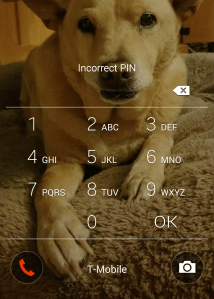
I’m usually calm in crises, but I couldn’t remember how to dial 9-1-1.

lock screen, incorrect pin, dog, emergency call

The red phone icon would have let me dial for help without keying the pin number on my locked screen … if I’d remembered. (Screenshot of photo by Teresa TL Bruce)

I’d seen items in the road and eased the car around them.

Passing the parallel-parked cars — and the things strewn on the road — I realized they weren’t things. I threw the motor into park, blocking the road. My hands shook. I jumped from the car.

On the ground, a backpack hid someone’s back; a baseball cap covered his head. His upper body jutted into the street from between two cars.

“Sir, are you okay?” He was breathing but didn’t respond. I fumbled the numbers to unlock my phone. (I forgot about the red emergency call icon.)

The man lay facedown on the road. His legs and hips hung above the ground, tangled in an upside-down bicycle between the sidewalk and the street.

Another man snaked his motorcycle around my car to see what happened. He quieted his motor and stepped close to the red pavement under the baseball cap.

I entered my unlock code, then tried keying 9-1-1. “Don’t move him!” I yelled as Mr. Motorcycle approached the unconscious man. I knew never to move anyone with possible back injuries — but this passerby didn’t.

An employee from the nearby school hurried over. Calling “9-1-1” felt more complicated than it should have been. Again I hit the wrong combination of digits.

You'd think hitting 9 once and then hitting 1 twice would be easy...

You’d think hitting 9 once and then hitting 1 twice would be easy…

Mr. Motorcycle laughed, pointing at the spilled beer can nearby. “He’s not hurt — he’s just drunk.”

I finally got through to 9-1-1.

“Sir!” I yelled again. “DON’T MOVE HIM!”

Mr. Motorcycle ignored me. He tugged and pulled the bike from between the unconscious man’s legs, lowering half his body with a thud.

The dispatcher barraged me with questions I couldn’t answer. “I don’t know. I found him like this.” How old was the person, how long had he been there, did anyone else see what happened, did the fall make him unconscious, or was it the other way around … ?

She kept asking, as if I hadn’t already answered.

Meanwhile, my car blocked the narrow street; I needed to make room for the ambulance. I told Mr. Motorcycle and the school employee to stay by the injured man (to protect him from approaching vehicles).

The dispatcher reprimanded me, telling me not to leave the scene — which I wasn’t doing! — and interrupted my disclaimers.

My hands shook as I fastened my seat belt. “I’m putting you on speaker,” I told her. She demanded I not relocate my car but rather return to make sure no one moved the man. (She’d already heard me tell Mr. Motorcycle — and that he ignored me.)

With one hand on the gearshift and one on the wheel, I jumped. Mr. Motorcycle pressed both hands against my window, talking at me through the glass.

The dispatcher fussed at me — loudly — as I lowered the window.

Mr. Motorcycle had to leave before the bank closed (it was barely three o’clock) and would be “right back.” (At least, I think that was what he said — it was hard to hear over the dispatcher’s voice.)

That was the last I saw of him.

The school employee (thank heaven for her!) “stood guard” while I drove (seven whole car-lengths away) to an empty space alongside the curb. (If you’ve never parallel parked while a 9-1-1 dispatcher berates you for making room so an emergency vehicle can reach the emergency, you can’t imagine how long that short drive was.) “I’ve parked and I’m walking back to the injured man now,” I told the dispatcher.

“Don’t give him anything to eat or drink,” she warned.

“He’s unconscious!” (I’d already told her.)

“Paramedics are on the way,” the dispatcher said, “but if he wakes before they arrive, don’t let anyone feed him or give him anything to drink.”

Between the dispatcher’s assurance of help on the way and the siren’s affirmation that it was, a gut-punching thought took my breath: These first responders were coming from that station — the station whose paramedics entered our home that night.

Please, oh, please, oh, please, oh, please, let it not be them…

I’d seen them out before — the same team — at the grocery store. I’d fallen apart, emotionally thrown back to the ground of that traumatic night.

Please oh please oh please let it not be them.

But the side of the truck bore that station number.

Please-ohplease-ohplease-not-them!

I turned and faced the prostrate man. I wouldn’t look at the paramedics’ faces.

Too many PTSD triggers of that night…

Behind me a man said, “I remember you…”

Oh, please, no!

My stomach heaved.

“Weren’t you in my radio class?”

I breathed again — How long was I holding my breath? — and turned toward the firefighter who’d taught my CERT group about the science and protocols of amateur radio back when I got my ham operator license. Way back, before the night my husband died.

It’s okay, I told myself. Not them. 

But. What if the others were on duty that night?

I blurted a summary of all I’d told the dispatcher, then asked whether I needed to stay.

“No, we’ve got him now. Thanks for helping out. Good seeing you.”

As I turned away, I heard the injured man respond to the rescue crew. I felt tremendous relief; he was conscious, but I didn’t linger. (I scurried to my car to avoid seeing other rescuers’ faces.)

Then I drove away.

Life went on, for me, anyway. I hope and assume it did for that man…

pavement, stain

“Stained pavement only seems compelling if you understand the story that soiled it. … Learning the story of another’s grief will help you understand the marks of mourning on the soul.” — Teresa TL Bruce (TealAshes.com)

It’s been a couple of weeks since that afternoon. I’ve wondered about the man whose name I don’t know. (Did he have a head injury? Did Mr. Motorcycle harm his back?) And I’ve worried. (Is that his bicycle locked against the fence near where he fell? If so, why hasn’t he come back for it?).

After two weeks in the Florida sun and rain, as of yesterday the pavement still showed stains from that day. I can’t pass the street without remembering.

It’s made me consider other marks on the roadways, discolorations I never thought twice about before. Stained pavement only seems compelling if you understand the story that soiled it.

How many of us see the behavioral or emotional “stains” in those around us and walk by — or turn our backs — without practicing emotional triage? For those who are grieving, it’s not enough (and often not a good idea) to simply ask, “Are you okay?” or “How are you?”*

Make sure your grieving friends breathe deeply. Stand guard against those who would take advantage of their vulnerability. Offer support, even if it comes in a drink of water or a bite to eat. Help them back onto their feet — physically and emotionally. Don’t ride away just because you have other things to do. Listen to their words and their tears and their assertions.

Learning the story of another’s grief will help you understand the marks of mourning on the soul.

___

*Better Questions than “How Are You?” Part 2–What to Ask When Grief Is New


Thanksgiving and Thanks-Grieving — Serving Mashed Gratitude with a Side of Grief

In previous years I wrote about grief and gratitude intermingling during Thanksgiving.* Whether someone died recently or long ago, the holiday season is forever altered for surviving family and friends.

For families who have lost loved ones within a few days, weeks, or even months, the shock of new grief might mask the sharpest pain of the first holiday season — or not.

The pain can be overwhelming. Getting through my first widowed Thanksgiving (only a couple of months after my husband’s unexpected death) was like waking up in a surgical recovery room. I was groggy with grief, unable to focus on anything but the faces of my family, too aware of the open wound where half my heart had been removed without my consent.

Our post-death holiday menu abstained from all things traditional. Instead of cooking favorite dishes, we went out to eat. Instead of verbalizing what we were grateful for as a family, I privately listed my many blessings in a notebook. Instead of putting up our Christmas tree the day after Thanksgiving for the 25th year in a row, I forgot. (I even forgot we’d bought an artificial tree two years before he died.)  I forgot Christmas was coming.

Seasoning my every acknowledgement of personal gratitude was the GAPING HOLE of his absence. My husband — my children’s father — WAS NOT THERE … and would NEVER return.

Sometimes the pain of loss can be motivating; not every loss means all tradition must be avoided. Mom died two months before Thanksgiving a decade and a half earlier. (Yes, my husband’s death was the same time of year as my mother’s.) Our family did everything we could that first Thanksgiving and Christmas to serve up “sameness” — as much as was possible without her presence. (Though we did have her presents, sort of. She left behind — or more accurately purchased ahead — ornaments for her grandchildren.) Thanksgiving and Christmas were bittersweet commemorations (not exactly celebrations) that year; her sweet reminders and attitude of gratitude surrounded us, tempered by our distress and longing for her, softened and lightened by everyone’s anticipation of her third grandchild’s birth between the two holidays.

These examples from my household illustrate one of the most important things to remember if you want to support a bereaved friend or if you are yourself grieving: There is no “right” way to grieve, and (short of recklessly dangerous behaviors) there’s no “wrong” way to grieve, either.

Every loss is unique. Everyone’s journey of adjustment after a death takes its own time. Like people attending an all-day Thanksgiving buffet, no two plates of grief will hold identical quantities, and few will eat all their items in the same order or at the same time.

Let your friends know you’re aware of their losses. If you haven’t said it lately, say it again. (Grief is ongoing; your concern should be, too.) Invite them to share your table. Reassure them they’re going about it the best they can.

___

*Here are links to my other posts on this topic:

Thanksgiving and Thanksgrieving

Happy Thanks-Grieving: Grief-Enhanced Gratitude