Thanksgiving and Thanks-Grieving — Serving Mashed Gratitude with a Side of Grief

In previous years I wrote about grief and gratitude intermingling during Thanksgiving.* Whether someone died recently or long ago, the holiday season is forever altered for surviving family and friends.

For families who have lost loved ones within a few days, weeks, or even months, the shock of new grief might mask the sharpest pain of the first holiday season — or not.

The pain can be overwhelming. Getting through my first widowed Thanksgiving (only a couple of months after my husband’s unexpected death) was like waking up in a surgical recovery room. I was groggy with grief, unable to focus on anything but the faces of my family, too aware of the open wound where half my heart had been removed without my consent.

Our post-death holiday menu abstained from all things traditional. Instead of cooking favorite dishes, we went out to eat. Instead of verbalizing what we were grateful for as a family, I privately listed my many blessings in a notebook. Instead of putting up our Christmas tree the day after Thanksgiving for the 25th year in a row, I forgot. (I even forgot we’d bought an artificial tree two years before he died.)  I forgot Christmas was coming.

Seasoning my every acknowledgement of personal gratitude was the GAPING HOLE of his absence. My husband — my children’s father — WAS NOT THERE … and would NEVER return.

Sometimes the pain of loss can be motivating; not every loss means all tradition must be avoided. Mom died two months before Thanksgiving a decade and a half earlier. (Yes, my husband’s death was the same time of year as my mother’s.) Our family did everything we could that first Thanksgiving and Christmas to serve up “sameness” — as much as was possible without her presence. (Though we did have her presents, sort of. She left behind — or more accurately purchased ahead — ornaments for her grandchildren.) Thanksgiving and Christmas were bittersweet commemorations (not exactly celebrations) that year; her sweet reminders and attitude of gratitude surrounded us, tempered by our distress and longing for her, softened and lightened by everyone’s anticipation of her third grandchild’s birth between the two holidays.

These examples from my household illustrate one of the most important things to remember if you want to support a bereaved friend or if you are yourself grieving: There is no “right” way to grieve, and (short of recklessly dangerous behaviors) there’s no “wrong” way to grieve, either.

Every loss is unique. Everyone’s journey of adjustment after a death takes its own time. Like people attending an all-day Thanksgiving buffet, no two plates of grief will hold identical quantities, and few will eat all their items in the same order or at the same time.

Let your friends know you’re aware of their losses. If you haven’t said it lately, say it again. (Grief is ongoing; your concern should be, too.) Invite them to share your table. Reassure them they’re going about it the best they can.

___

*Here are links to my other posts on this topic:

Thanksgiving and Thanksgrieving

Happy Thanks-Grieving: Grief-Enhanced Gratitude

Breast cancer awareness and grief–when seeing pink means seeing red, part 2

Prevention and blame — my second post of several breast cancer awareness experiences to keep in mind during October’s breast cancer awareness month … and beyond.

Scene One:

I was a child when Grandma died of cancer. I was sad, of course, and I’d only seen Granddaddy cry once before (at his brother’s funeral, when I was even younger). I remember his tears from that day more than my mom’s. Memories from then include crying, confusion, coordinated chaos — and one big burst of anger.

It happened not long after the family gathered at Granddaddy’s house following Grandma’s funeral. For several days, well-wishers and those bringing meals or offering condolences had come and gone, but I’d not paid much attention. (As an adult I’m ashamed that back then I was as upset by my older cousins’ distraught distraction as by Grandma’s death. I adored and idolized them, and since they were “visiting” — for the funeral — from out of state, I wanted them to play with me.)

From the room where I shadowed my cousins’ every move, I heard loud, angry voices. Of course, we dropped what we were doing and ran to see the commotion.

The nuances were lost on me, but over the years the details filled in as I heard varied accounts of what happened. Several adults clustered near the door, where Granddaddy — our soft-spoken, patient Granddaddy — yelled while shoving a woman out the door!

From what I later learned, the woman, an acquaintance of Grandma’s, had come to offer her services to the family. Well, one specific “service,” anyway.

Since Grandma’s death proved cancer ran in our family, the woman explained, she thought we’d be eager to buy cancer insurance policies from her.

Scant hours after Grandma’s funeral.

So, yeah, Granddaddy yelled and kicked — er, shoved — her out the door.


Scene Two:

Twenty years later, while Mom recovered from mastectomy, radiation, and chemotherapy, we had an encounter with a long-time friendly acquaintance. Everyone within that circle knew of her battle, so it was normal and appreciated when people inquired about her condition in the context of offering their support (mentioned prayers, in-person visits, dropped-off casseroles, etc.).

What we didn’t expect was one man’s crusading tirade.

He approached with a friendly smile and handshake. He asked how she was feeling (as tricky a question for someone fighting a deadly disease, I might add, as for someone living with grief).  Her response was somewhat noncommittal but positive, as usual. (She often made jokes about needing to wear a wig.)

Without preamble, the man stepped into her personal space and lectured her.

According to his uninvited rant:

all doctors were too greedy, too quick to slice into people for no good reason;

all pharmacies and drug manufacturers were only in business for the money and tailored their medications (including chemotherapy) to make people sicker so they’d have to buy more medicines;

all breast cancer was caused as much by wearing deodorant as by underwire bras …

[It’s a good thing this was during the mid ’90s. He’d probably have exploded had he heard about Turing’s recent drug price hike from $13 to $700+ per pill!]

Mom tried speaking up on behalf of her oncologist, a caring and compassionate doctor who fought hard for her. But this … this … person wouldn’t let her.

I can’t remember the details of how we got away from him. I do remember the fury I felt. How dare he attack her for seeking treatment!? How dare he attempt to undermine the course of care she’d carefully studied and sought out!?


If you can't say something nice, don't say anything!

When grief or illness encroach, be supportive in positive ways that aren’t intrusive. (Image by Teresa TL Bruce, TealAshes.com)

Scene Three:

I can’t count how many times this has played out in casual conversations with acquaintances in the decades since Mom’s diagnosis. Talk of family or health or October’s overwhelming pinkness often leads to mentioning my late mother’s breast cancer.

And then I’m asked a question so personal it’s inappropriate. “Have you been tested? What have you found out?”

The implication is that because my mother (and grandmother) had breast cancer, I must have rushed out to have myself tested for the BRCA gene mutations (which indicate an inherited predisposition toward some breast cancers — in about 5 percent of cases*).

The people who ask seem to think I should tell them all about it.

Others ask how often I do breast self exams and whether I’m up to date on mammograms. 

They mean well. I get that.

But it’s not their place to ask.

Breast cancer awareness month means people can initiate conversations about prevention, diagnosis, and treatment. But it’s not open season to delve into women’s medical histories and decisions.

(Now go schedule a mammogram for yourself, or talk the women in your life into scheduling theirs.)

___

*See http://www.mayoclinic.org/tests-procedures/brca-gene-test/basics/definition/prc-20020361

Breast cancer awareness and grief–when seeing pink means seeing red, part 1

This is the first post of several breast cancer awareness experiences to keep in mind during October’s breast cancer awareness month … and beyond.

Last month marked twenty years* since Mom died of breast cancer. More than thirty years ago her mother passed of the same; so did hers.

I’m therefore acutely aware of the importance of women getting regular mammograms and being vigilant about self-exams. That’s how Mom won more than three extra years with our family.

That’s why I got a mammogram — on the twentieth anniversary of Mom’s death, the week after the fifth anniversary of my husband’s.

The fun of getting a mammogram starts with stuffing top wear into a locked cubby. Photo by Teresa TL Bruce

The fun of getting a mammogram starts with stuffing top wear into a locked cubby. Photo by Teresa TL Bruce

It’s not something I look forward to every year. (Does anyone?) This year I put it off for months, until one day I finally called and made an appointment for the first available opening.

The irony of the timing didn’t hit me until that morning.

By the time I’d sat in the backed-up waiting room an hour after my scheduled appointment, my emotions were all ajumble.

By the second time the technician told me the equipment had a “technical problem” — and the procedure had to be repeated — my pertinent body parts felt all ajumble, too.

I cried — as much from emotional pain as from physical. When the technician assured me (bless her heart) that it would “only hurt for a few more seconds” (for the record, not true), she had no way to know the far deeper, longer-lasting pain came not from the contortions she inflicted on my body but from the losses the date itself smashed against my chest.

For a few moments, I plunged back into the mode of blurting my bereavement the same way I did during the early weeks (months, really) after my husband’s death.

To her credit, the woman tried to comfort me. She put an arm around me to give me a hug — but clad as I was only in the radiology center’s flimsy wraparound top, it felt awkward and uncomfortable. (In an oddly different way, the feeling reminded me how it felt when I was newly widowed and well-meaning men friends offered hugs — which at that raw time I didn’t want from any man I wasn’t related to.)

After the second round of images was taken (this time without technical difficulties), as my hand touched the doorknob, she offered a few well-intended words:  “You’ll be okay. You just have to get past it. Everybody has to die sometime.”

WHAT!?

I’d just bared my soul (among other things) in front of this woman. I was crying because I missed my mom on the anniversary of her death to breast cancer, and missing my late husband, too. And she tried to make me feel better by reducing the validity of my grief? (Not to mention that she ignored my apprehension over the reason for the mammogram she’d just subjected me to.)

Yes, I saw red.

Please don’t say such things to those who are grieving! It’s true that everyone dies, but it’s not helpful or encouraging (or even nice) to make such losses seem everyday or expected or unimportant. 

___

*In an earlier post I rounded up the amount of time (see https://tealashes.com/2014/06/27/comfort-after-moms-funeral/).

“Thought of You” Five Years Later

Five years ago my life ended.

In that same absent heartbeat, my new, alien life began.

No, I didn’t have a near-death experience, but without warning, Death got in my face, reached into my being, and ripped away my other half — my soulmate.

To say that it hurt … words don’t exist that convey the suffering of that severance. I didn’t think I could endure the agony.

I wouldn’t — couldn’t — consider ending my life to end the pain; I had three daughters who needed me. But there were times the idea was hard to squelch. More often, I daydreamed of going to sleep and never waking up.

Waking up — in that split-second flash of remembering he was dead — felt horrific, far worse than the sleepless tossing and turning that preceded it. Brief, eventual dips into nightly, exhaustion-induced, nightmare-ridden naps were never “restful.” Even within those nightmares I somehow knew that waking would bring a fresh slap in the face of the worst reality I’d ever faced: my husband was dead.

Life — as I knew it — was over. (The well-intended, misguided souls who “consoled” me that “life goes on” were wrong.)

It was

no

more.

Yet, relentlessly, without him, one unwanted sunrise after another, I “woke up and wished that I was dead, with an aching in my head . . . I thought of you and where you’d gone, and the world spins madly on.“*

I found myself drawn to communities of the widowed, and I connected more deeply with friends who’d lost children and other dear ones. In such company, the words which so frustratingly failed us when speaking with the non-bereaved weren’t necessary. Among fellow mourners, each grieving their own unique bereavement, all were fluent in the language of heart loss.

Back then, I struggled to get through a full day. The thought of enduring that degree of pain — at that intensity — for the rest of my lifetime . . . Ugh. (As I sit typing these words, even the memory of those awful months makes me shudder from shoulder to knee.)

I asked my fellow widows and widowers who seemed to have rebuilt their shattered lives, who seemed to know how to make it from one day to the next, “How long did it take? How long before you felt like yourself again? Before you felt you could cope again?”

Their responses gave me nibbles to ponder (I wasn’t yet up to food for thought), hope in future, and reasons to fight — for my own newly alien life. Their answers surprised, encouraged, and confounded me:

  • I’ll let you know if I ever feel like myself again.
  • The second year was harder than the first. I started getting my act together during the third.
  • I did what I had to do because there was no one else to do it, but I still don’t feel like myself.
  • It takes as long as it takes. Don’t listen to anybody who hasn’t walked in your shoes. There’s no set time for anything.
  • By five years I’d pulled my new self together. Give yourself time.

Five years? I thought. No way will it take me FIVE YEARS. No way I can last that long through this. No way.

From time to time since then, I’ve tried to take an objective look at where I am now compared to where I was before widowhood and where I was during the earliest months and years of widowhood. Along the way from Back Then to each new Right Now, at every self-evaluation I could see signs of progress — and of my own personal failure to thrive.

Overall, my progress has grown and my failures (for the most part) have shrunk from one stage to the next. But I always thought, It’s okay that I’m not “there” yet. I will be before five years. I am NOT gonna take that long to be okay again.

But now . . .

It has been five years.

And I am well. Not the same, but well enough. (At least, well enough for now.)

And, most of the time, I am happy again. (At least, happy enough for now.)

Among the widows and widowers I first met, someone (I wish I remember who, but too many memories from then are widow-fog obscured) shared the video clip, “Thought of You” by animator Ryan Woodward**, created the same year my husband died. The artist left the meaning open so viewers can relate their own circumstances to the story it tells. To me (and to many others who’ve lost loved ones) the animation, music, and lyrics together come close — very close — to conveying the feeling of new bereavement (which words alone can’t approach).


___

*Lyrics by The Weepies in “World Spins Madly On,”
http://www.theweepies.com/
**Ryan Woodward’s incredible site:
http://ryanwoodwardart.com/

___

(Happy angelversary in your better place, my dear.)

Are We There Yet? (How Long Does Grieving Take?)

Are we there yet? — one of the most annoying questions parents hear. Invariably, no matter how long remained was too long for our children. When they were young,  we sometimes answered that if they asked one more time, we’d turn the car around and go back home.

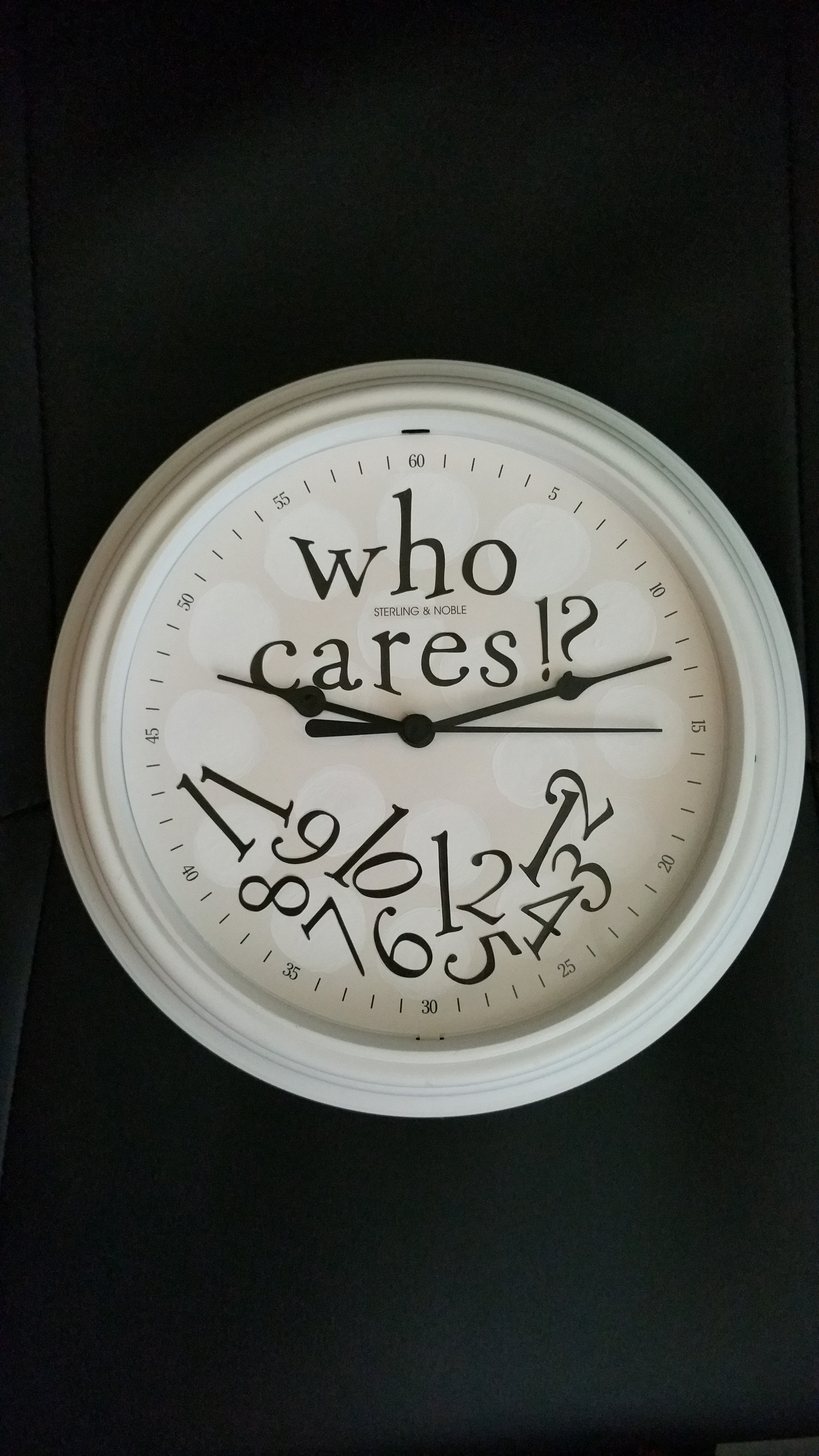
clock with fallen numbers

“who cares?” clock face created and photographed by Teresa TL Bruce (TealAshes.com)

On a few occasions, we circled back to where we started, postponing the excursion for another day.

Their petition came regardless of our destination — rare, days-long, out-of-state road trips; frequent, up-to-an-hour-long, crosstown errands; or thrice-weekly, around-the-corner church meetings . All drives were apt to include variations on the dreaded question.

In hindsight, I realize our kids were eager for the fun to begin (or at least for the end of being strapped into car seats and belts while motion sickness churned their tummies). But while we were behind the wheel, our focus was to convey everyone safely from point A to point B. (If I could manage not getting lost when I was driving — ha! — so much the better.*)

Maybe askingWhen will we get there? reflected part of our kids’ intellectual development, too. They were still learning the basics of how time flows and is measured. They were learning to anticipate upcoming landmarks on familiar routes and weren’t yet able to estimate the amount of time it would take to reach the next location they could relate to during their journey.

And at that point in their lives, they lacked the experience to realize (or in some cases to care) how annoying it was to be asked.

We were more worried about reaching our destination intact than in time. If the Bruces were late, we were late … as long as we didn’t become the late Bruces in our attempt to arrive.

Sometimes detours or road conditions made our best estimates to How long is it gonna take? woefully wrong. (And, oh, did we hear about it!)

Then life’s day-to-day travels crashed into the worst kind of unplanned detour. My husband died.

My estimated arrival times died with him.

Are you better yet? — one of the most annoying questions mourners hear. With precious and dear exceptions, no matter how recent my bereavement felt, it seemed to take too long for those around me. When my grief was still young, I first answered bluntly, “No, of course not.”

If the same person asked more than once, I soon learned my frank answers disappointed them; disapproval showed in their expressions, voices, and words. I turned myself around when I saw them (or their phone numbers). That I was “still” not “better” (meaning not yet my former, pre-widowed self again) shamed me into silence about my real feelings. (Grieving was hard enough without being made to feel I was doing it the wrong way.) I put on my plastic smile and said, “Mm-hmm” — and got away from them as fast as I could.

In hindsight, I realize my friends were still learning the basics of what it meant to be around someone who’d lost a loved one. And they were eager for my sadness to end (as evidenced when I cried my way through conversations). But while I fumbled my  way through learning to cope with life-altering loss, my focus was simply to endure a single day from one moment to the next.

Any planning, any  estimation, any sense of the “when” of things was beyond my capacity. Death detoured my timing in every way. It slowed me down. (I know others who fell into fast-paced flurries of keep-busy actions to try to keep their grief from catching up with them; it sometimes worked — temporarily.)

It took me twice as long to do the dishes (when I remembered to cook — or to eat — and the two didn’t necessarily happen together anymore). It took me twice as long (or more) to get dressed in the morning. Four times as long to pay the bills and attend necessary business transactions. And getting to sleep or staying asleep … (sigh). Let’s just say my internal sleep clock has been at the repair shop for several years now …

I had a trouble estimating how I’d fare on the other side of the next five or ten minutes. Figuring out what would happen another day was tougher. What would the next week hold? (Thinking that far ahead made my head hurt almost as much as my heart.) The following month? Ha! (In case the italicized “Ha” with an exclamation point didn’t convey it clearly the first time, let me repeat. Ha!)

Questions about my five- or ten-year plans were as impossible to answer as “When are you going to act like normal again?

Maybe askingWhen will you be done with grieving? reflected part of my acquaintances’ empathetic development. They were still learning the basics of how grief flowed and ebbed around time-warped detours on an unfamiliar journey they couldn’t relate to. Yet because of what they observed in how I grieved my husband, they were awakened to an uncomfortable realization: they would someday lose a loved one, too.

Their need to ask, So, is everything okay now? stemmed as much from their lack of experience with grieving as it did from their genuine concern for me. And at that point in their lives, they had no way to realize how annoying it was to be asked. 

Instead of asking your grieving friends how long it will take them to “get over” their bereavement, assure them you accept them and support them no matter where (and when) they are in their grief.

___

*I’ve been known to get lost even when following GPS directions. In a future post I’ll share more about getting lost in other ways while finding my way through grief.

___

Feel free to subscribe or follow me on Facebook (https://www.facebook.com/TealAshesbyTeresaBruce) or Twitter (@TealAshesTBruce) for the latest posts.